



South Korea's tourism industry is attracting visitors thanks to the "K-content effect" following the success of the drama "When Life Gives You an Orange," which aired globally on Netflix and sparked interest from international tourists.
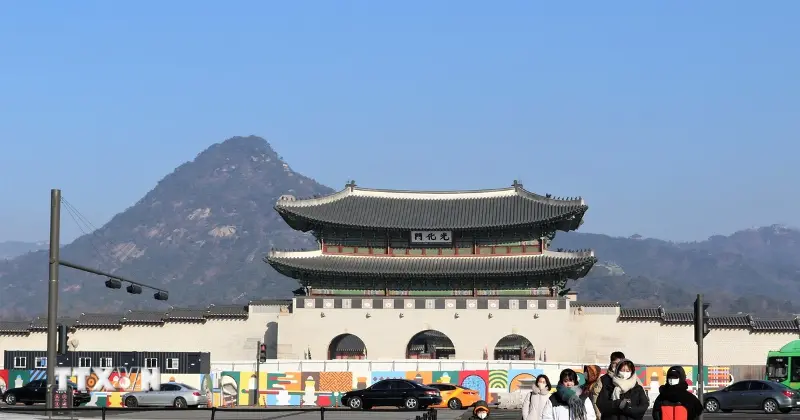
Seoul (South Korea) has been voted one of the most attractive cities for Asian tourists during this year's Lunar New Year holiday.
According to data on the most popular destinations in Asia for the 2026 Lunar New Year holiday, released on January 26th by the digital travel platform Agoda, Seoul, the capital of South Korea, ranked 5th in terms of accommodation searches among major cities in the region.
Information indicates that Tokyo (Japan) tops the list, followed by Bangkok (Thailand), Taipei (Taiwan, China), and Osaka (Japan).
The most notable finding in this survey is the trend of international tourists dispersing to locations outside the capital.
Besides Seoul, cities like Busan, Jeju, Incheon, and Pyeongchang are also among the top destinations attracting international tourists. In particular, Jeju Island is experiencing high growth, with hotel room searches from foreign visitors increasing sharply by 72% compared to 2025.
The South Korean tourism industry attributes this result to the "K-content effect." The success of the drama series "When Life Gives You Tangerines," which will be broadcast globally on Netflix in 2025, has sparked international interest in Jeju's unique cultural aspects, such as the Haenyeo Museum (Sea Maiden Museum).
In addition, subsequent proactive marketing campaigns such as the Jeju Tourism Bureau's "JJ Friends" program also played a significant role in positioning Jeju as the next destination in the minds of international tourists.
Pyeongchang, a mecca for winter sports , also saw a 40% increase in searches. This is attributed to experiential activities such as skiing and snowboarding associated with the "Daegwallyeong Pyeongchang Snow Festival" held during the Lunar New Year holiday, which attracted a large number of foreign families.
Agoda's data also shows that the highest-spending customer group when visiting South Korea is Taiwanese tourists, followed by Japanese and Hong Kong (China).
On the other hand, for Korean tourists, the most searched domestic destinations were Jeju, Seoul, Busan, Sokcho, and Gyeongju. In particular, Gyeongju recorded explosive growth, more than doubling its search volume with a 105% increase compared to the same period last year.
This result stems from the promotional effect of Gyeongju being chosen to host the Asia-Pacific Economic Cooperation (APEC) Summit in 2025, along with the rise of "New-tro" (neoclassical) meccas such as Hwangridan-gil Street and the Daereungwon ancient tomb complex, which strongly attract young people.
Statistics also show that South Koreans' preference for Japan remains strong in 2026. The top three most popular overseas destinations for South Koreans are all Japanese cities: Tokyo, Fukuoka, and Osaka. This is attributed to the persistently weak yen and the significant expansion of flight routes to smaller Japanese cities.
According to statistics from the South Korean Ministry of Land, Infrastructure and Transport, the number of passengers using flights to Japan in 2025 increased by 8.6%, reaching a record high.
Lee Jun-hwan, Agoda's Northeast Asia Director, said that travel demand across Asia is surging ahead of the Lunar New Year.
In particular, the significant attention that areas offering unique experiences deeply rooted in Korean culture, such as Jeju and Pyeongchang, are receiving is extremely encouraging.