



Porridge is a familiar breakfast dish in many Asian families. It's light and easy to digest, but is it nutritious enough for breakfast? Experts say the benefits of porridge depend on how it's cooked and how the ingredients are combined.
Porridge has long been a popular breakfast choice for Vietnamese people and many other Asian countries. Thanks to its soft texture, ease of eating, and warming properties, this dish is often served to the sick, the elderly, or anyone needing a light breakfast.

Thanks to its soft texture, ease of consumption, and warming effect, porridge is often served to the sick, the elderly, or anyone needing a light breakfast. Photo: PH created from GM
Is porridge a good breakfast option?
According to the Chinese Nutrition Society, porridge is a breakfast dish that can help the digestive system function more gently in the morning, and is especially suitable for people with sensitive stomachs or those recovering from illness.
Dr. Fan Zhihong, a nutritionist at China Agricultural University, said that porridge helps the body absorb energy more easily after a long night. However, she emphasized that porridge "should not be just pure starch" but should be supplemented with protein and green vegetables to ensure nutritional balance.
Advantages of eating porridge in the morning
- Easy to digest, does not cause bloating.
- Suitable for people with weak digestive systems.
- Helps provide quick energy after waking up.
- It's easy to combine many nutritious ingredients.
But you shouldn't just eat plain rice porridge
Although porridge is easy to digest and suitable for a light breakfast, plain white porridge mainly provides carbohydrates while lacking protein, fiber, and some important micronutrients. If this habit is maintained for a long time, breakfast may not be nutritionally balanced, causing the body to feel hungry again quickly and lacking stable energy in the morning.
According to the UK National Health Service (NHS), a healthy breakfast should include a combination of carbohydrates, protein, and fiber. This combination helps slow down sugar absorption, maintain more stable blood sugar levels, and reduce fatigue and lethargy during the day.
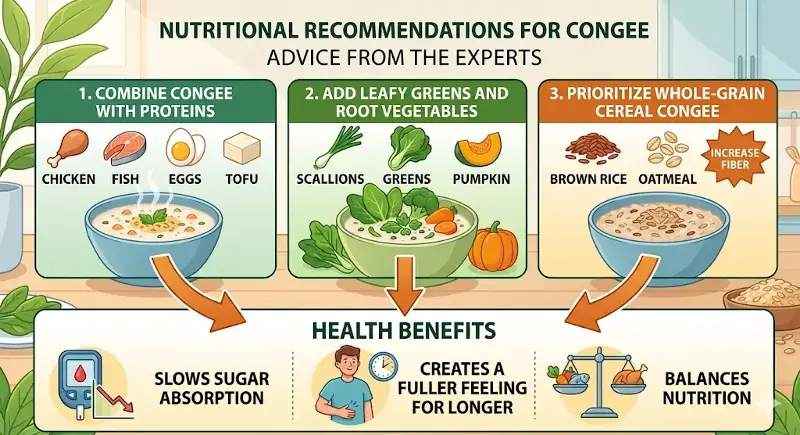
Photo: PH created from GM
How to eat porridge in a way that's good for your health?
Nutrition experts recommend:
- Combine porridge with chicken, fish, eggs, or tofu.
- Add green vegetables such as onions, cabbage, and pumpkin.
- Prioritize brown rice porridge or oatmeal to increase fiber intake.
This eating method helps slow down sugar absorption, creating a longer-lasting feeling of fullness and maintaining nutritional balance.
Porridge is a good breakfast option if eaten correctly and combined appropriately. However, it shouldn't be considered the only meal if other food groups are missing.