



As the weather turns cold, many people, despite wearing plenty of warm clothes, still feel tired, easily catch colds, and have trouble sleeping. Could it be that forgetting to keep their feet warm is causing the body to constantly "lose heat," leading to energy depletion?
Dr. Nguyen Huy Hoang (a member of the Vietnam Society of Underwater and Hyperbaric Oxygen Medicine) stated that in both modern and traditional medicine, the advice "don't let your feet get cold when going out in the wind" is not just anecdotal evidence. Numerous physiological, immunological, and neurological studies show that keeping your feet warm can contribute to better health, especially respiratory health and sleep, although this is only one of many factors.
The feet – the body's special "cooling system".
Unlike the skin on the hands, feet, or torso, the skin on the soles of the feet is smooth, thick, and hairless, and possesses a very special vascular system. Arterial-venous bridges exist here, allowing blood to flow directly from arteries to veins without passing through small capillaries as is typical.
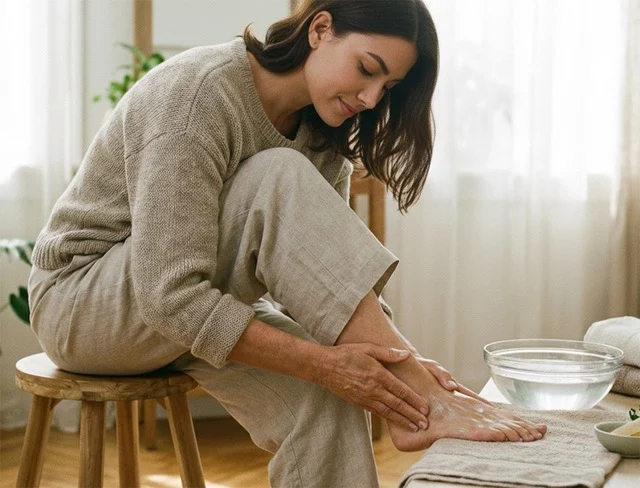
Proper foot care, especially during cold weather, should be considered part of an overall health strategy.
Illustration: AI
These bridges act like "regulating valves," opening and closing flexibly under the control of the autonomic nervous system. As a result, the amount of blood flowing through the soles of the feet can increase or decrease dramatically, not only to nourish the tissues but primarily to regulate body temperature.
When the body needs to release heat, these "valves" open, directing warm blood from the body's center to the feet. Because the superficial veins are close to the skin's surface, heat is dissipated into the environment more quickly. Conversely, in cold weather, the connections constrict, reducing blood flow to the skin, thus limiting heat loss and prioritizing warmth for vital organs such as the heart, lungs, and brain.
"Therefore, the feet can be considered one of the body's important 'heat release and retention' points, rather than the sole thermoregulatory center. Walking barefoot on cold stone floors in winter can cause the body to lose heat faster; conversely, keeping the feet warm helps the body maintain a stable internal temperature," Dr. Hoang explained.
Why do cold feet easily lead to a cold?
Some studies suggest a link between cold feet and an increased risk of developing cold symptoms in people who already carry a respiratory virus. When feet get cold, heat receptors in the skin send signals to the brain, triggering a systemic vasoconstriction reflex that affects not only the lower extremities but also the mucous membranes of the nose and throat.
When blood vessels in the nasal mucosa constrict, blood supply decreases, surface temperature drops, and mucus becomes thicker. Simultaneously, cilia—the nose's natural "cleaning barrier"—become less effective, making it easier for viruses and dirt to trap. Some immunological studies have also noted that at low temperatures, nasal mucosal cells reduce the production of local antiviral factors, weakening the initial protective barrier.
During cold weather, many respiratory viruses may be present in the nasal mucosa at low levels, without causing obvious symptoms. When the body's defenses are weakened by the cold, including cold feet, symptoms such as runny nose, sneezing, coughing, and sore throat are more likely to develop. This doesn't mean cold feet automatically mean you have a cold, but it shows that keeping your feet warm is a reasonable supportive measure, alongside familiar measures like washing hands, keeping your body warm, and limiting contact during outbreaks.
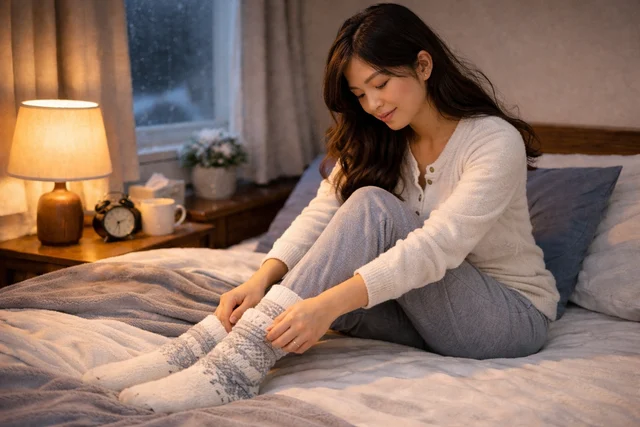
Keeping your feet warm offers many health benefits during the cold season.
ILLUSTRATIVE PHOTO: AI
Keep your feet warm: A small habit, with significant benefits.
When the feet are warm, the body doesn't need to mobilize strong vasoconstrictive responses and muscle tremors to generate heat, thus freeing up space for other activities such as immunity, tissue repair, and mental concentration. Conversely, when the feet and lower extremities remain cold for an extended period, the body has to increase sympathetic tone and constantly regulate peripheral blood vessels, leading to energy depletion and feelings of fatigue and discomfort in some people. This isn't a serious disease mechanism, but an unnecessary physiological burden that can be avoided with very simple habits.
In daily life, some easy-to-implement measures include:
- Choose appropriate socks (preferably wool or synthetic fibers that retain heat, wick away moisture, and aren't too tight), and change them when they become damp.
- Keep your feet dry and avoid walking barefoot on cold surfaces for extended periods.
- Avoid sitting still for long periods to limit blood stagnation in the lower limbs.
- Soak your feet in warm water and massage the soles of your feet in the evening, using moderate amounts of water and water, especially when it's cold.
"Especially for people with peripheral vascular disease, diabetes, or varicose veins, keeping the feet warm is even more important, but they need to be more cautious with the water temperature and soaking time to avoid burns or increased circulatory stagnation. These groups should consult a doctor before applying any localized heat therapy. Proper foot care, especially during cold weather, should be considered part of a strategy to protect overall health," Dr. Hoang advised.