



Once a sensation throughout South Korea, Dubai chewy cookies quickly became unpopular after only a month. The short lifespan of this treat reflects the market's tendency to follow trends.

The desserts sat quietly in the display case. They were round, brown, about the size of an egg, filled with crunchy pistachios, and topped with cocoa and marshmallows.
Just a month ago, Seong Jeongmin could sell around 1,000 items in a few hours. But on a Sunday evening at the end of February, dozens remained unsold out of the 250 he had made that day. A few days earlier, he had even had to drop the rule limiting each customer to a maximum of four items.
"Now customers don't even bother looking at them when they come into the store," Seong, 42, told the New York Times.
A nationwide craze in South Korea.
The rise and then rapid decline of " dujjonku ," also known as Dubai chewy biscuits, clearly reflects the short lifespan of dessert trends in South Korea. Despite its name, this is not actually a biscuit and did not originate in Dubai.
According to experts, novel products can quickly become a nationwide phenomenon, but they can also easily be forgotten when the market becomes saturated and consumers lose interest.
Previously, South Korea has witnessed several similar trends, such as the "fatcaron" (macaron with thick filling) in 2018-2019, Pokemon bread in 2022, and tanghulu - the Chinese sugar-coated fruit dessert - in 2023-2024.
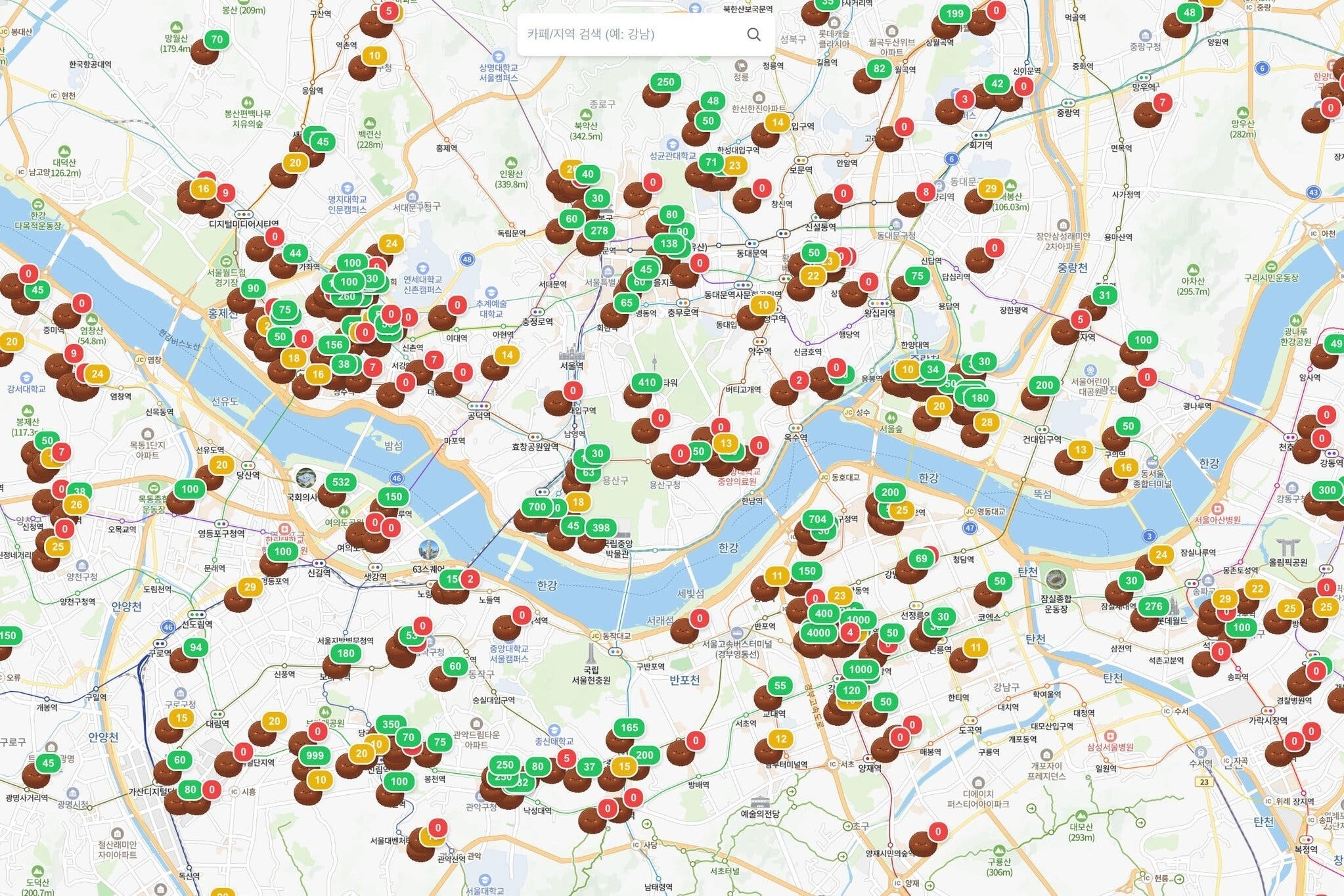
A map launched in January tracks bakeries across Seoul that sell Dubai mochi cookies, allowing cookie lovers to check inventory levels in real time. Photo: dubaicookiemap.com.
Dujjonku is a variation of Dubai chocolate, a chocolate bar filled with pistachio cream and kataifi bread strands. The original product became a global phenomenon from mid to late 2024. In South Korea, a store developed its own version in April of the same year.
This type of cake quickly became incredibly popular in the latter half of the year as celebrities and K-pop idols continuously posted pictures of it on social media.
During the winter, the craze spreads throughout South Korea. Cafes, bakeries, even noodle shops and salad bars sell this treat in large quantities. Some places even require customers to purchase other products before they can buy the cake.
People lined up in the cold weather, monitoring product availability via real-time updates on websites. Many convenience store chains and major brands also launched their own versions.
According to experts, the appeal of dujjonku stems from several factors, from its chewy texture that suits Korean tastes, its eye-catching appearance with a prominent green pistachio filling that easily goes viral on social media, to its "imported" status, which always creates a strong attraction in this market.
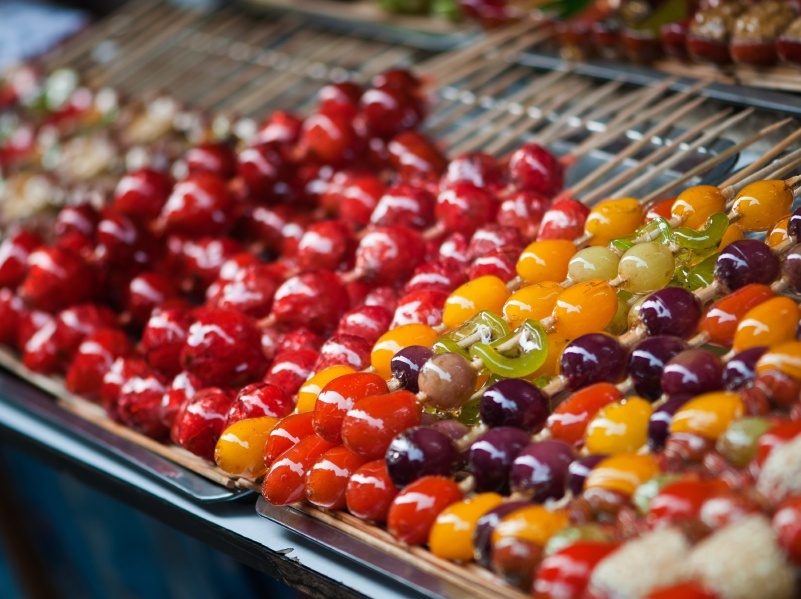
The Chinese sugar-coated fruit dessert took the Korean food market by storm in 2023-2024. Photo: Pinterest.
Disappear
The craze peaked in January, but has since almost disappeared. In Mangwon, a neighborhood popular with young people for its stylish cafes and shops, the once-sold-out pastries are now sitting in piles. Shop owners say sales have plummeted since the beginning of February.
"I think it's all over. Koreans get bored quickly," Seong said.
Data from the search engine Naver also shows a similar trend. After peaking in mid-January, searches for "Dubai marshmallows" halved in just about 17 days.
According to Jerry Jisang Han, associate professor of marketing at Sungkyunkwan University, when a product starts to become popular, Koreans often feel pressured to quickly join the trend due to their culture's emphasis on community. This causes trends to explode very quickly.
However, when "trendiness" becomes the primary driving force, interest also plummets once the initial appeal fades, according to food critic Lee Yongjae. This raises the question of whether the cake's appeal truly stems from its flavor.
"You don't care what it looks like or what it tastes like. You just want to queue up to buy it," said Mr. Lee, adding that he didn't rate the dish highly because the crust was "tough as leather" and the filling was dry and hard. However, the dense and chewy texture still suited the common taste in Korea.
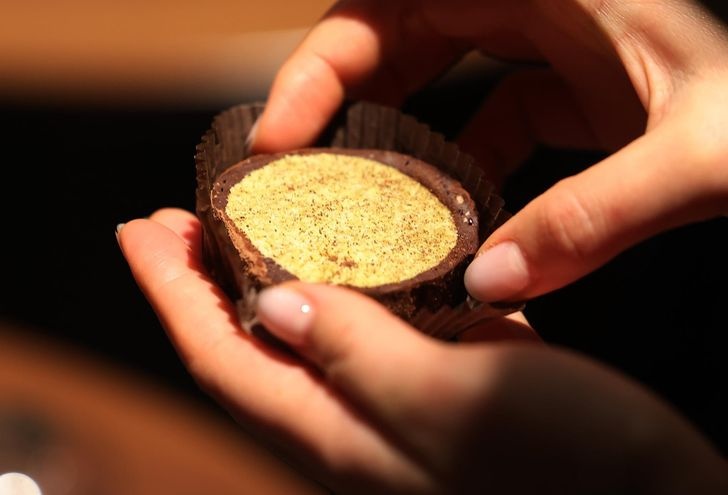
Customers hold a Dubai mochi roll, a version inspired by Dubai mochi cookies, at a store in Seoul, South Korea. Photo: Yonhap.
The price is also one of the barriers leading to the decline of the trend. Each dujjonku costs around 4-7 USD (6,000-10,000 won), which is relatively high compared to the average. A 24-year-old customer said she bought one out of curiosity, but had no intention of buying another.
Short trend cycles pose a significant challenge for businesses. When tanghulu became popular earlier, many specialized shops opened, but they quickly closed down once the trend faded.
According to Mr. Han, many businesses are aware of the short lifespan of trends, so they choose a "quick win" approach, taking advantage of the hot moment and then selling or closing down before the market cools down, even though this strategy carries significant risks.
Even long-established cafes are under pressure to constantly innovate. A bakery owner in Mangwon said she's currently selling only 10-15 cakes a day, less than half of what she did at her peak. She's experimenting with new desserts flavored with pistachios, both to utilize existing ingredients and to hopefully retain customers.
"It's not just us, it's the same for everyone. We're forced to constantly develop new dishes," she said.
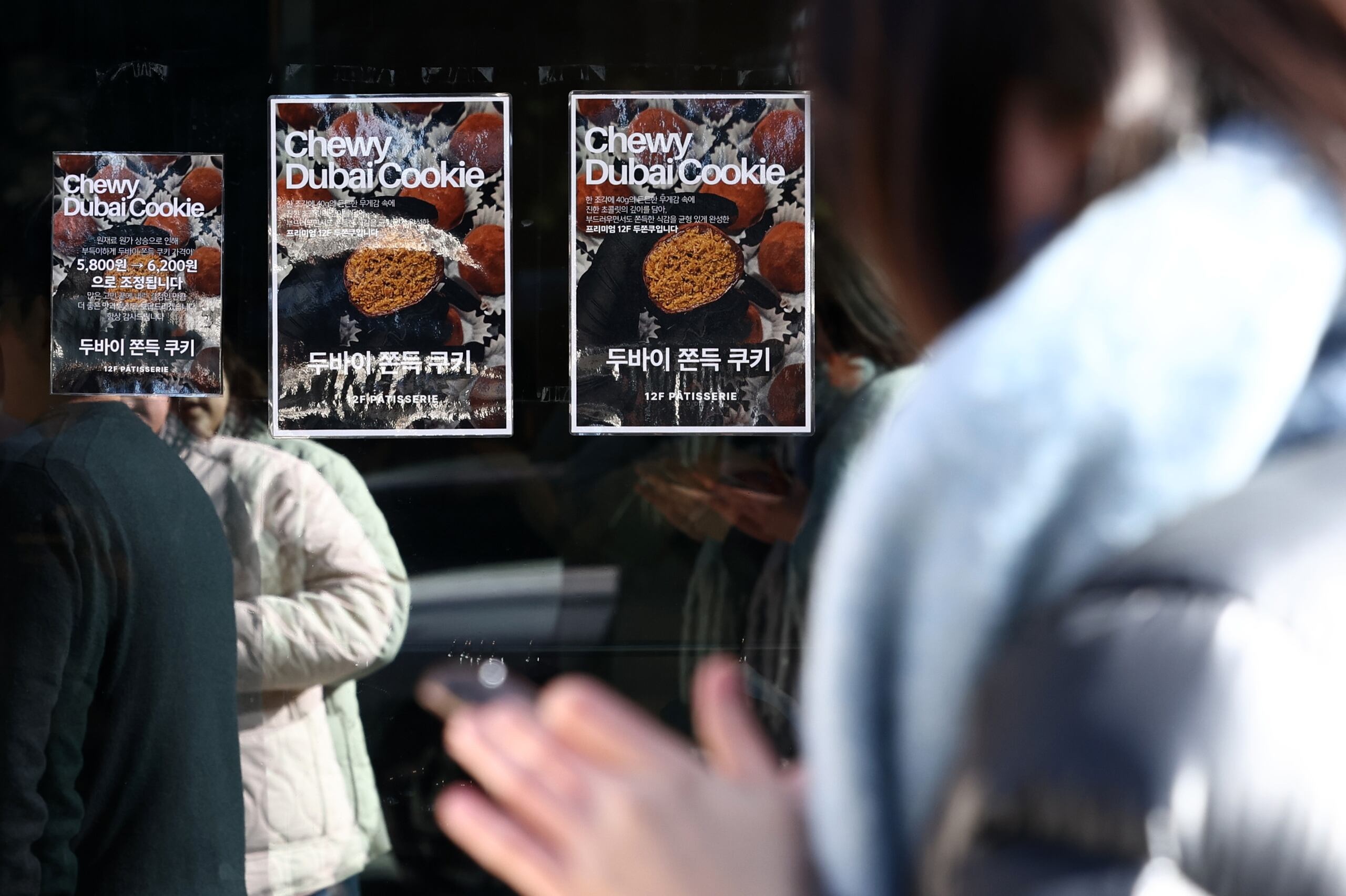
People line up to buy Dubai mochi cookies at a bakery in Jongno District, Seoul, South Korea. Photo: News1.