



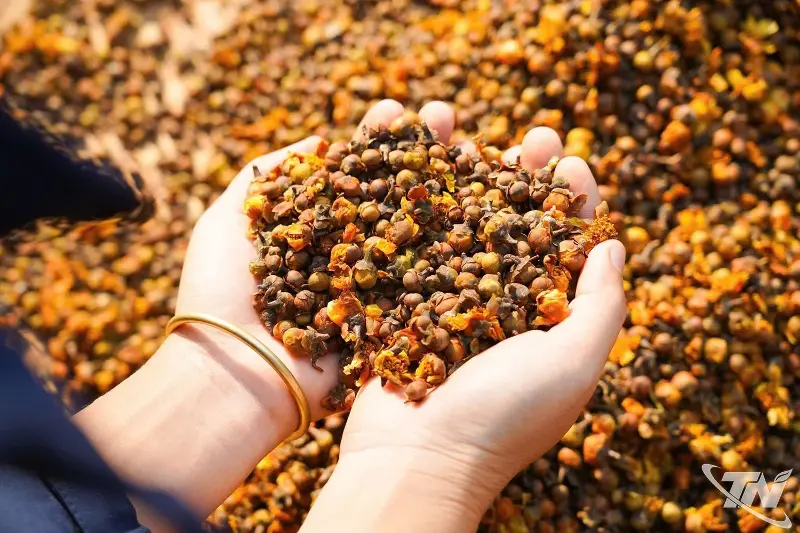
 The tea flower buds (an ancient variety from the midland region) are a vibrant yellow under the sun.
We arrived in the tea-growing region on a crisp, cool winter morning. Mist hung over the gnarled, moss-covered branches of the ancient tea trees, weathered by time. In Quang Son commune, Ms. Vi Thi Phuong was inspecting each old tea plant in her family's organic tea garden. As someone who practices natural farming , Ms. Phuong understands the nature of the tea plants as well as she understands her own family members.
Ms. Phuong said: "Trees, like people, work hard all year, so when winter comes, they need to rest. During this season, the leaves stop growing. All the life force and energy from Mother Earth are concentrated in the flower buds. That's why winter flower buds are the most precious 'gift from heaven.' And bees and ants are very clever; they only seek out buds grown on clean soil, on healthy trees, and without chemicals."
According to Ms. Phuong, the best tea buds must be found on native tea plants in the midland region (Vietnamese tea). These are tea plants with taproots that penetrate deep into the rocky soil. The buds are where the purest life-giving sap is concentrated after a long year of the tea plant struggling with sun and rain.
Because of its meticulous preparation and scarcity, the ancient camellia flower bud has become a precious gift, with prices ranging from 100,000 to 150,000 VND per gram. This is a considerable sum, but tea connoisseurs are still willing to pay, understanding that they are not just buying a beverage, but the essence of an entire winter in the central highlands, steeped in honey and fragrance.
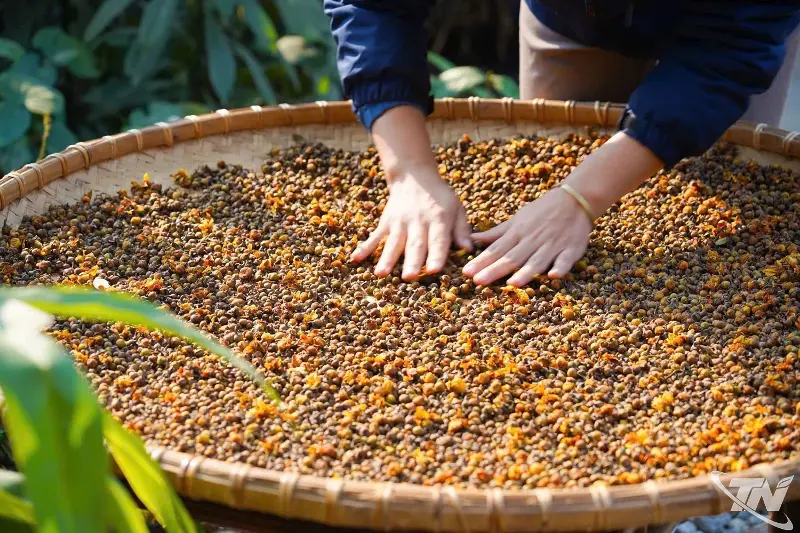 The fresh, plump tea flower buds are dried in a well-ventilated place with gentle sunlight.
Having precious ingredients is just the beginning. To transform fresh flower buds into a special beverage, tea makers must go through a meticulous processing procedure, quite different from the usual methods of making tea buds, hook-shaped tea, or pin-shaped tea. The most interesting aspect of this stage is that there is absolutely no kneading involved in making tea buds. Ms. Vi Thi Phuong explains in detail: "The flower buds are very delicate; kneading them will crush them immediately, and all the nectar will leak out, leaving no flavor or aroma. Instead of kneading, we have to be patient."
At the workshop, Ms. Phuong spreads fresh, plump flower buds on bamboo trays, drying them in a well-ventilated area with gentle sunlight. The buds are left to wilt naturally for 2 to 3 hours to lose moisture and soften the petals. When the fragrance begins to emerge, it's time to start the curing process. And that is truly the art of waiting.
The taste of nostalgia
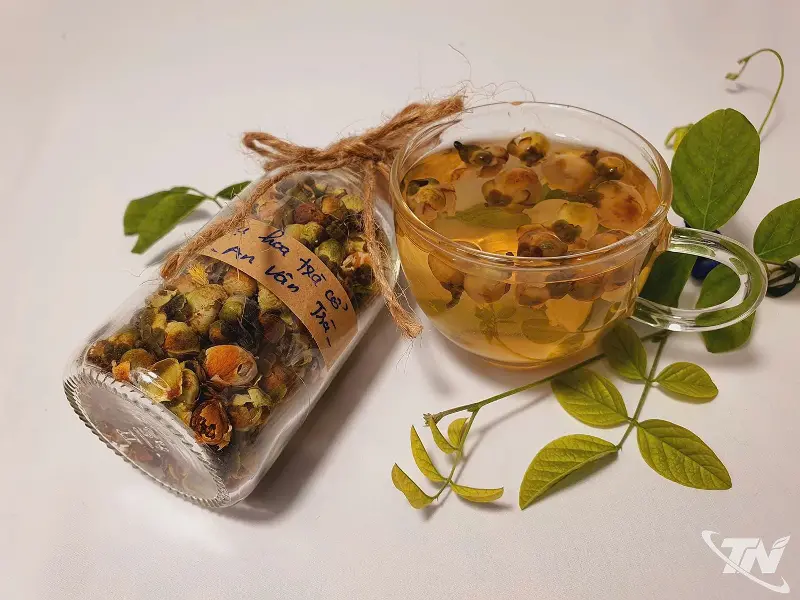 When brewed, the aroma bursts forth, the tea leaves turn a rich yellow color, and acquire a sweet, nectar-like flavor.
Holding a freshly brewed cup of tea buds in my hand, I finally understood why the ancients cherished this beverage so much. When tea buds come into contact with just the right amount of boiling water, they don't simply bloom; it's a delightful dance of fragrance.
As soon as the hot water is poured in, the aroma bursts forth, permeating every corner of the olfactory senses. It's the fresh scent of flower pistils blended with a hint of sweet, rich honey. The tea infusion turns a rich golden yellow. Taking a sip, the sweetness of the flower nectar immediately permeates the tip of the tongue, flows down the throat, and leaves a deep, lingering sweetness that lasts for hours afterward.
However, the pinnacle of tea appreciation doesn't stop there. Tea connoisseurs also have an elegant pastime: pairing carefully brewed tea buds with traditional loose-leaf tea in a teapot.
It's a perfect "marriage" between two extremes. On one side is Thai Nguyen green tea with its strong, astringent taste (yang), and on the other is the soft, sweet honey-infused tea bud (yin). When the two blend in 90-degree hot water, the flavors explode. The tea drinker finds the familiar astringency of traditional tea while being amazed by the honey aroma and the deep, lingering sweetness of the tea bud. As the cup is lifted, the aroma of young rice blends with the honeyed fragrance, creating a surprisingly well-rounded and balanced beverage.
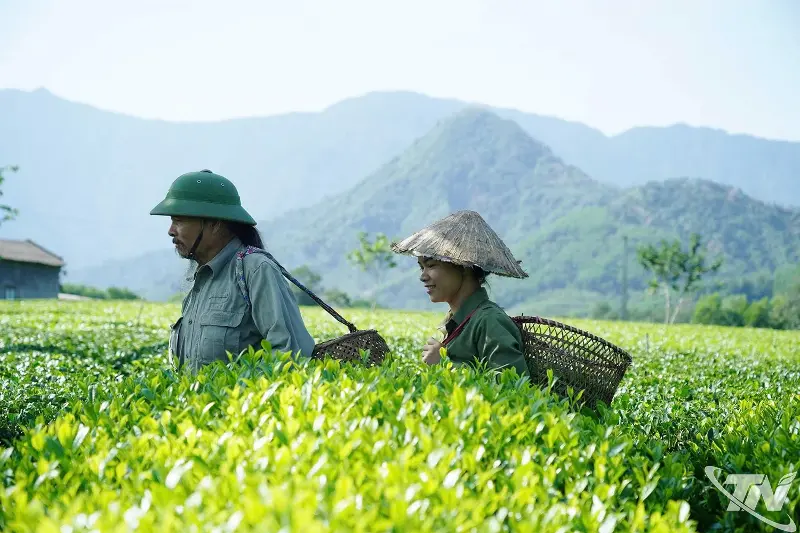 Generations in Thai Nguyen have successively dedicated their love and passion to cultivating tea in the midland region.
In particular, thanks to being carefully fermented in earthenware jars, the flower bud tea is very healthy. "Customers who drink flower bud tea don't have to worry about insomnia; on the contrary, they feel relaxed and sleep easily"; "Flower buds contain many nutrients that help cool the liver and beautify the skin. That's why women in the past valued this drink," added Ms. Vi Thi Phuong.
Sitting on the porch in the afternoon, gazing out at the tea plantation gradually disappearing into the mountain mist, I raised a steaming cup of tea in my hand. Ms. Phuong's story made me realize that "fermentation" is not just a processing technique. She is "fermenting" the flower buds in earthenware jars, silently nurturing her love for the local tea variety, and cultivating her hope of preserving a traditional tea culture.
Amidst this hectic pace of life, "honey-infused tea buds steeped in winter" offers a peaceful respite, reminding people to slow down a little, to fully appreciate the sweet flavors that nature has bestowed and that people have carefully nurtured and preserved for one another.