



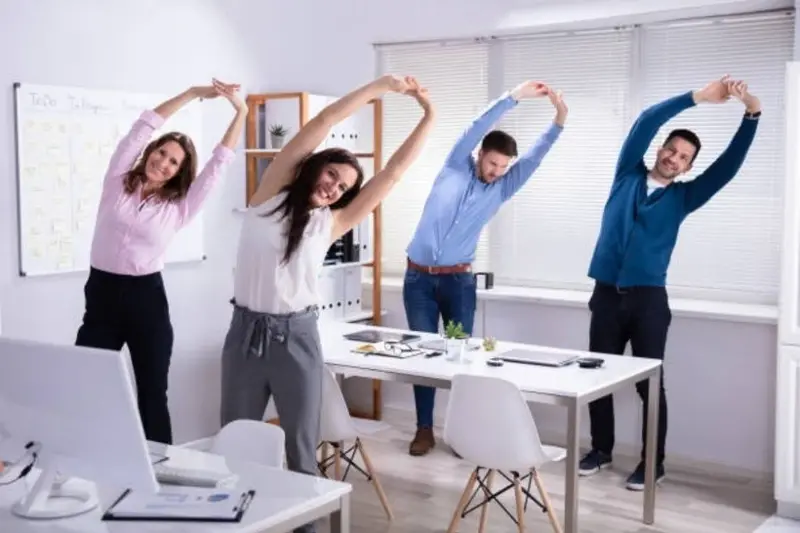
Many people often assume that to improve their health, they need to go to the gym, follow a strict training program, or spend a lot of time on high-intensity sports.
However, researchers at the University of Witwatersrand, South Africa, say that even small movements in daily life can have a noticeable benefit to physical and mental health.
Scientists emphasize that the biggest obstacle to fitness training is not only a lack of time but also the mindset that if one cannot train properly, then short, simple exercises will not be very meaningful.
This way of thinking causes many people to overlook very easy activities such as standing up and walking around after sitting for a long time, climbing stairs, taking short walks, or cycling on their daily commutes.
Research shows that short bursts of exercise, even those under 5 minutes, can have a positive impact if repeated regularly throughout the day.
Instead of focusing solely on formal workouts, experts suggest that the body also benefits from increased physical activity at work, during commuting, and in daily activities.
A study conducted with 62 office workers showed that using a desk that could switch from sitting to standing helped reduce continuous sitting time, while also improving several indicators such as blood pressure and body mass index.
These results show that even in the office environment, where people often sit for hours in front of screens, small habit changes can still have a positive impact.
In addition, researchers have noted that walking or cycling to work or school is associated with lower body fat percentage, better blood pressure, and a more positive mental state.
Another study conducted in 2024 with 43 manual laborers also showed that measures encouraging physical activity can help reduce waist circumference, blood sugar, blood pressure, and improve physical fitness.
The message emphasized is that health care doesn't necessarily have to start with big goals or expensive exercise regimens. In a context where many people are busy, have little time, and sit for long periods each day, maintaining small but regular movements can be a more practical, easily applicable, and suitable solution for improving long-term health.