



One of the key factors contributing to this success is the proactive, substantive, and effective implementation of economic diplomacy .
Along with efforts to restructure production and improve product quality, economic diplomacy also plays a crucial role in expanding markets, removing barriers, and promoting the deep integration of Vietnamese agricultural products into global supply chains.
Deputy Minister of Foreign Affairs Le Thi Thu Hang stated that the Ministry of Foreign Affairs considers economic diplomacy a top priority. Based on this, the Ministry has closely coordinated with the Ministry of Agriculture and Environment , localities, and the business community to promote the deep integration of Vietnamese agriculture into global supply chains and to expand and diversify export markets.
A notable highlight in the recent period has been the implementation of the Project to Strengthen Cooperation in Building and Developing the Halal Industry until 2030. By 2025, the project had already achieved many positive results, with the opening of many new markets, especially in the Middle East and Africa, creating room for sustainable growth for Vietnamese agriculture in the future.
Beyond the field of trade, the coordination between the Ministry of Foreign Affairs and the Ministry of Agriculture and Environment is also evident in the implementation of international commitments on climate, environment, and biodiversity. According to Deputy Minister of Foreign Affairs Le Thi Thu Hang, fulfilling these commitments not only affirms Vietnam's responsibility and prestige but also opens up opportunities to access new technologies and mobilize international resources to serve the development of green and sustainable agriculture.
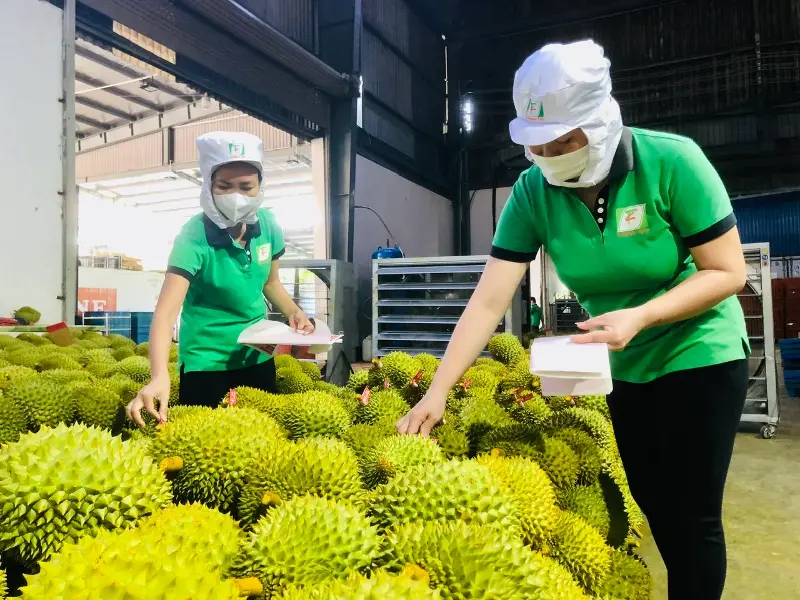
In fact, the year 2025 showed that the above directions had yielded positive results. Of the total export value of agricultural, forestry, and aquatic products reaching approximately US$70.09 billion, many product groups achieved high growth rates, such as fruits and vegetables, which reached US$8.6 billion, an increase of nearly 20% compared to the previous year. This result reflects the strong growth momentum of the fruit and vegetable sector – a sector that clearly benefits from market expansion and diversification of partners.
From an industry perspective, the Chairman of the Vietnam Fruit and Vegetable Association, Nguyen Thanh Binh, stated that the Association is also promoting activities to connect and link member businesses with localities and raw material areas, contributing to strengthening the connection between export businesses, production businesses, farmers, and cooperatives. In addition, trade promotion activities and participation in international fairs and exhibitions are being implemented effectively, helping businesses expand their markets and reach new customers.
Besides trade promotion, the association focuses on guiding businesses and producers to comply with legal regulations and import market standards, contributing to enhancing the reputation of Vietnamese fruits and vegetables and reducing violations in exports. Based on this foundation, the association predicts that fruit and vegetable exports could reach $10 billion in 2026 if quality continues to be improved, the traceability system is perfected, and product promotion is intensified.
According to Mr. Tran Cong Thang, Director of the Institute of Agricultural and Environmental Policy and Strategy, although the United States will apply some retaliatory tariffs on Vietnamese goods, including agricultural, forestry, and aquatic products, in 2025, exports to this market will still maintain growth. This result shows that Vietnamese businesses have proactively adapted through product restructuring, adjusting market strategies, and taking advantage of trade preferences.
Along with major markets such as the United States, China, and the EU, Vietnamese agricultural products are now exported to nearly 200 countries and territories; many of these markets have high standards, such as Japan, South Korea, Australia, New Zealand, Singapore, and the Middle East. However, the fact that some products still heavily depend on a few key markets necessitates further diversification of markets and supply chains. Diversifying markets and expanding cooperation with new regions such as Africa, South Asia, or Latin America can reduce the risk of dependence and enhance the flexibility of the supply chain.
Sharing his views on the Ministry's operational direction, Minister of Agriculture and Environment Tran Duc Thang stated that the Ministry is focusing on removing barriers related to markets, technical standards, and traceability; while simultaneously promoting the expansion of export markets, diversifying partners, and reducing dependence on a few traditional markets. Exports should not only increase in quantity but also in quality, brand, and value.
The trips of the Minister and Deputy Ministers to Japan, South Korea, France, China, Europe, Africa... and many other important partners not only have diplomatic significance but also aim at the specific goal of expanding cooperation, attracting resources, technology, and advanced management experience. Each trip is required to be transformed into programs, projects, and tangible results serving the development of the industry.
Notably, in 2025, Vietnam signed five protocols with China to export chili peppers, passion fruit, rice bran, raw bird's nests, and fresh jackfruit. According to Minister Tran Duc Thang, these protocols not only expand the list of officially exported agricultural products but also contribute to enhancing the stability and transparency of export activities, strengthening confidence among farmers and businesses in production according to standards and value chain linkages.
The draft document for the 14th Party Congress places foreign affairs as a crucial and ongoing task; in particular, foreign affairs in the fields of agriculture and environment are among the key contents of economic diplomacy, environmental diplomacy, and development diplomacy, directly linked to the national strategic priorities.