



The prestigious American travel magazine National Geographic has just honored 12 unique culinary experiences around the globe, where local traditional values are preserved and transformed by experts into unforgettable flavors, creating the soul of each destination. The Vietnamese coffee brewing ritual is included in this list.
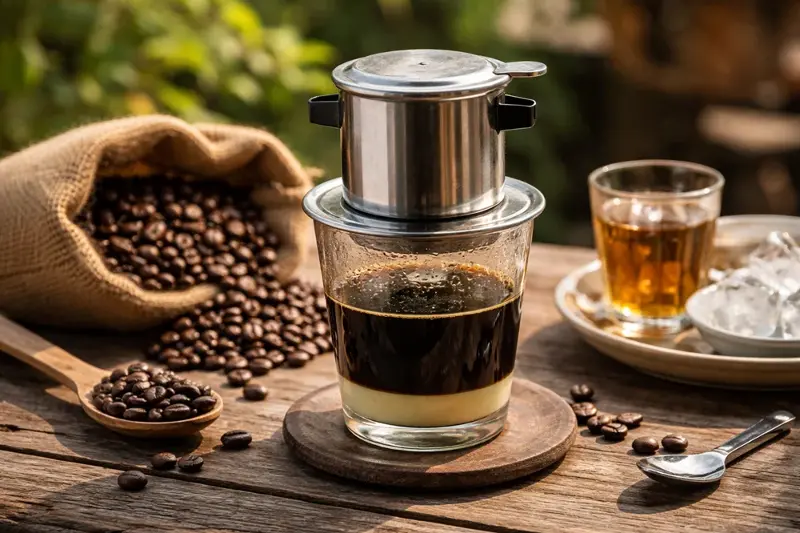
Illustrative image
According to National Geographic, food often serves as a compass for travel. Spicy, bubbling, or sweet dishes can entice travelers to cross borders. A delicious meal not only leaves a lasting impression on the palate but also tells a story about the history, rituals, and identity of the land.
When exploring culinary traditions, travelers not only enjoy the food but also discover the depth of local culture. “The following 12 culinary experiences invite travelers to step behind the scenes, meet the people who make them, and taste the flavors of a destination in the most intimate way possible,” National Geographic emphasizes.
Vietnamese coffee thus appears on the list as a quintessential slice of local culture. From small cafes nestled in Hanoi's Old Quarter to the vibrant life of Ho Chi Minh City, a cup of coffee not only helps people stay awake but also creates a space for meeting, chatting, and experiencing the rhythm of life.
Coffee beans were introduced to Vietnam by the French in the 19th century, then took root and developed into a distinct identity, stretching from Hanoi to the Mekong Delta.
Each region has its own unique way of enjoying coffee, influenced by climate, creativity, and historical circumstances. For example, egg coffee originated during a period of milk scarcity when a barista in Hanoi whisked egg yolks with hot coffee, creating a distinctive creamy, rich layer.
At The Yellow Bicycle riverside café in the Moire Hoi An Hotel, guests can learn about this story through daily experiences with local baristas and servers. They explain why Vietnam favors robusta beans with their bold flavor and high caffeine content, as well as the drip brewing method that enhances the depth of flavor. Guests can sample traditional black coffee and a version with condensed milk.
Those who want to explore further can participate in a one-hour barista class, where they can whisk eggs themselves, carefully time each drop of coffee, and perfect variations such as salted coffee or egg coffee.
Beyond Vietnamese coffee, National Geographic also takes readers to Hatton, Sri Lanka, where the heritage of Ceylon tea is recreated amidst the misty highlands. Introduced by the British in 1867, tea has now made Sri Lanka the world's fourth-largest producer, renowned for its citrus-flavored black tea. At Ceylon Tea Trails, five wooden cottages on the 550-acre Dunkeld Tea Plantation offer a memorable experience, from touring the century-old mill to enjoying tea in the green hills.
Le Marche (Italy) is known for its long-standing tradition of pork preparation. At La Tavola Marche, four-night courses on whole pig slaughtering provide participants with a deep understanding of the butchering techniques and the spirit of local cuisine.
Japan contributes with the art of bento, a symbol of meticulousness in daily meals. At Palace Tokyo, a three-and-a-half-hour class led by Marc Matsumoto allows visitors to prepare their own bento boxes, enjoy a meal with their creations, and take home a wooden bento box along with his cookbook.
In addition to the destinations listed above, National Geographic's list also includes Mendoza, Argentina; St. George, Grenada; Istanbul, Türkiye; Lake Atitlán, Guatemala; Hong Kong, China; Kigali, Rwanda; and Bohuslan, Sweden.
Each place is a slice of culture, where cuisine becomes a bridge between tourists and the local community, making each journey of discovery an opportunity to experience the depth of local cultural life.