



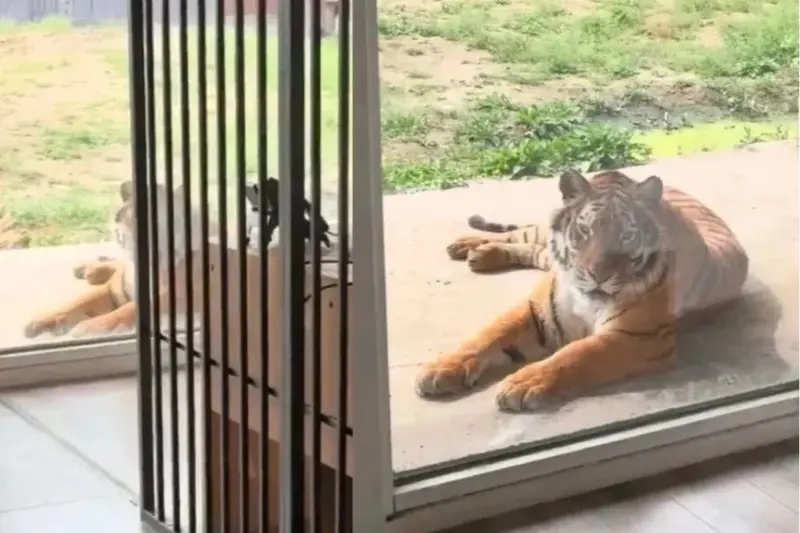
The zoo has launched accommodations that allow visitors to observe tigers up close through a window. Photo: Beijing News .
Hesheng Forest Zoo in Qinyang City, Henan Province, China, has opened 30 viewing rooms allowing visitors to observe tigers up close, according to Beijing News . It is home to tiger species such as Siberian tigers, golden Bengal tigers, and white tigers.
Online booking platforms indicate that these are standard rooms with two beds, measuring 25-35 square meters, priced at approximately 168 yuan ( US$24.65 ), including two entrance tickets. Each room allows visitors to observe 2-3 tigers through transparent glass.
This type of accommodation quickly attracted attention on social media. Some people were curious and expressed a desire to experience it, while many questioned the quality of service at such a low price.
In addition, many people are concerned about safety. The zoo stated that the observation area and the enclosures are separated by three layers of specialized glass, ensuring absolute safety for visitors.
According to the local cultural, broadcasting, and tourism authority, the "tiger view" accommodations meet safety standards and have been inspected. The report also states that the zoo is a privately owned facility, established in 2021, operating primarily in the entertainment sector.
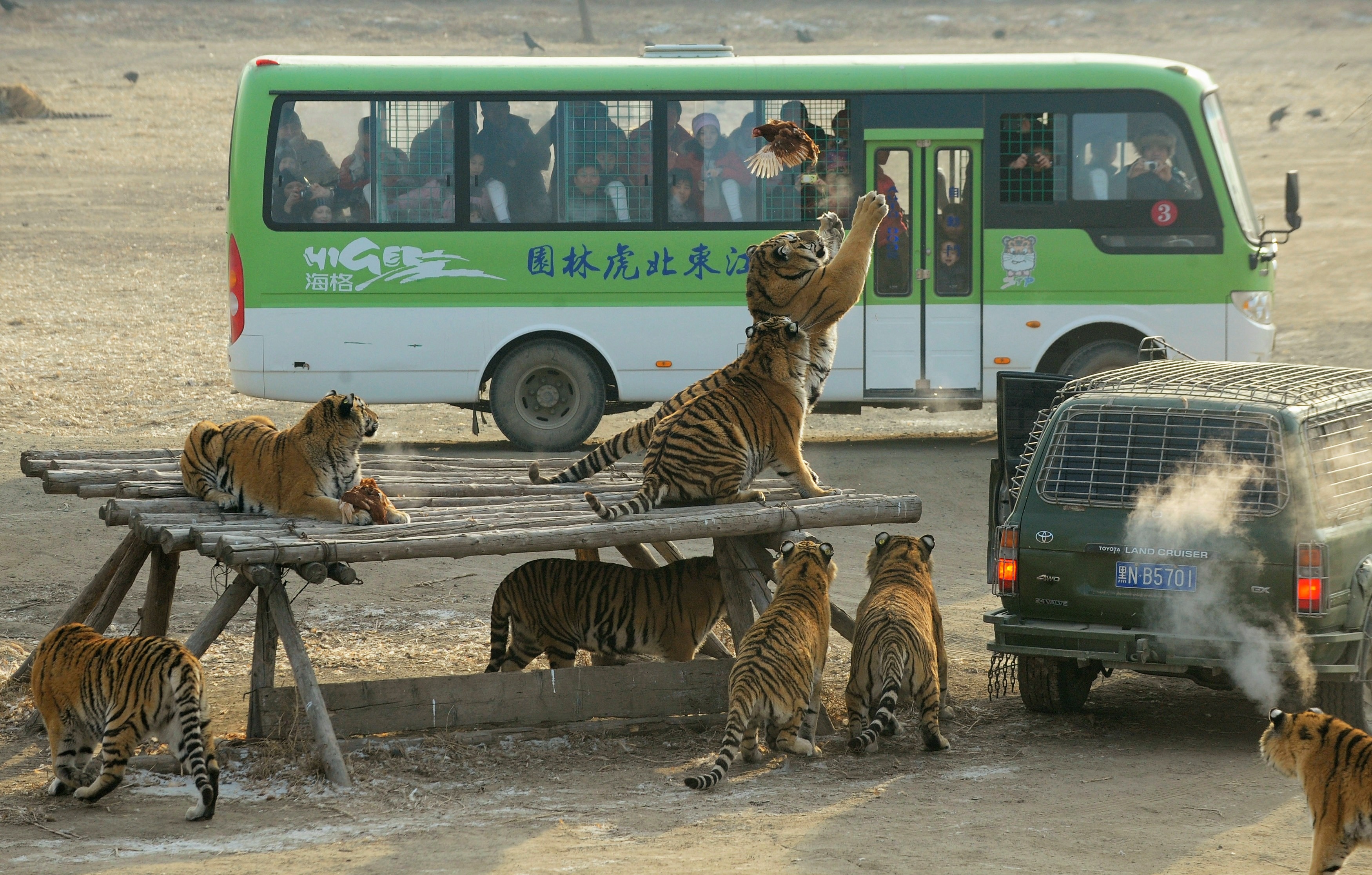
Tourists witness tigers hunting firsthand at the Siberian Tiger Park in Heilongjiang province, China. Photo: Reuters.
Besides safety concerns, some people worry that operating this model could affect the lives of individual tigers.
Zhang Minghai, Director of the Felidae Research Center under the National Forestry and Grassland Administration of China and professor at Northeast Forestry University, believes the extent of the impact depends on two main factors: whether the animals' living space is restricted and whether the barrier material is harmful.
"If these two factors are ensured and the related items meet the standards, the 'tiger-watching room' model will essentially not cause any further negative impacts," he said.
According to experts, wildlife conservation and exploitation must go hand in hand, with conservation being the prerequisite. Revenue from such models, if used to improve animal welfare, can create a positive cycle.