



The World Heritage site of Ha Long Bay has long been known for its exceptional geological and geomorphological landscapes, biodiversity, and cultural and historical value.
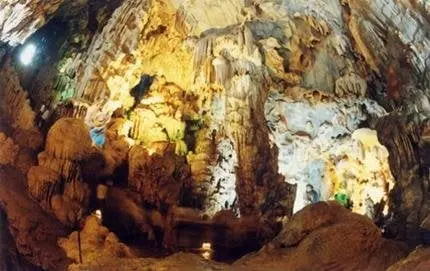
However, alongside its globally recognized and widely publicized values, Ha Long Bay still holds secrets waiting to be unraveled by scientists and time.
According to old French documents, from the late 19th to early 20th centuries, many French naval vessels encountered giant sea snakes in Ha Long Bay. Captain Lagresille, commander of the gunboat Avalanche, in his report from July 1897, recounted that sailors saw two strange creatures in Ha Long Bay.
Their bodies were about 20 meters long, their necks covered in fine hair, and their body diameter was about 2 meters. They moved by wriggling like snakes. They loaded their guns and fired, but the distance was too great, so they missed, only causing them to dive deep into the sea.
On February 24, 1898, the crew again spotted the two creatures in front of the ship. They pursued them for 35 minutes. When they were only about 200 meters away, Captain Lagresille clearly saw the head of the creature, which closely resembled that of a seal but was almost twice as large. Another French naval captain, Peron, commander of the Chateurenault, on the morning of February 12, 1904, while patrolling the area of Con Coc Island, was reported to have a rocky outcrop ahead. Peron saw it and was certain it was a large fish, so he steered the ship closer. But when they got close, the creature disappeared.
Peron launched a speedboat in pursuit, hoping to catch a glimpse of the creature, but as he neared Cat Ba, he saw two creatures resembling giant eels, with rocky-colored skin and pale yellow spots. They only appeared in the sight of those in the speedboat for a moment before diving deep into the sea.
Not only the French, but also some fishermen in Ha Long Bay recounted seeing giant creatures like the one described above, decades ago, in the 1960s and 1980s. One of them is Mr. Nguyen Dinh Huy ( Hai Phong ). Mr. Huy said that he encountered this sea serpent in 1980. That time, he and some members of the fishing cooperative went out to sea around 9 a.m. and came across the giant creature; its back alone was about 5 meters long...
Stories like these remind many people of a similar tale about a black, massive creature with a snake-like neck in Loch Ness (Scotland), which has been sighted by chance on numerous occasions, yet for centuries no scientist has been able to explain what kind of creature it is. The story of these giant snakes has been passed down and will perhaps forever remain a mystery of Ha Long Bay.
Issue 289 of the Vietnam Historical Science Association's magazine "Past and Present " (2007) published an article by Ho Dac Duy, in which he put forward hypotheses about a Mongol treasure at the bottom of Ha Long Bay. The author argues that the supply fleet of Truong Van Ho, which was routed by the Tran Dynasty's army and people in Ha Long Bay in 1288, must have contained not only food but also other items such as pottery, porcelain, or even more. Because no archaeological surveys or excavations have been conducted at the bottom of the sea, this remains a mystery within Ha Long Bay.
In 2004, some divers in Cai Rong (Van Don) reported discovering the wreck of a wooden ship in Bai Tu Long Bay while diving for seafood. The wreck contained pottery and porcelain items such as bowls, plates, and basins. According to Dr. Pham Quoc Quan, Director of the Vietnam National Museum of History, these artifacts originated from China and dated back to the late 19th century. Because they were more concerned with making a living than searching for antiques, the divers did not return to the area of the shipwreck with its dangerous whirlpools.
Another secret of Ha Long Bay, always full of surprises, is its archaeological sites . According to archaeologists, since 1937, when Swedish archaeologist Anderson discovered the Ha Long Culture (then called the Danhdola Culture - the name of Ngoc Vung Island during the French colonial period), nearly 40 similar archaeological sites have been discovered on Ngoc Vung Island.
Dozens of onshore surveys, outside the islands of Ha Long Bay, seemed to have yielded nothing, but in 2007, archaeologists discovered the Ha Long Culture site not far away, right at Hon Hai mountain, on the heritage site's shore, in Bach Dang ward, Ha Long city. The results of the subsequent excavation revealed secrets about the unique burial method (sitting burial) of the prehistoric people of the Ha Long Culture – a question that archaeologists had been searching for answers to for decades.
In early 2007, archaeologists discovered another site belonging to the Ha Long Culture on Dong Trong Island, right next to Cai Rong port (Van Don). The results of the excavation at this site promise to shed more light on the values of a culture that is a World Heritage site, existing thousands of years ago.
With all its well-known values, Ha Long Bay has become a popular destination, attracting numerous domestic and international tourists. Beneath the azure waters, the secrets of this heritage site remain a surprise, stimulating the curiosity of visitors.