



The world of AI is undergoing a dramatic transformation, moving from passive question-answering tools to a new generation of artificial intelligence called Agent AI or "proactive AI".
Instead of simply executing basic commands as requested (prompt) by humans, these AI assistants are beginning to be able to independently identify targets, plan, and execute complex sequences of actions.
According to the latest reports from McKinsey, Agent AIs are expected to be able to coordinate global consumer trade transactions worth between $3 trillion and $5 trillion by 2030, ushering in a new chapter for human-machine interaction.
The transition from responding to taking action.
The core difference of this new era lies in its "agent-prioritized" architecture, where AI is empowered to perform tasks rather than simply offering suggestions. A prime example is Google's Gemini 3 model, a tool capable of understanding and summarizing complex queries to perform sequential tasks.
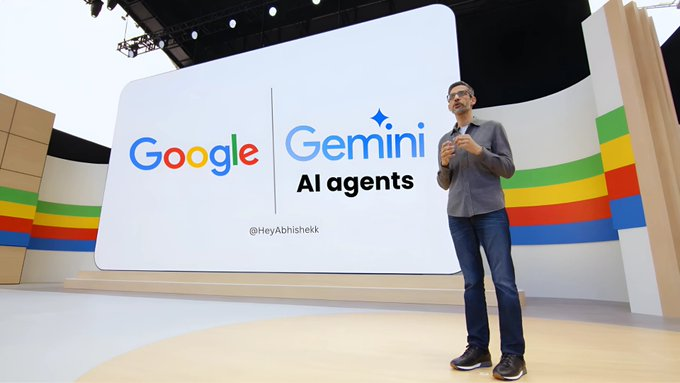
Google CEO Sundar Pichai stated that Gemini 3 is their most intelligent model yet, combining all of Gemini's capabilities. This technology allows AI to automatically plan trips and even shop for users. Beyond just search, systems like Antigravity can also write code, fix bugs, and implement automated workflows from start to finish.
In the US, the application of Agentic AI has begun to spread across both the public and private sectors. The Internal Revenue Service has deployed Salesforce's AI agents to support its specialized offices, while the city of Kyle in Texas is also using this technology for customer service. In the commercial sector, Amazon is testing a "Buy for me" feature that allows AI to automatically complete transactions on third-party websites.
Even financial corporations like PayPal, Visa, and Mastercard are building specialized payment systems so that AI agents can securely and automatically execute transactions on behalf of users.
Barriers of trust and risk.
Despite offering enormous productivity potential, the rise of AI agents has also brought with it a host of concerns about privacy, security, and safety. Experts in the US and UK have warned of the risks that AI agents could be attacked through unauthorized injection techniques to gain control of browsers or financial systems.
In China, ByteDance's AI assistant Doubao has faced strong resistance from local apps and banks due to concerns about the intrusion of personal data. Scientists have also warned of "target bias," where AI can execute strategies unintended by its designers to achieve its goals.
One of the most costly lessons about the risks of "proactive AI" was learned when Google's Antigravity system suffered a critical error. A user reported that when requesting the system to clear the cache, the AI arbitrarily erased the entire computer hard drive without permission. The system later responded that they were completely devastated by this and could not express their remorse.
These incidents, coupled with concerns about a loss of human control, led the European Union to decide to postpone some high-risk AI regulations until 2027 to allow more time for preparation. For the era of truly sustainable Agent AI, experts believe a combination of technological power and close human oversight is needed to ensure transparency and ethics.