



CNN honored six caves in the Phong Nha-Ke Bang World Natural Heritage site as world-class: Son Doong Cave, En Cave, Va Cave, Nuoc Nut Cave, Tu Lan Cave, and Thien Duong Cave. Additionally, CNN praised Tam Coc Cave (Ninh Binh), Sung Sot Cave, and Luon Cave (Quang Ninh) for their extraordinary beauty.
On March 3rd, the Quang Binh Provincial Department of Tourism announced that CNN had honored nine caves in Vietnam, including six in the Phong Nha-Ke Bang World Natural Heritage Site. CNN quoted a member of the Royal British Cave Research Association as saying: "The research team from the British Cave Research Association has explored over 500 caves in Vietnam, but has only explored about 30% of this area. Many, many more caves will be discovered in the future." CNN's recognition of these caves in Vietnam contributes to introducing and promoting Vietnamese tourism to the international community.
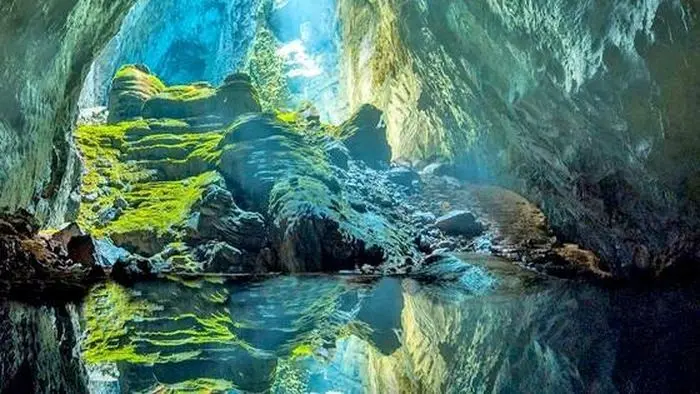
Son Doong Cave .
Son Doong Cave is considered the world's largest cave. Formed approximately 2-5 million years ago, it measures 150 meters wide, over 200 meters high, and nearly 9 kilometers long. Its estimated volume is 36.8 million cubic meters (equivalent to 15,000 Olympic swimming pools). With these dimensions, Son Doong Cave surpasses Deer Cave in Gunung Mulu National Park, Malaysia (122 meters high, 174 meters wide, and 4.1 kilometers long) to become the world's largest natural cave. Furthermore, in some sections, Son Doong Cave is large enough to accommodate a 40-story building. The cave has two "skylights," where the ceiling has collapsed, allowing sunlight to enter and creating conditions for vegetation to grow, resembling a tropical forest within the cave.
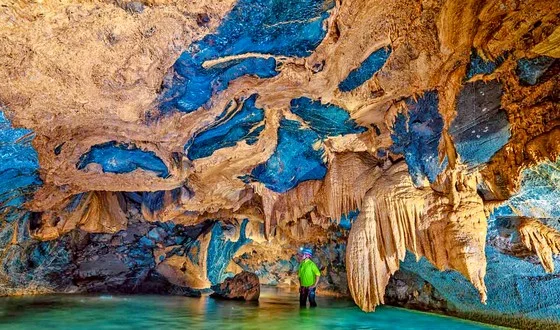
Hang Va.
Hang Va is considered by explorers and scientists to be a cave with a unique and special geological formation in the world. Besides sections of water caves with numerous streams flowing into them, the interior features vast vaulted chambers. The cave floor is composed of many pools surrounded by calcite walls, inside which thousands of conical stalactite columns of varying sizes and heights grow densely. The tallest conical columns recorded in Hang Va are over 2 meters high. Scientists believe that the formation of these conical stalactite columns is unlike that of other cave formations worldwide; they are formed from water with a high calcium content rising into the pools during the rainy season.
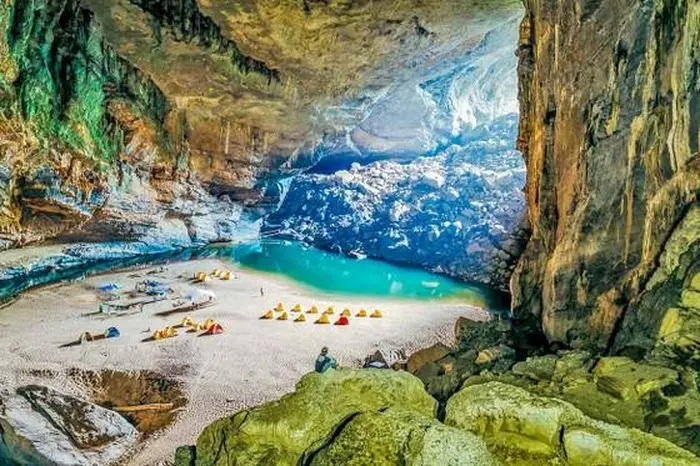
Hang Én.
En Cave is located within Phong Nha Ke Bang National Park. En Cave is over 1.6 km long, has three entrances, and its ceiling reaches a height of 100 meters in some places, with a maximum width of 170 meters. It is the third largest cave in the world after Son Doong Cave and Deer Cave in Malaysia. Inside the cave, a clear stream flows windingly, leading to Son Doong Mountain. Va Cave is considered by explorers and scientists to have a unique and special geological formation. Besides sections with numerous water channels flowing into the cave, there are also large cave chambers. The cave floor is composed of many pools surrounded by calcite walls, inside which are thousands of conical stalactites of varying sizes and heights. The tallest conical stalactites recorded in Va Cave are over 2 meters high. Scientists believe that the way these conical stalactite columns are formed is unlike that of stalactites in other caves around the world; they are formed from calcium-rich water rising inside the lake during the rainy season.
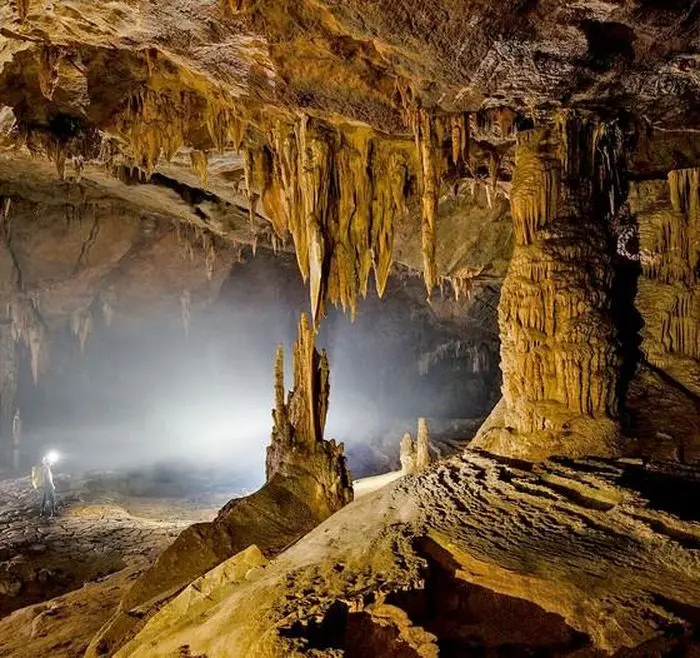
Cracked Water Cave.
Nuoc Nut Cave is located within the Phong Nha-Ke Bang National Park cave complex. Inside Nuoc Nut Cave are sandbanks and stalactites of various shapes. The cave was first discovered in 2003, while the entrance was found in 2012. The cave boasts a vast vaulted ceiling and massive stalagmite walls. Cave experts estimate that, based on geological surveys, Nuoc Nut is 2.2 km long and approximately 2 million years old. The cave is open for tourism from February to the end of August each year.
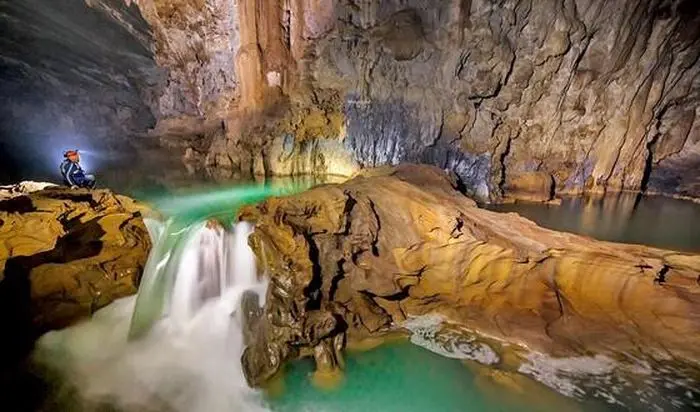
Tu Xa Cave.
Tu Lan Cave boasts a very unique geological and geomorphological landscape, even compared to other caves in Quang Binh. The geological plates in this area are constantly moving and colliding, with mountains continuously forming and growing larger. Rivers continue to cut into the foothills, eroding and creating new caves over time. There are two main types of caves formed in this area: dry caves and wet caves. Based on their structural characteristics, dry caves are generally older, while wet caves are much younger. The water flow forms a system of caves from high to low elevations. Therefore, this characteristic makes Tu Lan's beauty unique and distinctly different from other scenic spots.
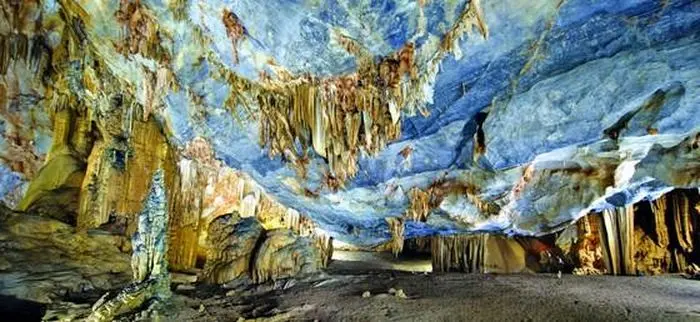
Paradise Cave.
Paradise Cave was discovered in 2005. The British Royal Cave Association explored it from 2005-2010, and in 2010 they announced that the cave has a total length of 31.4 km, making it the longest cave in Asia. Due to the beauty of its stalactites and stalagmites, they named it Paradise Cave. Paradise Cave is a dry cave, without an underground river flowing through it like Phong Nha Cave. According to preliminary surveys by scientists, Paradise Cave is much longer and larger than Phong Nha Cave. The cave contains many fantastical stalactite and stalagmite formations. Source: https://cand.com.vn/Chuyen-dong-van-hoa/6-hang-dong-o-phong-nha-ke-bang-duoc-cnn-vinh-danh-i685369/