



Novak Djokovic's public expression of his desire to participate in the 2028 Los Angeles Olympics, even while acknowledging it as a "very distant" goal, is not simply a personal statement. This declaration shows that the "weight" of legends has not diminished, both on the court and within the values of the sport.
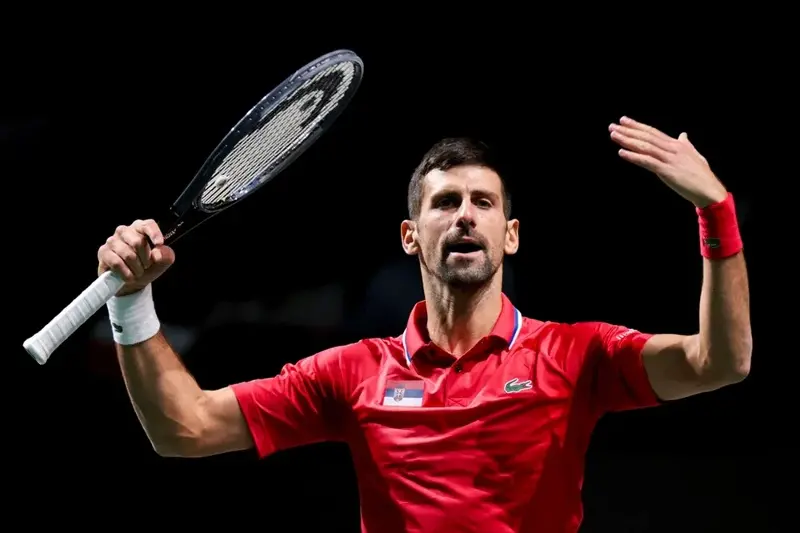
Approaching 39, Djokovic no longer places as much emphasis on the number of titles as he did during his peak, but his motivation to compete remains at a rare level.
According to ATP statistics, Djokovic is currently the most successful tennis player in history with 24 Grand Slam titles, along with numerous records for the number of weeks held as world number one. In particular, the 2024 Paris Olympic Gold Medal – the last major title missing from his career – completed the profile of a player considered one of the greatest of all time.
Therefore, Djokovic's continued mention of the 2028 Olympics is not simply a matter of age or physical condition, but rather an expression of a long-term competitive mindset, where the symbolic value of the Olympics is placed on par with professional milestones.
According to the International Olympic Committee and the ATP, athletes like Djokovic not only represent achievement but also bridge the gap between generations, helping to maintain the global appeal of tennis at the Olympic arena.

Meanwhile, on the other hand, the rise of Carlos Alcaraz is creating a new wave of debate about the concept of "succession." Alcaraz is considered the most prominent figure of the younger generation, possessing a modern, fast-paced playing style and having already won many major titles.
However, counterarguments from former players and international experts, notably Greg Rusedski, suggest that the line between "big star" and "legend" remains very wide.
According to a view shared by many ATP commentators, the core difference lies not in the number of titles won in the first few years of a career, but in the ability to maintain peak performance for one or two decades. The "Big 3" – Djokovic, Nadal, and Federer – dominate not only through talent, but also through resilience, the ability to adapt to successive generations of opponents, and a rare consistency at Grand Slam tournaments.
The debate surrounding Alcaraz thus reflects a reality: men's tennis is at a crossroads, where the new generation must be compared to the almost perfect standards set by the legends. And in that context, Djokovic's presence – even if only in terms of aspiration – at the 2028 Olympics further highlights the gap between "rising quickly" and "lasting success."
From a commentary perspective, it's clear that world tennis hasn't truly entered the "post-Big 3 era." As long as names like Djokovic remain prominent in the major goals of elite sports , this transition will proceed slowly and cautiously. And ultimately, this is what creates the depth, appeal, and unique continuity of contemporary men's tennis.