New research reveals the complex history of the Earth's rotation.
Vietnam.vn EN
31/12/2025 05:49:00
Analysis of data over 2.5 billion years shows that day length varies irregularly, sometimes remaining stable for 1 billion years before gradually increasing.
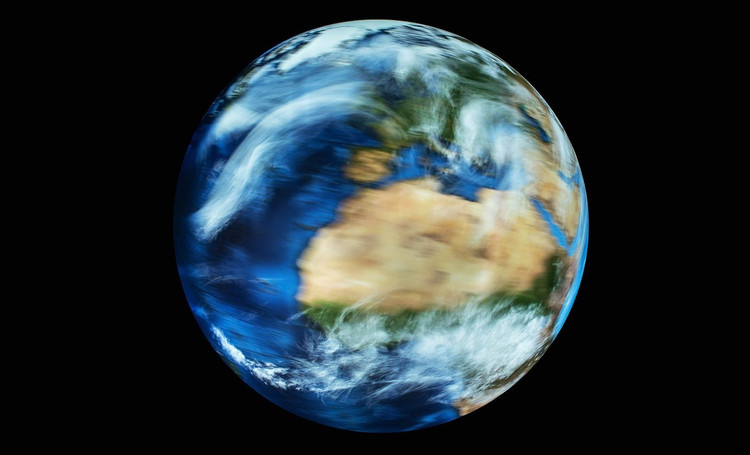
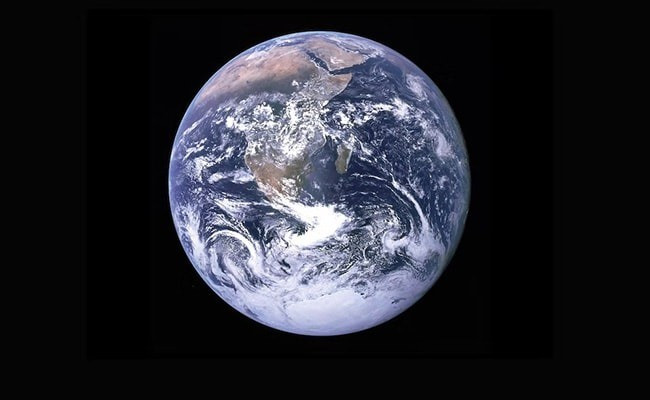
Research by experts indicates that, normally, the Earth's rotation speed slows down over time due to tides originating from the Moon, which dissipate rotational energy, causing the length of the day to gradually increase. Photo: Earth.
Experts at the US National Aeronautics and Space Administration (NASA) estimate that the rotational energy loss from tides causes each day to lengthen by about 2/1,000 of a second every century. Photo: photovideostock via Getty.
The Earth's rotation is constantly affected by various forces, the most important of which is the tides from the sea. This force creates tidal friction and gradually deprives the planet of its rotational energy. Image: digitalmazdoor digitalmazdoor.
This discovery was announced by a research team led by geophysicist Ross Mitchell at the Institute of Geology and Geophysics of the Chinese
Academy of Sciences (CAS). Photo: Shutterstock.
To verify whether day length actually changes, geophysicist Mitchell and his colleagues compiled global data from dozens of past day length estimates, based on evidence from sedimentary rock layers formed over the past 2.5 billion years. Photo: ndtv.com.
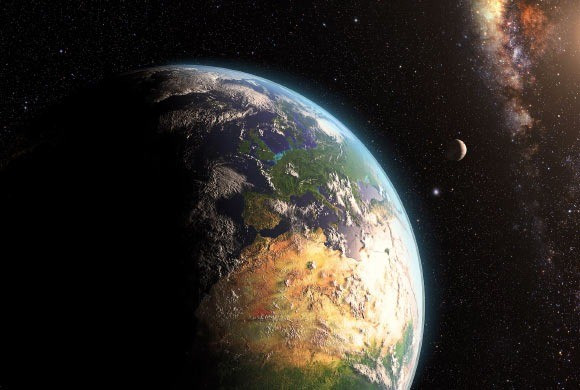
Research by experts reveals that the Earth's rotation history is far more complex than previously thought. Instead of the length of the day gradually slowing down, data shows periods where the length of a day remained almost unchanged. (Image: mikiell/Getty Images)
Geophysicist Mitchell says the length of the day appears to have remained consistently at around 19 hours per day for a billion years without change. This period began between 2 and 1 billion years ago. Photo: NASA.
After this period, the length of each day began to increase, gradually approaching the current 24 hours. Photo: Krishna Vihari/Shutterstock.
The article continues below the video.
Recommended video
Readers are invited to watch
the video : A map of the universe with over 900,000 stars, galaxies, and black holes. Source: THĐT1.
This article is provided by Vietnam.vn EN, authorized for use, and represents solely the author’s personal opinions. Please contact us in the event of any potential infringement.