


In feng shui, if the main door is considered the "energy intake" and the living room the "bright hall" where auspicious energy gathers, then the staircase is the "backbone," the main artery connecting the floors of the house.
A staircase designed according to feng shui principles will help the flow of energy to circulate smoothly, distributing energy evenly to each space. Conversely, a staircase that violates feng shui principles can become a "pathway" for the loss of auspicious energy, hindering the accumulation of wealth and causing unrest in the family.
Below are the core principles homeowners need to understand when designing and arranging staircases.
Staircase placement
Location is a crucial factor determining the good or bad feng shui of a staircase. The first principle is that the staircase should not be placed in the center of the house, which is the "central palace" area.
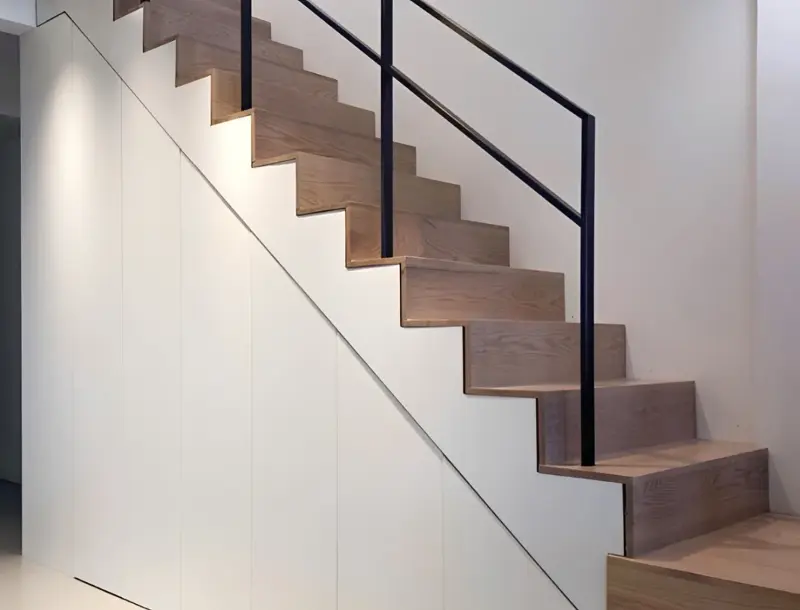
In feng shui, the central area belongs to the Earth element, and it is the place that needs the most stability and tranquility to serve as a foundation for the entire house.
Placing the staircase here is considered to disrupt the stability of the central area of the house, causing constant disturbance of energy, making family members prone to anxiety and experiencing erratic business dealings.
In addition, the staircase should not be placed directly opposite the main door. This is a serious feng shui mistake that many modern townhouses and terraced houses make.
When the main door and the staircase are aligned, the entire flow of air entering the house will be drawn straight up to the upper floor without having time to spread and enrich the living space on the ground floor.
As a result, the first floor—where the living room and kitchen are usually located—becomes lacking in vitality, making it difficult for wealth to accumulate. A common solution is to place a screen, low cabinet, or potted plant in front of the stairs to block some of the airflow, forcing it to meander around the room before ascending.
Shape and texture
Not all types of staircases bring good fortune. Spiral staircases are a prime example. Although aesthetically pleasing and space-saving, this design is considered one of the major taboos in feng shui.
The spiraling motion, resembling a drill bit, creates a strong, unstable swirling airflow, causing a feeling of unease and potentially affecting relaxation and rest quality.
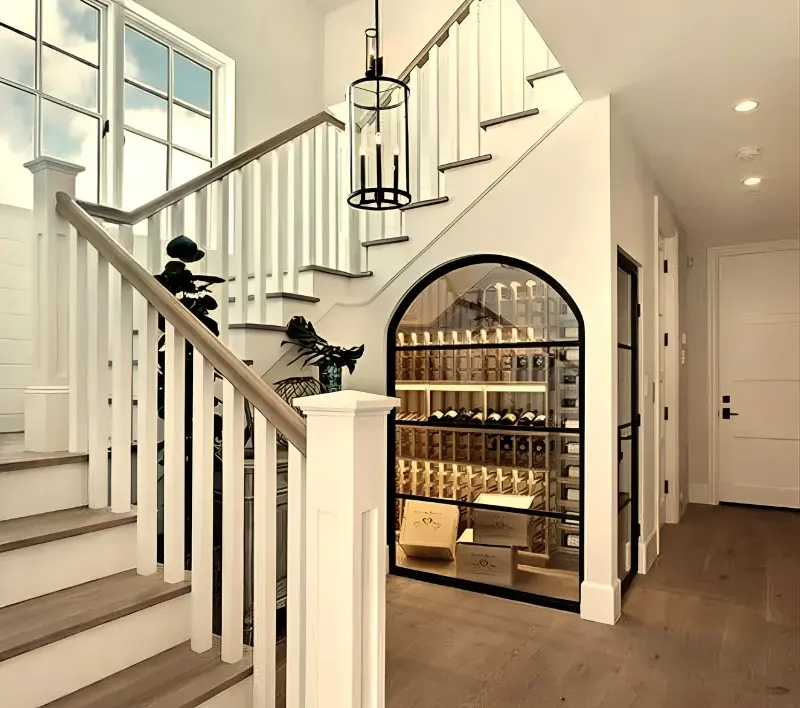
The ideal staircase design features gentle, flowing curves or spacious landings to allow airflow time to "rest," preventing a rapid descent.
Staircases also need a solid support, meaning they should be against a wall instead of being placed isolated in the middle of the house. Regarding the steps, a moderate slope combined with landings will help air circulate smoothly and rhythmically, like blood vessels in the body, nourishing every corner of the house evenly.
Light and ventilation
Staircases are often a neglected area in terms of lighting in many homes, especially narrow townhouses with limited space.
A dark, damp staircase can become a "blockage" for airflow, generating negative energy and negatively impacting the entire living space.
The solution is simple: if the staircase doesn't have windows to let in natural light, the homeowner needs to install a lighting system that provides sufficient illumination, preferably warm yellow light to create balance.
A small lamp placed along the staircase not only helps guide the way safely but also continuously adds positive energy, dispelling dark and gloomy corners.
In particular, the staircase should not be a cluttered and messy place to pile up belongings. Tidiness here is just as important as the living room or the prayer room itself.
Under the stairs
The space under the stairs is often left empty or used as a storage area for clutter. This is a common feng shui mistake many families make.
The space under the stairs is dark and cramped; if filled with old, broken items, it will accumulate stagnant energy, dragging down the overall luck of the entire house.
Instead of using the space under the stairs for storage, homeowners can transform it into a charming little garden with a few potted plants, a small bookshelf, or a dry landscape feature.
Items that bring vitality will counteract stagnant energy, transforming "dead spaces" into vibrant focal points that are beneficial in terms of feng shui.
If the space is too small, simply keeping the area under the stairs clean and airy, and lighting a small lamp, is enough to maintain airflow.