


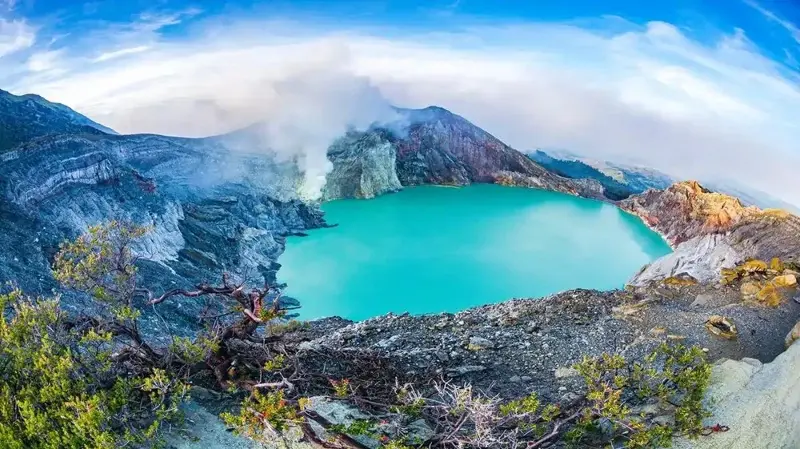
A unique volcanic wonder in Southeast Asia.
Located in the far east of Java Island, Ijen Geopark is one of Indonesia's most famous geoparks and was recognized as a UNESCO Global Geopark in 2023. At the heart of the geopark is Mount Ijen – an active volcano boasting a turquoise acid lake considered one of the largest and most unique in the world.
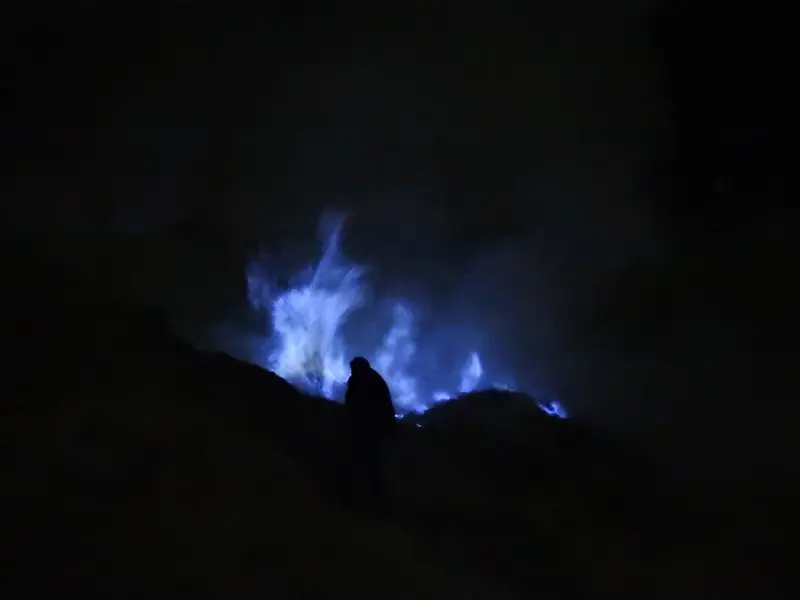
What makes Ijen globally famous is the "blue fire" phenomenon – the blue flames that appear at night when sulfur gases escaping from the volcano ignite at high temperatures. This is an extremely rare phenomenon, almost exclusively visible in Ijen, making it one of Asia's most popular destinations for sunrise viewing and volcano exploration .
Beyond its surreal beauty, Ijen also reflects the millions of years of geological history of Indonesia – a country situated on the "Pacific Ring of Fire," home to the world's highest concentration of active volcanoes.
A place where humans live alongside volcanoes.
One of the iconic images of Ijen is that of the manual sulfur miners. Every day, they descend to the bottom of the volcanic crater to break up sulfur, then carry heavy blocks weighing tens of kilograms on their shoulders up the steep and treacherous slopes. This arduous work has existed for decades and has become a unique part of Ijen's "living heritage."
Surrounding the volcanic area is the Osing community in Banyuwangi – an indigenous group that still maintains many rituals, folk arts, and beliefs connected to nature. This combination of geological landscape and community culture makes Ijen not only a tourist destination but also a unique cultural space of East Java.
In addition, the fertile basalt soil around Ijen is also famous for its coffee plantations dating back to the Dutch colonial era. Agriculture, tourism, and traditional culture now coexist within the unique ecosystem of this geopark.
Indonesia's symbol of sustainable tourism.
After being recognized by UNESCO, Ijen became a new symbol in Indonesia's sustainable tourism development strategy. The East Java government is pursuing a "geotourism" model – tourism based on geological values, environmental education, and the preservation of indigenous culture.
Unlike many mass-market tourist destinations, Ijen has controlled visitor numbers, enhanced protection of its volcanic ecosystem, and promotes community-based tourism. Visitors come not only to admire the scenery but also to learn about volcanic activity, Earth's history, and the lives of the people living around the crater.
Within the UNESCO Global Geoparks Network, Ijen is now considered one of Asia's most spectacular volcanic geoparks – where nature, science, and human life blend together into a rare tapestry.