



The injury is over, the desire to return remains, but Dembele is facing an unpleasant reality: he's ready to play, but PSG aren't ready to take the risk.

Dembele is not yet in his best physical condition.
A paradox exists in Paris. Dembele, once expected to be a devastating attacking force, is now feeling "confined" even though, according to the player himself, he is physically ready. This contradiction isn't loud or explosive, but it's enough to cause discomfort.
Last season, Dembele was at his best. Stable, decisive, and impactful. He was no longer the player of spontaneous, uncontrolled plays. That was the season Dembele truly rose to the ranks of Europe's biggest stars. But this season, the familiar story returns: injuries.
The injury sustained against Bayern Munich in the Champions League became a turning point. Not only because of its impact, but also because of how PSG reacted afterward. The French team chose the safest path. They reduced playing time, minimized risks, and sacrificed immediate explosiveness in exchange for long-term peace of mind.
The problem is that this caution doesn't align with Dembele's thinking.
The French player believes he needs to play to regain his rhythm. For players who rely heavily on ball control, speed, and reflexes like Dembele, training is never enough. Sitting on the bench for too long only makes the body "cool down," and gradually erodes confidence. Dembele wants to play regularly not because of ego, but because he understands how he performs best.
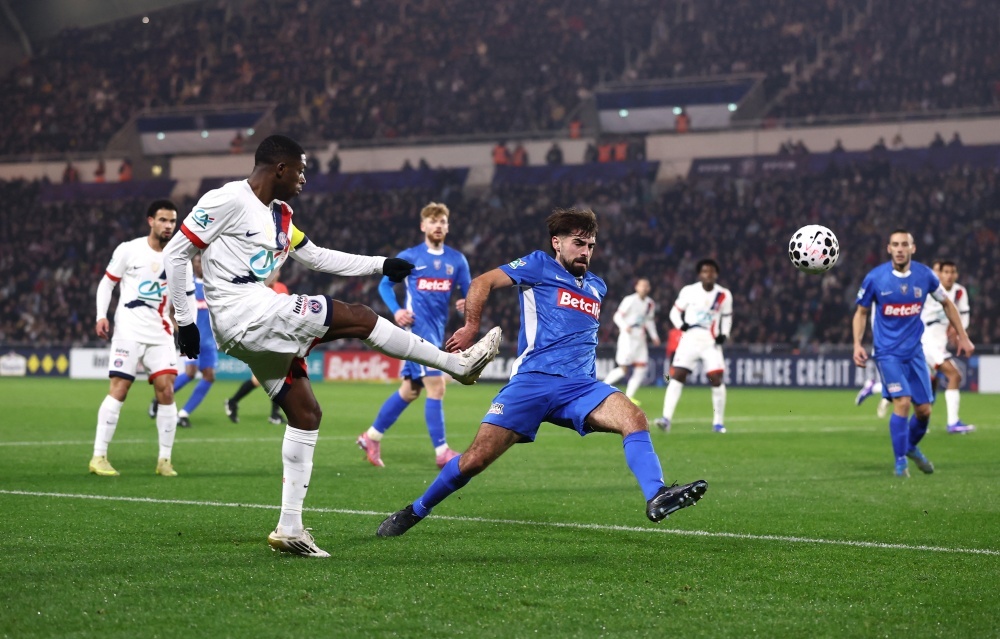
Dembele remains the most anticipated star at PSG.
Conversely, Paris Saint-Germain and coach Luis Enrique view the issue from a different perspective. They have witnessed more than enough instances of Dembele suffering recurring injuries due to rushing the recovery process. PSG does not want to repeat the vicious cycle: early return - injury - long recovery - loss of form.
Therefore, Dembele only gets to start in the Coppa Italia, against much weaker opponents. In Ligue 1 or other important cup matches, he remains a substitute. For a player who was once considered the centerpiece of the project, that's enough to create a feeling of disappointment.
What's noteworthy is that Dembele didn't react with shocking statements. There were no rebellious pronouncements, no public acts of pressure. His frustration lay in his silence, in his gaze, and in every precious minute he was given on the pitch. It's a dangerous kind of unease, because it simmers and lingers.
PSG are about to enter a crucial phase, with the French Super Cup and key matches at the start of the new year. They need a fit Dembele, but they also need a happy Dembele. Keeping him in a "glass cage" for too long might be safe for his body, but it's not necessarily good for his mental state.
The question isn't whether Dembele is capable of being a starter. The issue is whether PSG dares to believe that, sometimes, controlled risk is better than absolute safety. Otherwise, the relationship between the star and the club will remain in limbo, where no one is entirely at fault, but no one is truly satisfied either.