



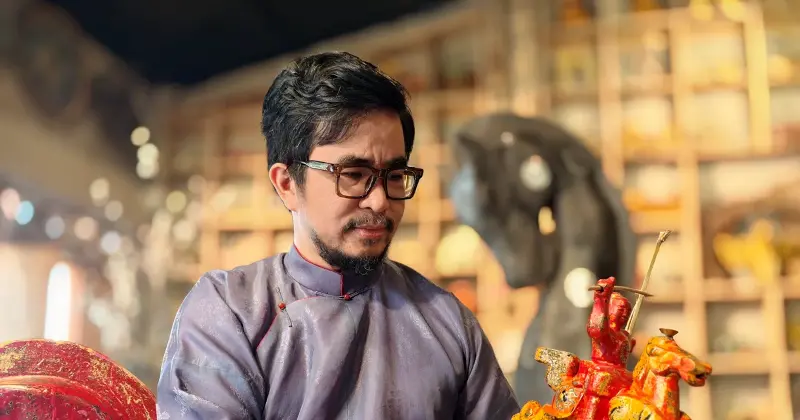
Beginning the story of this year's horse collection, the distinguished artist Nguyen Tan Phat shared that this wasn't a new idea formed in recent years, but one he had been nurturing for a long time. "The image of the horse is one I love very much, so I started working on it a long time ago, about 10 years ago," he said. From the early days of researching and experimenting with sculpting, he created the first horse statues and has continuously developed and perfected them to this day.
Over a period of about a decade, the horse designs were constantly being updated. According to the artist, it was a journey through many ups and downs and changes, so each piece itself carries many layers of emotion and stories connected to different periods of his life and work. For him, each horse is not just a sculpted product, but also a trace of time and experience.
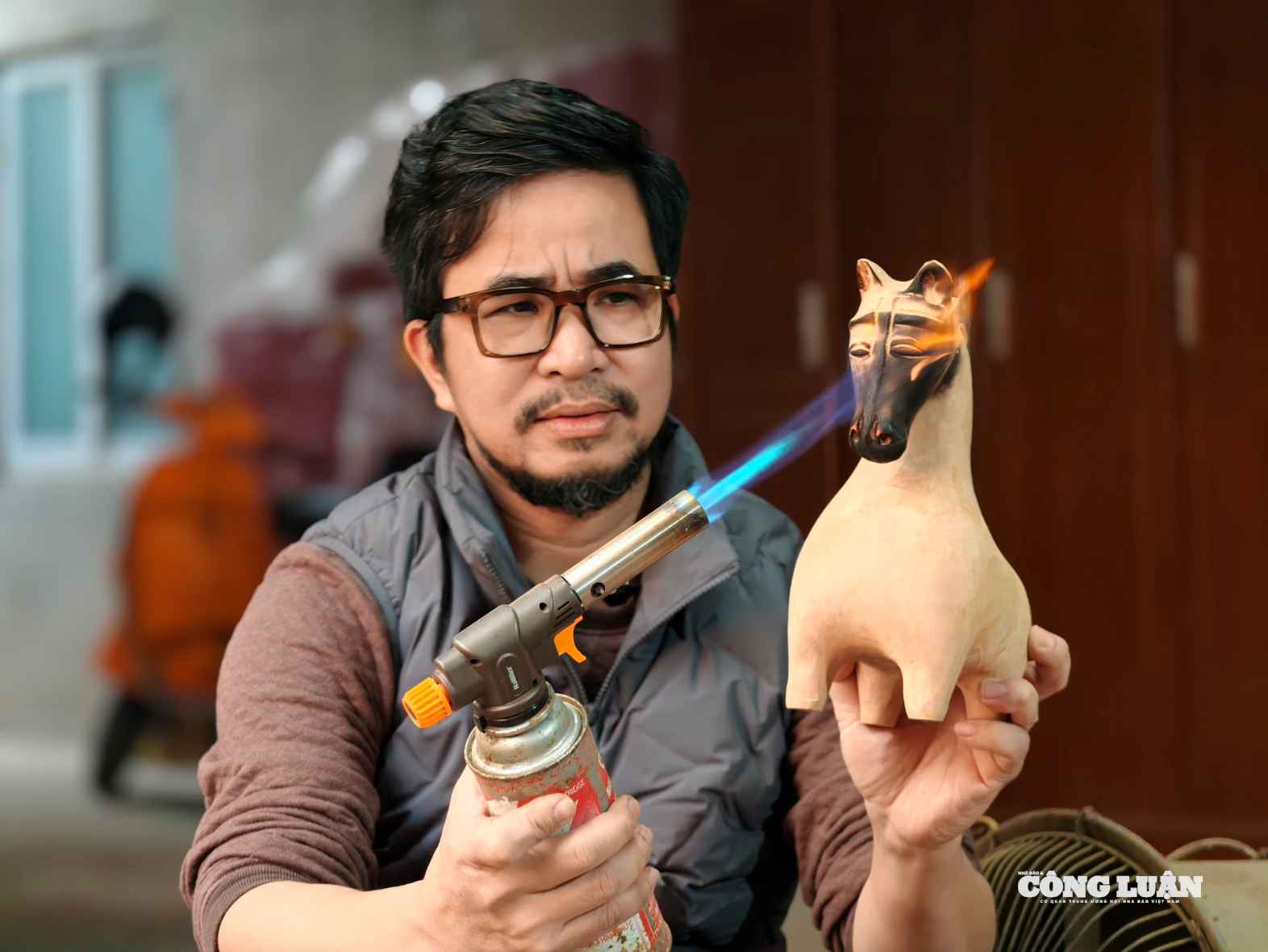
Speaking about the differences between this year's collection and previous years, the distinguished artisan Tan Phat believes that the difference lies primarily in the individual figures. Each horse possesses its own unique appearance and spirit. However, what is even more noteworthy is the richness in style and approach. Having accumulated experience over a long period, this year's collection is more diverse in form, while also incorporating changes in the crafting methods.
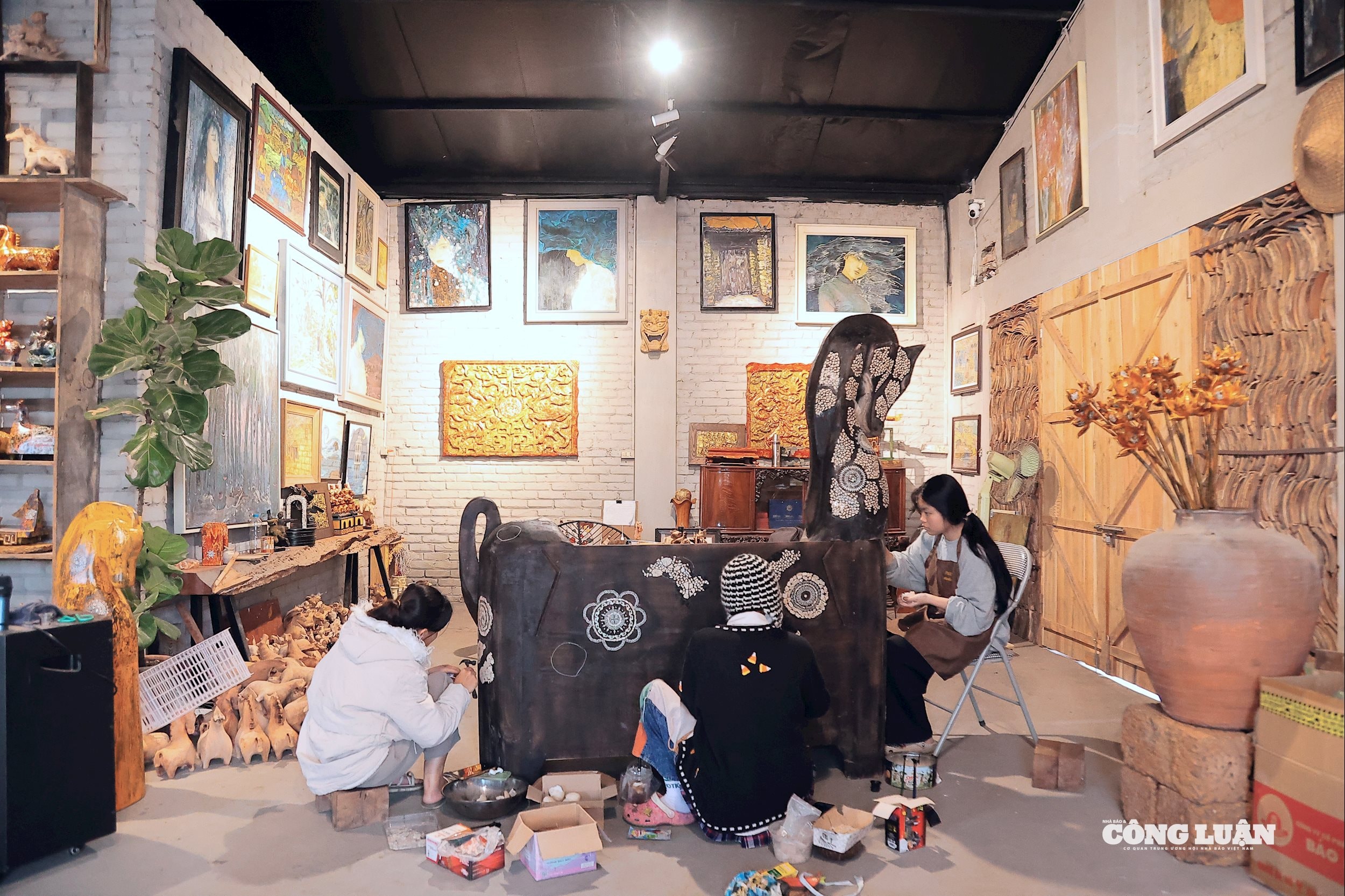
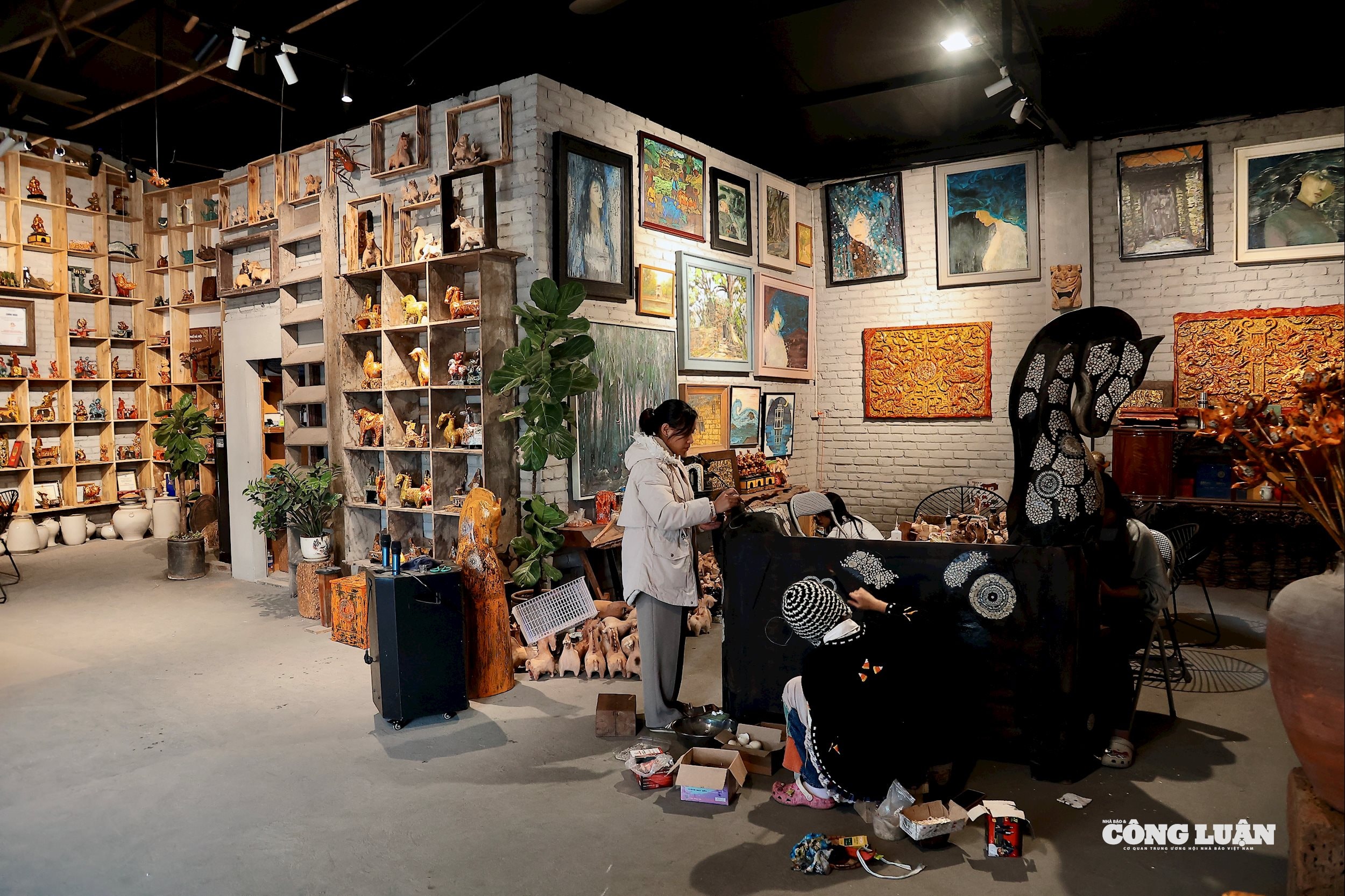
" This year I've opened up a space for visitors to come and experience the craft, and even participate in making products," he shared. According to him, this is primarily to create a vibrant atmosphere and spread awareness of the traditional lacquerware craft, while also supporting some of the work in the workshop.
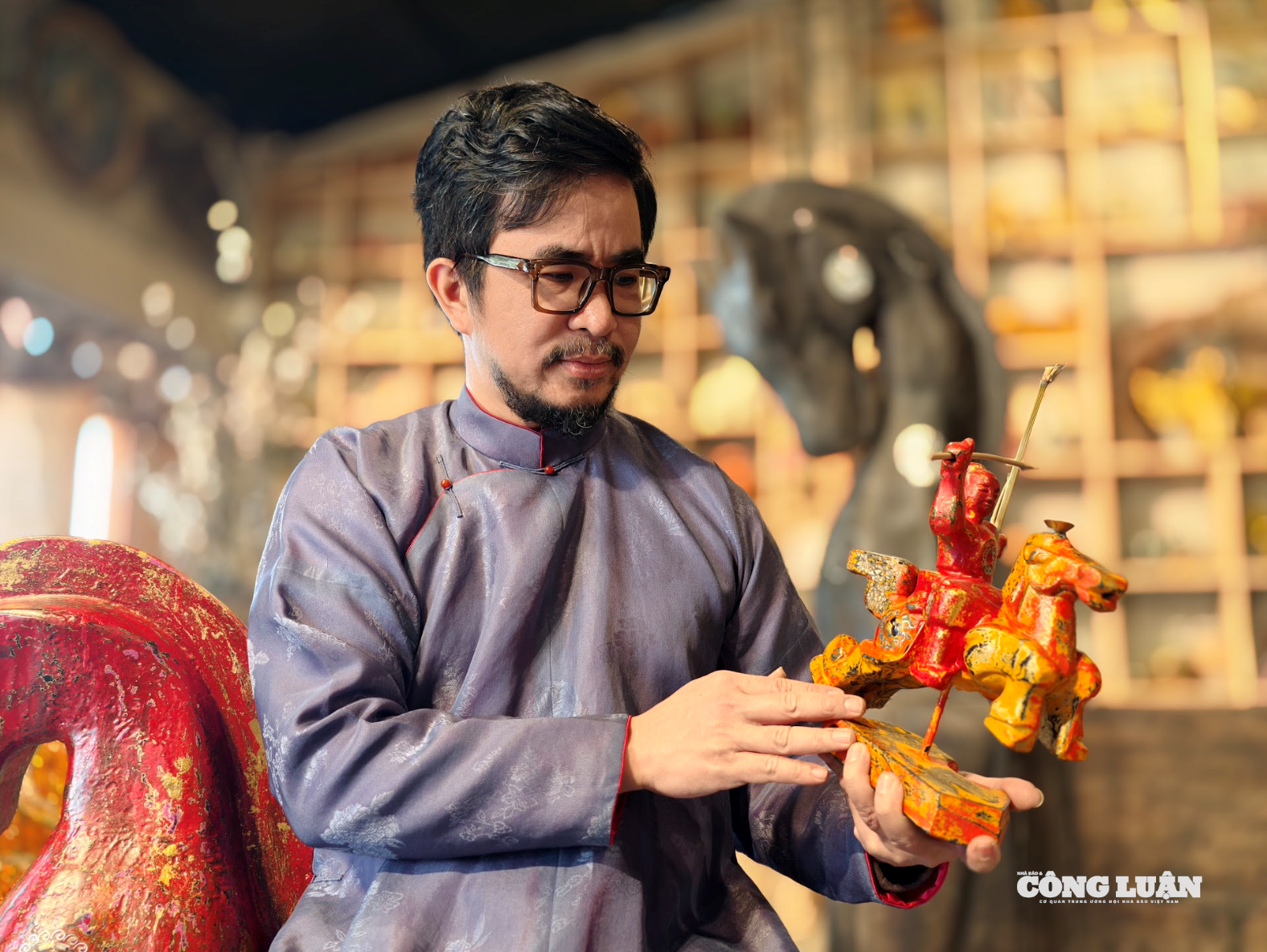
The central theme throughout the collection is the image of Saint Gióng. The artist stated that the horse sculptures, featuring riders, all point towards the image of the legendary saint, and he named the entire project "Gióng," hoping that the image of Saint Gióng's horse could emerge from the legend.
" I think the horse is perhaps the rare zodiac animal that can be associated with the image of a saint," said artisan Tan Phat.
Therefore, the horse in the collection not only signifies a working animal or a means of transportation, but is also closely linked to the history and culture of the nation. According to the artisan, in Vietnamese culture, the horse also embodies the spirit of victory and is a symbol of unity in overcoming difficulties.
In a broader sense, horses also symbolize the spirit of always moving forward, always striving for greater heights, representing perseverance and aspiration towards the future, as seen in familiar images like "success upon arrival" and "eight horses chasing the wind."
Sharing his desire to bring Vietnamese lacquerware to the world , artisan Nguyen Tan Phat said that this is not just a personal aspiration, but a shared wish of the entire Vietnamese lacquerware community.
According to him, lacquerware is a rare craft, as it depends on geological conditions and the availability of lacquer trees – not every country has them. In East Asia and Southeast Asia, only a few countries like China, Japan, South Korea, Myanmar, or Laos have lacquerware, but Vietnamese lacquerware has made its own mark by developing it into a form of painting.
He also mentioned that recently, the cultural sector has been organizing numerous exhibitions as a prelude to nominating lacquerware as a UNESCO World Heritage site. Some of his products have been selected for display at the Da Nang Museum and participated in a lacquerware exhibition in France during this process.
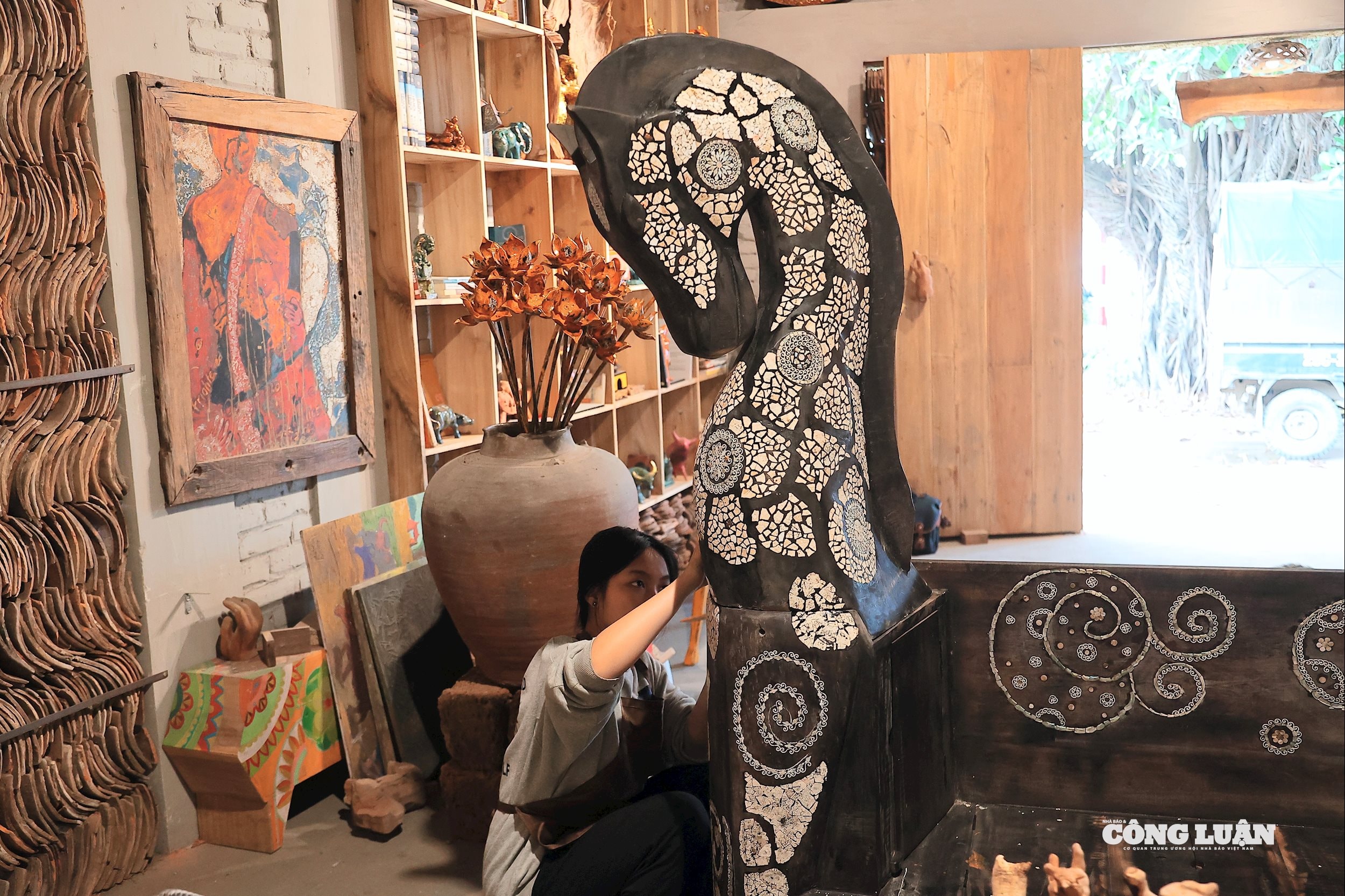
Regarding the crafting process, the artisan explained that for a lacquerware product measuring approximately 25-30 cm, the completion time typically takes about a month, with 15 days for shaping and 15 days for lacquering. Larger pieces can take significantly longer. He emphasized that lacquerware making cannot be done alone but always requires the support of a team of artisans.
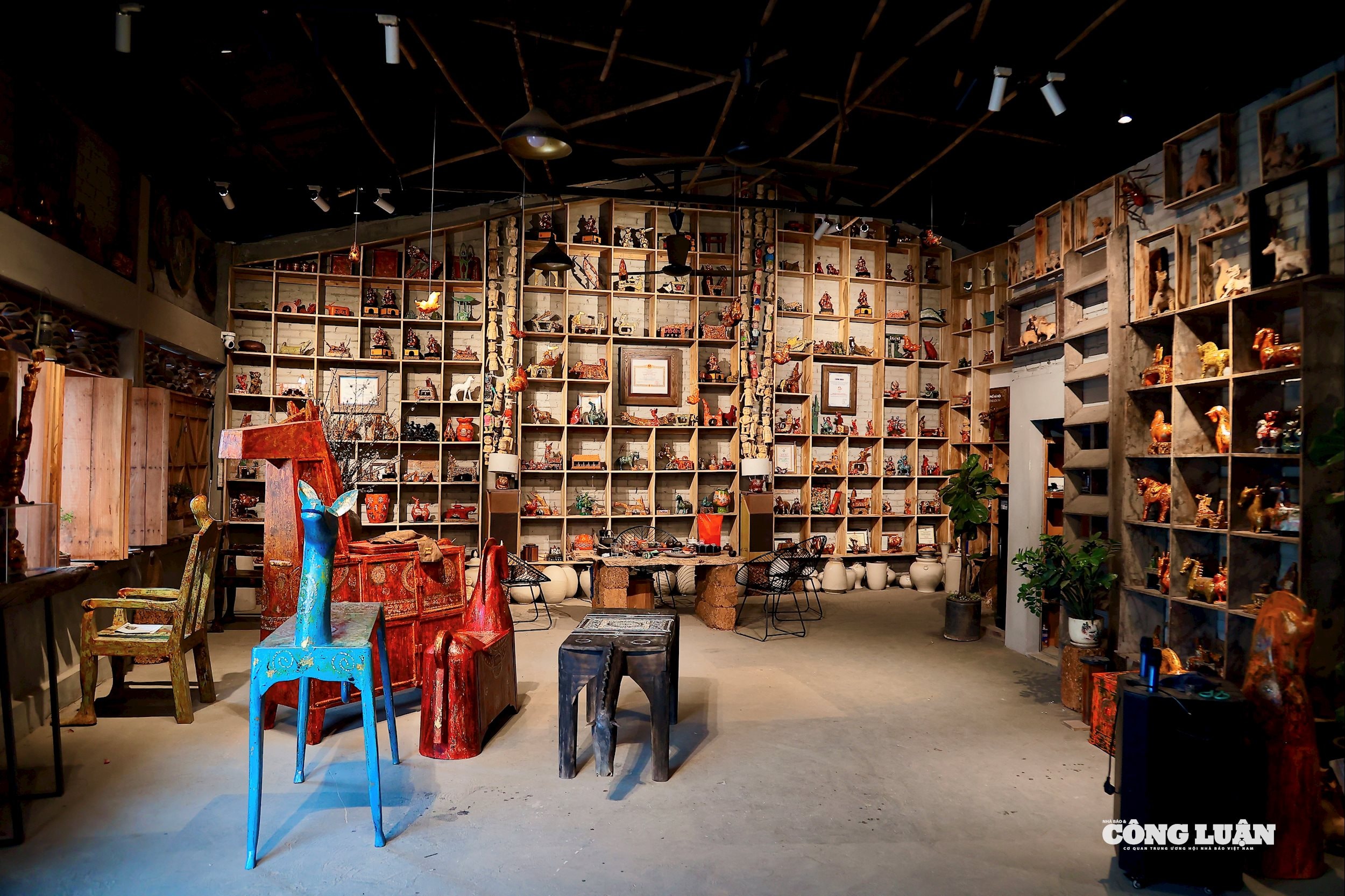
In this year's collection, besides the series of works depicting the iconic legend of Saint Gióng, the largest piece is the "Eight Horses Chasing the Wind" set, consisting of seven horse-shaped chairs and a horse-shaped table. According to the artist, one large chair represents the mother horse – symbolizing the foundation and the present, while the seven smaller chairs represent the seven foals – symbolizing future growth and expectations. The entire set is expected to take more than a year to complete.
Compared to previous years, this year's collection also features many innovations in materials, combining wood, laterite, bamboo, straw, etc. The applications have been expanded with products such as tables, chairs, cabinets, and stools, including the addition of a horse-shaped cabinet line.
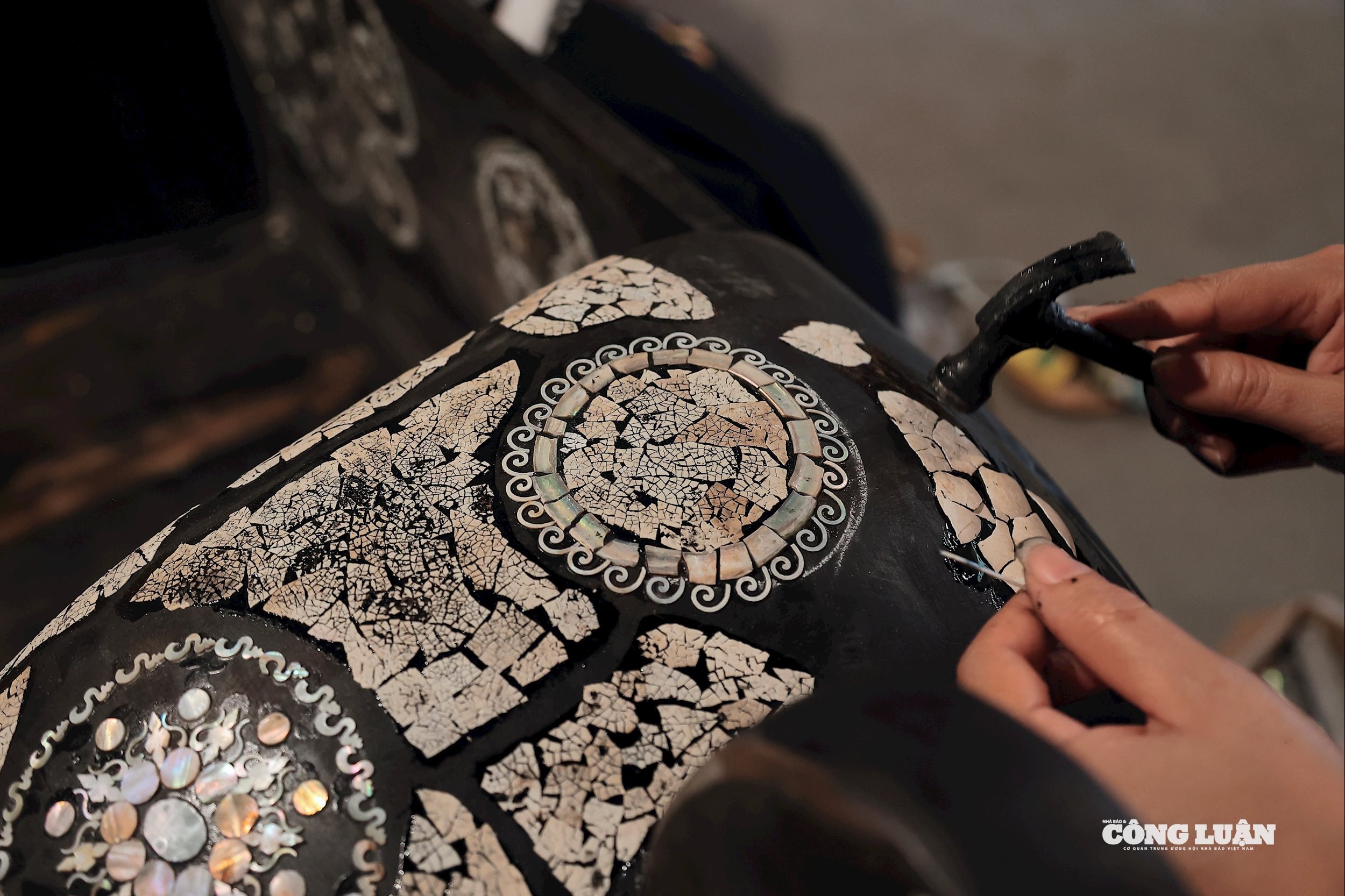
Besides creating his own artwork, artisan Nguyen Tan Phat still maintains weekly lacquer painting classes at his workshop, primarily in an experiential format.
According to him, the biggest goal is to spread the traditional lacquerware craft to the community. He considers this part of an effort to enrich tourism products for Duong Lam ancient village – a heritage site, home to Mia Pagoda with the largest collection of ancient lacquer statues in Vietnam. “ I want tourists to come to Duong Lam not only to visit, but also to have truly vibrant cultural experiences,” he said.
Here are some photos taken by the reporter:
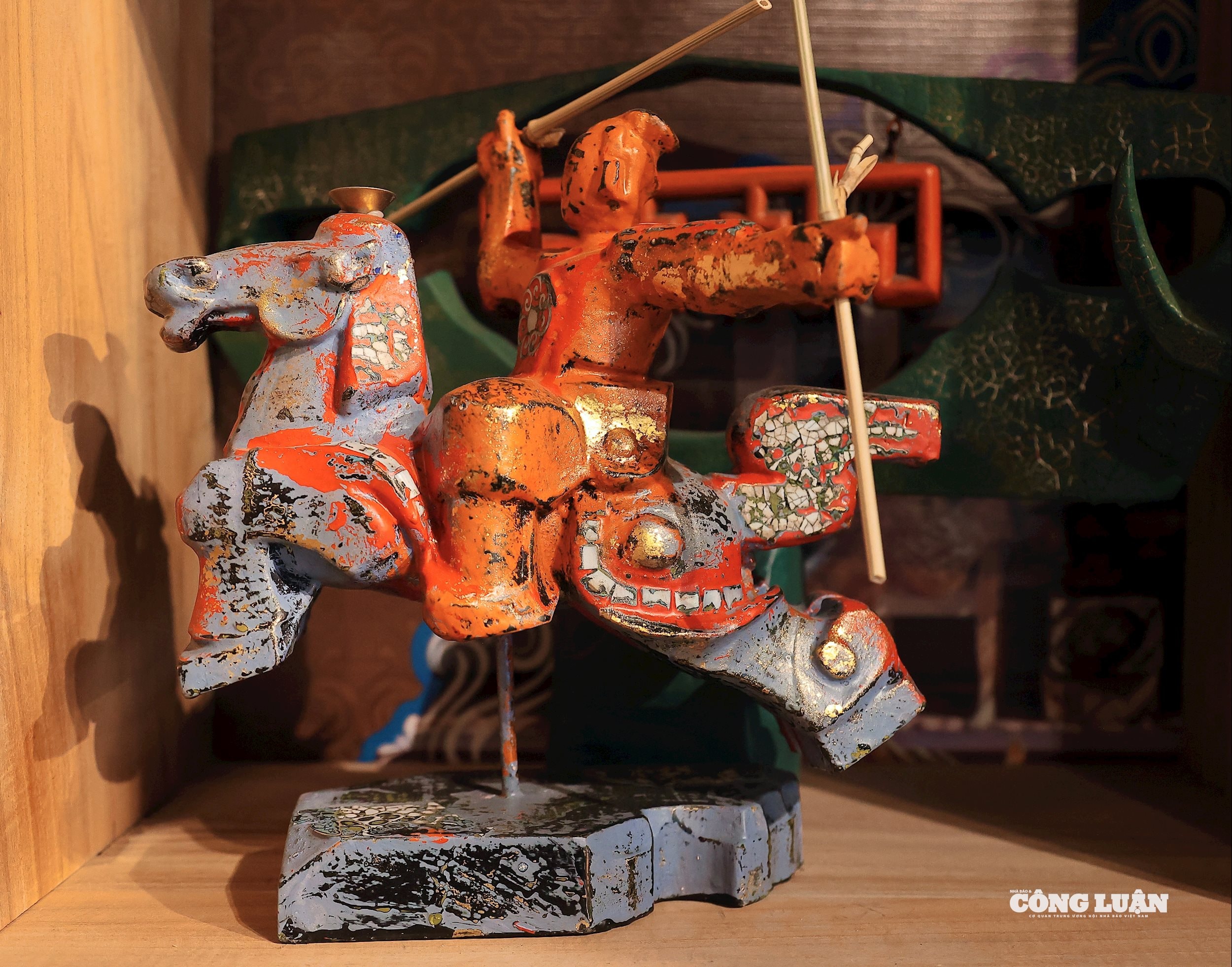
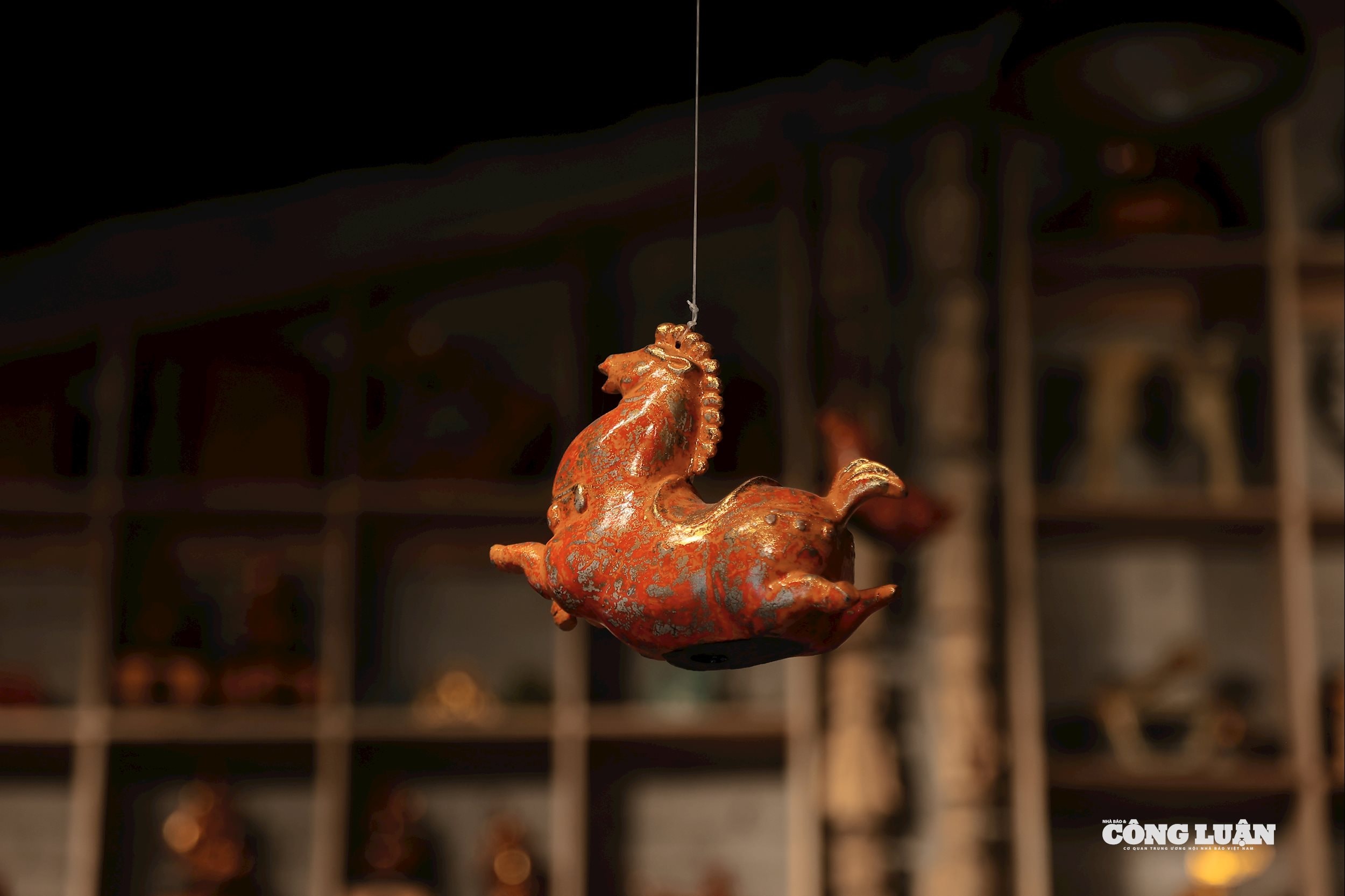
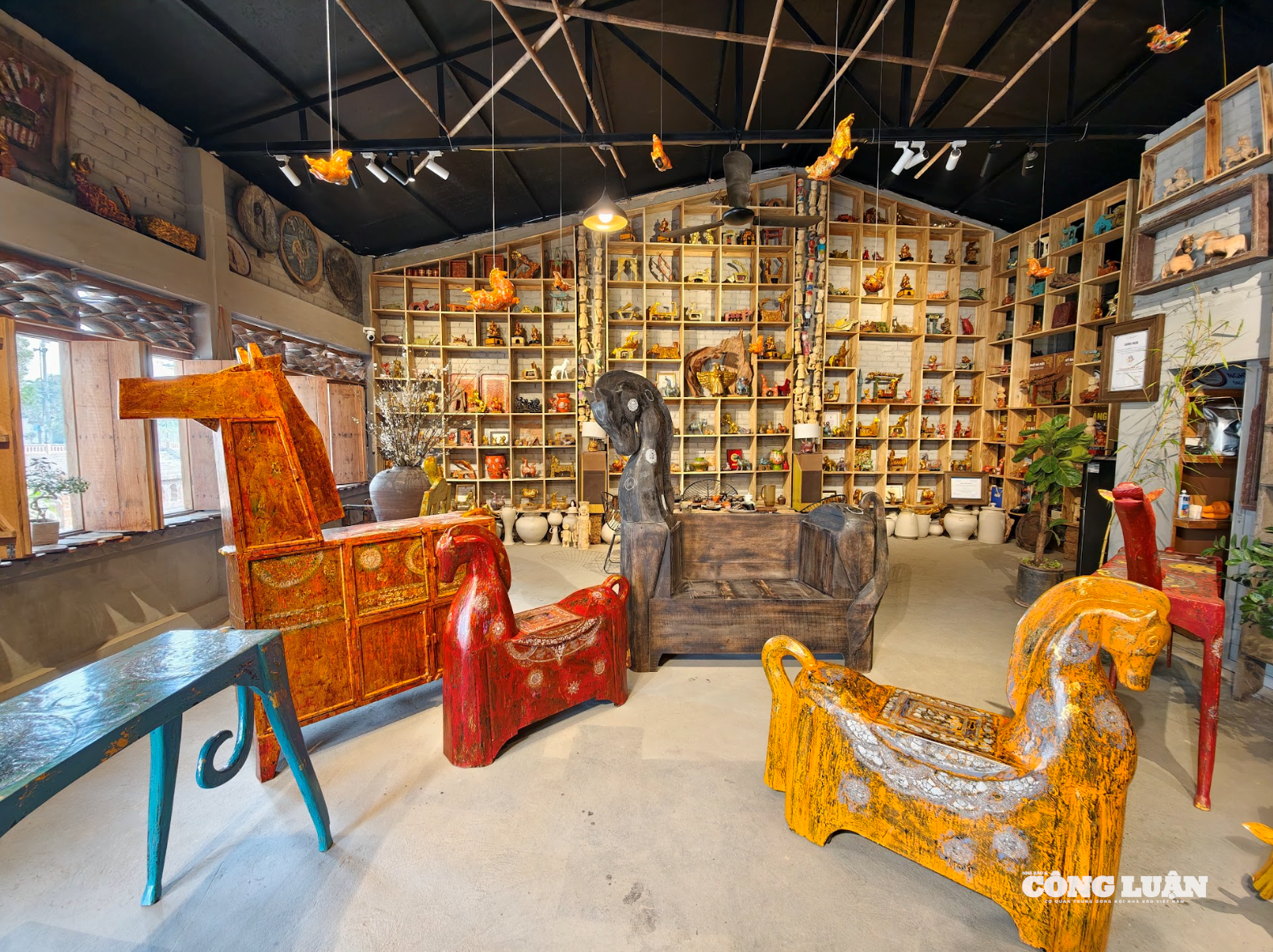
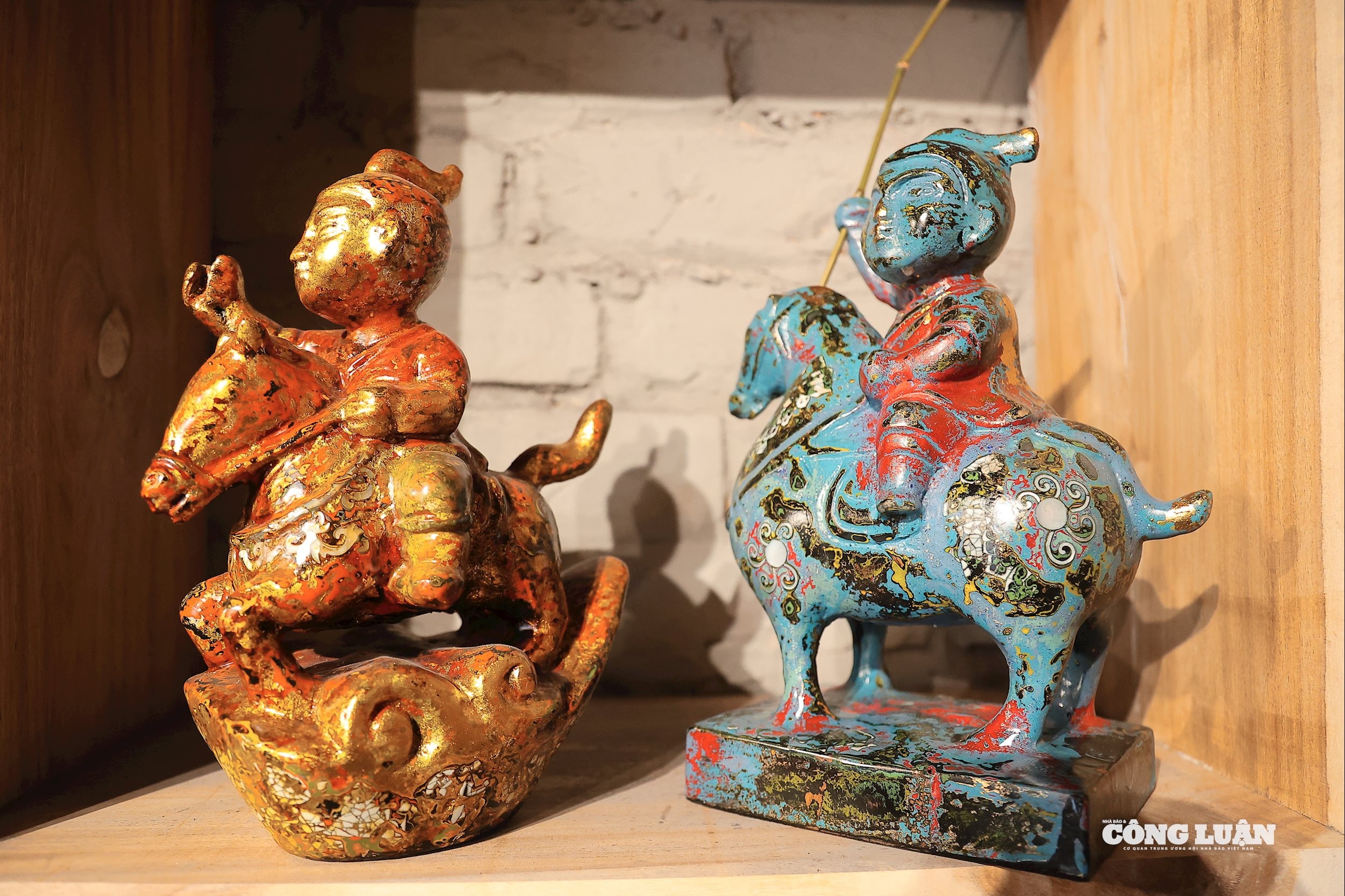
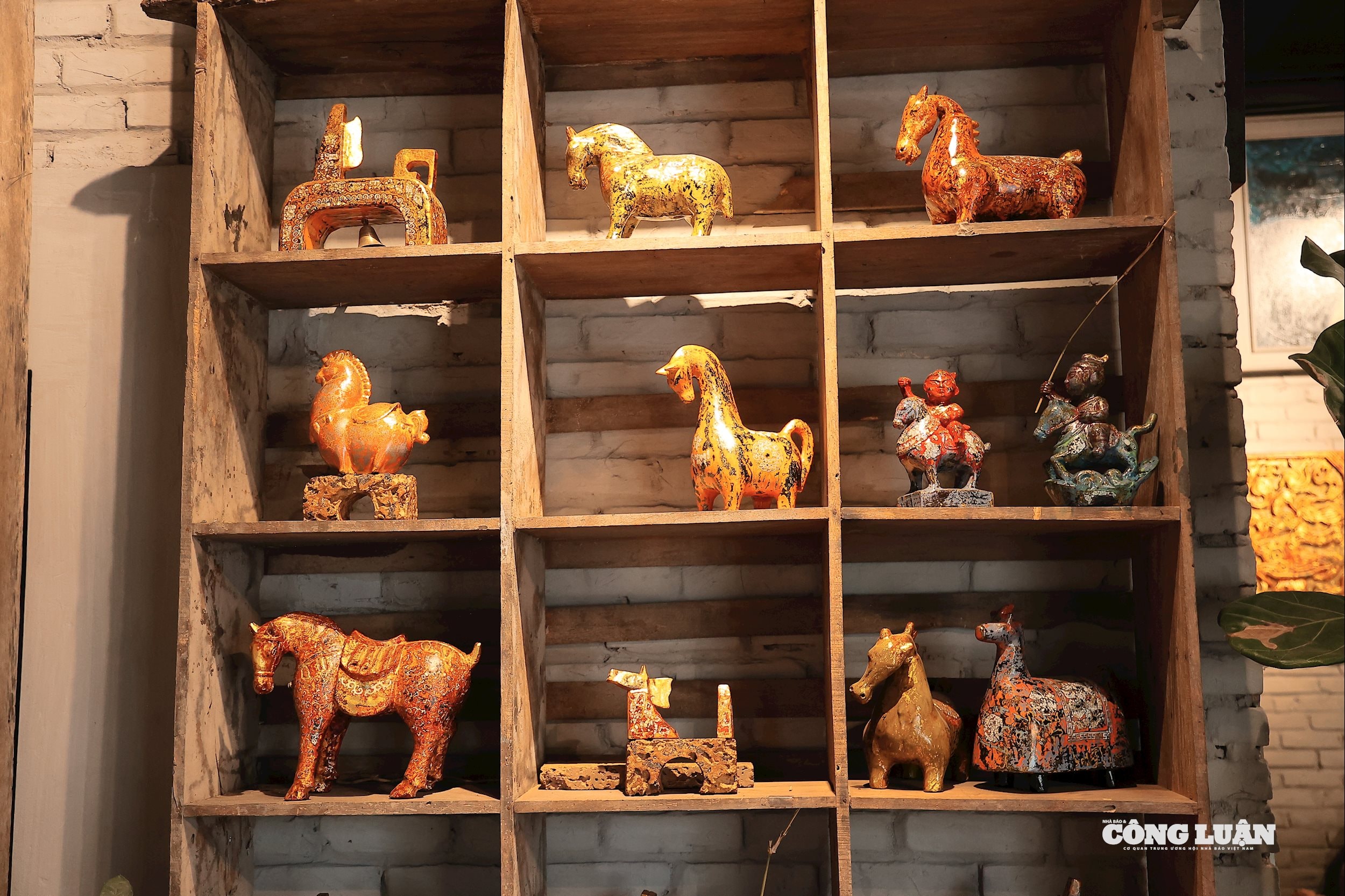
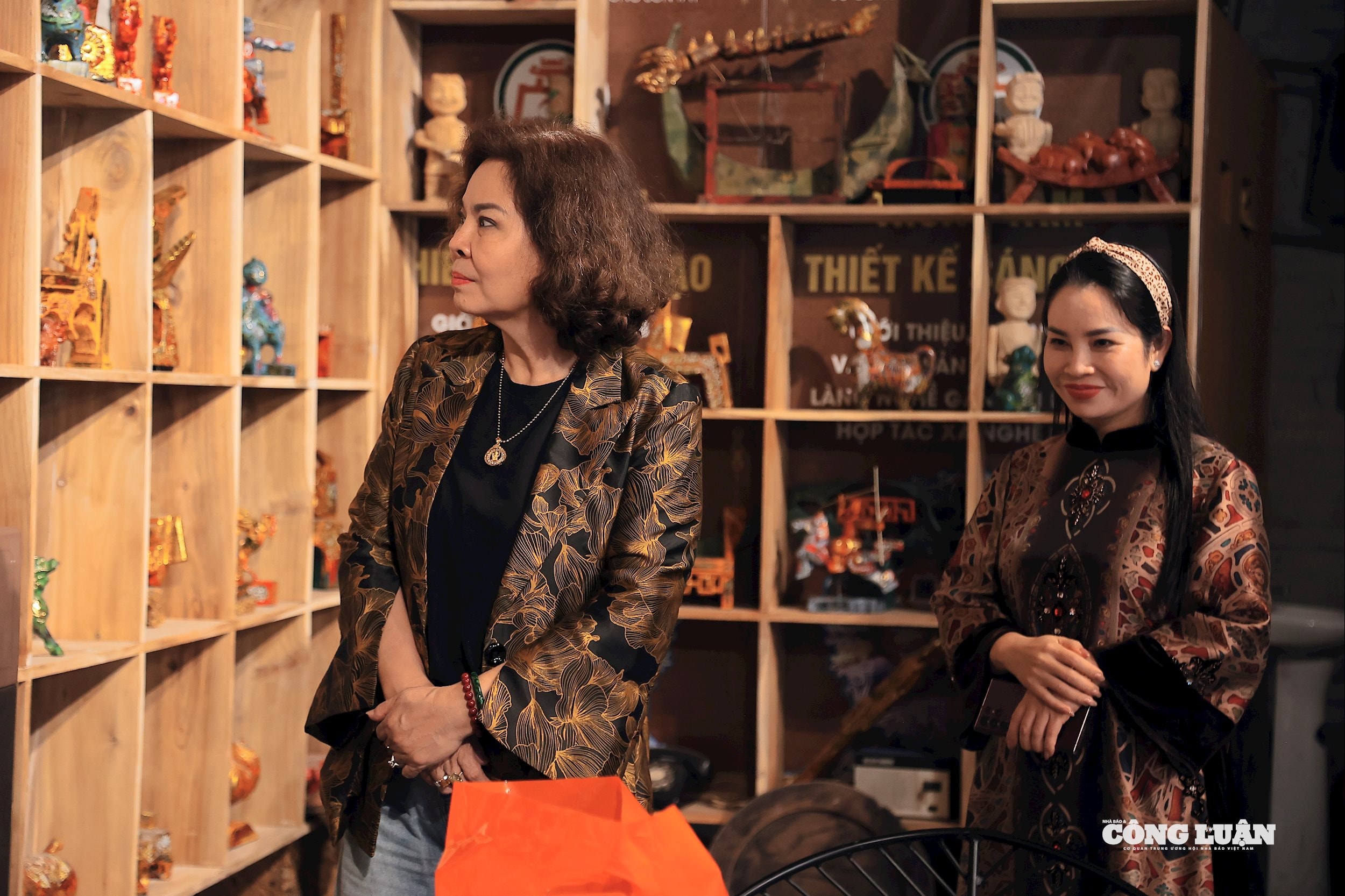
In 2017, Mr. Nguyen Tan Phat was awarded the title of Hanoi Artisan by the Hanoi People's Committee in the field of mother-of-pearl inlay and lacquerware. In 2023, he received a certificate of commendation from the People's Committee of Son Tay town (formerly) for his achievements in developing culture, art, and tourism economy... In 2025, he will be awarded the title of Outstanding Artisan.
Not content with just creating his own designs, Mr. Phat actively participates in passing on his skills, training the next generation, and organizing lacquerware experience activities for students, contributing to bringing the traditional craft closer to the community, especially young people - the force that will determine the future of the craft village.