



While not as magnificent as Thien Cung Cave, Dau Go Cave, or Sung Sot Cave, Trong Cave possesses a unique beauty, offering stunning views of Ha Long Bay along with a tragic and despairing love story.
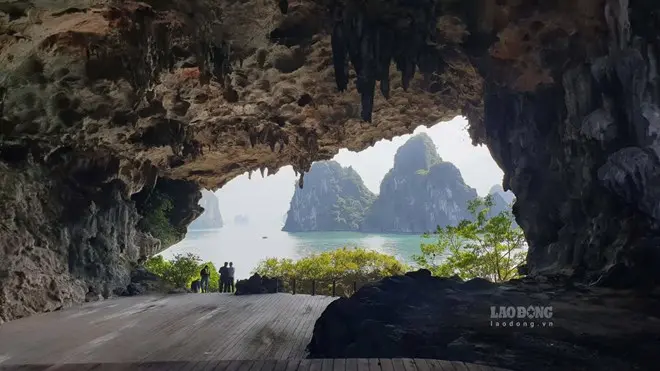
Drum Cave. Photo: Nguyen Hung
Drum Cave is a tourist attraction located on tourist route number 2 in Ha Long Bay , about 15 km from the center of Ha Long City. Drum Cave is situated opposite Virgin Cave.
These two caves are quite spacious, each measuring over 300 m² ; the floor is relatively flat and dry.
Entering the Virgin Cave, right in the heart of the cave is a rock formation resembling a statue of a girl lying with her long hair flowing, her eyes gazing out to sea, weary with longing and despair.
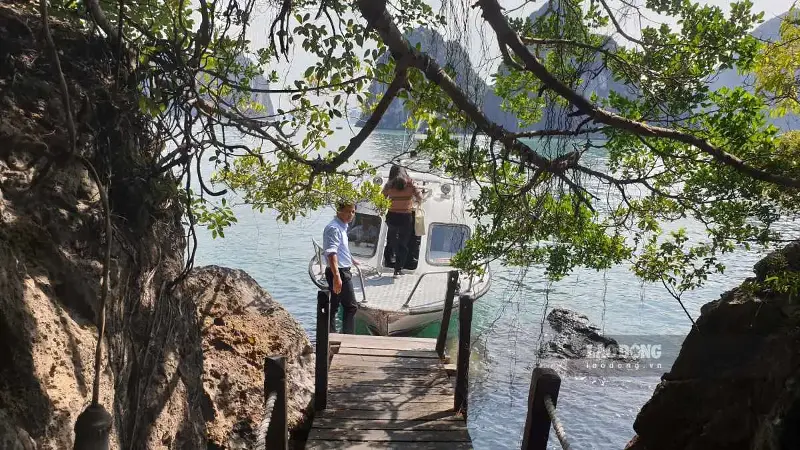
The main entrance to Drum Cave. Photo: Nguyen Hung
Opposite the Virgin Cave is the Drum Cave (also known as the Boy's Cave), which houses a statue of a young man turned to stone, facing the Virgin Cave, as if his desperate screams and the sounds of him knocking against the rock walls still echo somewhere.
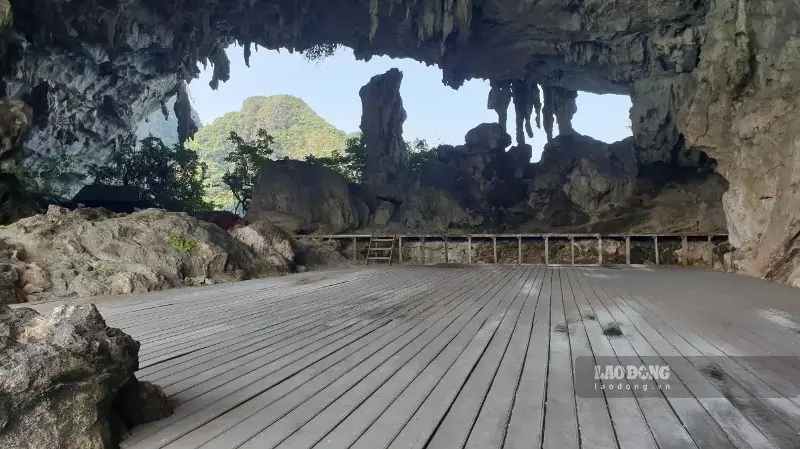
Inside Drum Cave. Photo: Nguyen Hung
The story goes that there was a beautiful fisherwoman from a poor family who had to work for a powerful fishing village owner. Seeing her beauty, he pressured her family to marry her off as his concubine, but she refused because she already had a lover. Unable to do anything else, the landlord banished her to a deserted island to break her spirit. She starved and was exhausted. One terrifying stormy night, she turned to stone there.
That was also the night the young man learned of her misfortune, so he tirelessly rowed his boat to find her. That night, a storm struck, shattering his boat. He was washed ashore on a deserted island. In the flash of lightning, he looked into the distance and recognized the girl, but his calls were carried away by the wind. He used a stone to strike the cliff face, letting her know he had arrived. He kept striking until blood flowed from his hands, until he was exhausted, and he turned to stone in this Drum Cave.
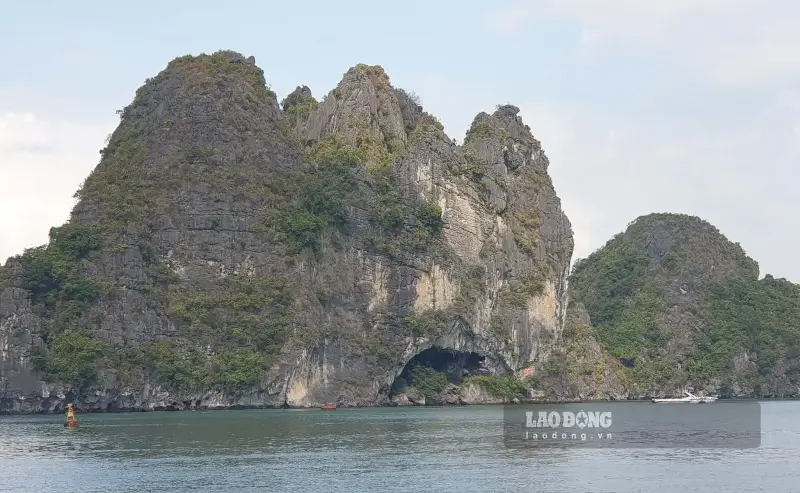
The entrance to Drum Cave seen from a distance. Photo: Nguyen Hung
Hang Trong is one of several cave archaeological sites belonging to the Soi Nhu culture, dating back tens of thousands of years.
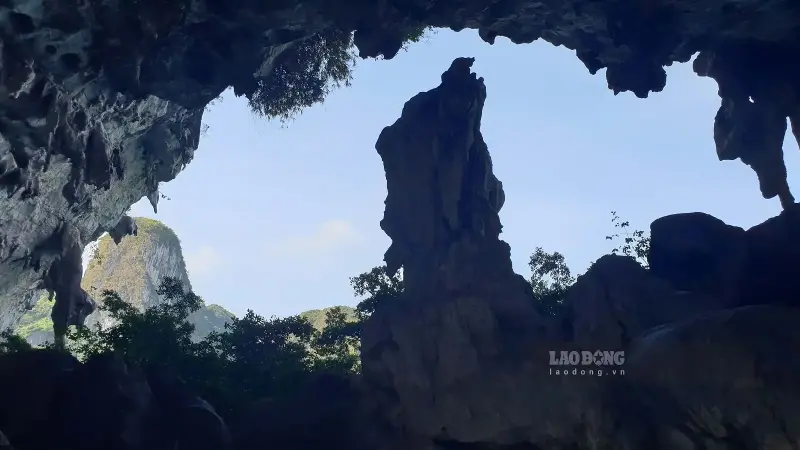
Stalactites and stalagmites in Trống Cave. Photo: Nguyễn Hùng
At the northwest and southeast entrances, traces of yellowish-brown sediment layers and shells of freshwater snails such as Melania and Cyclophorus are still present. In addition, there are a small number of other freshwater mollusk species such as: scallops, clam shells, and mussel shells.
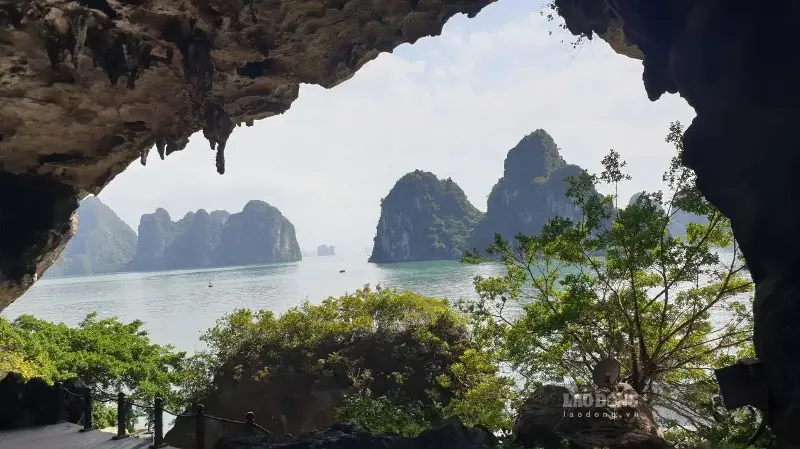
From inside Drum Cave, there are many stunning viewpoints of Ha Long Bay. Photo: Nguyen Hung
Upon entering the cave, visitors can not only admire the beauty of the cave's vault and stalactite formations, but also hear the wind whistling through the crevices in the rocks, echoing back against the cave walls, creating a strange and delightful drum-like sound.
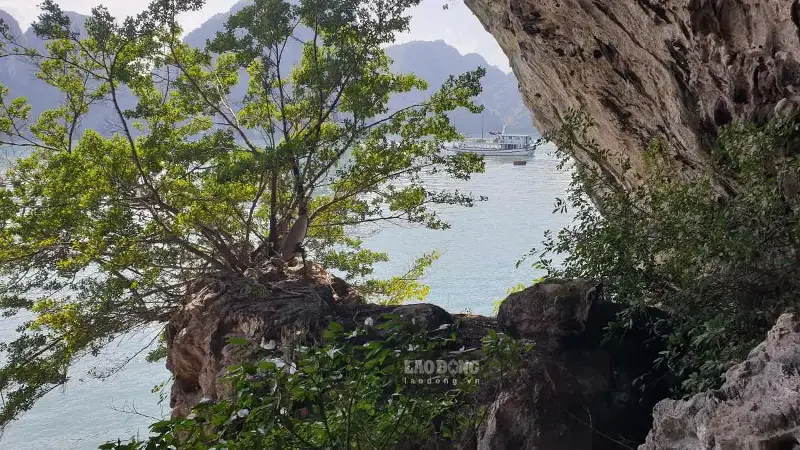
A peaceful scene. Photo: Nguyen Hung
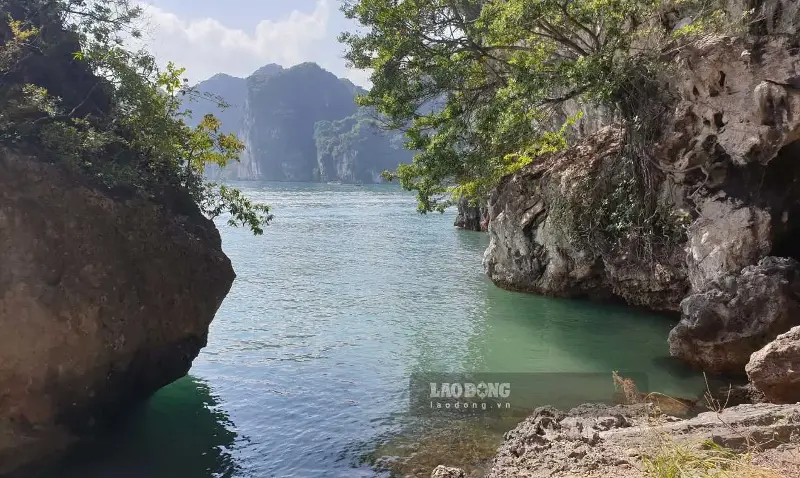
Crystal clear water surrounds Drum Cave. Photo: Nguyen Hung
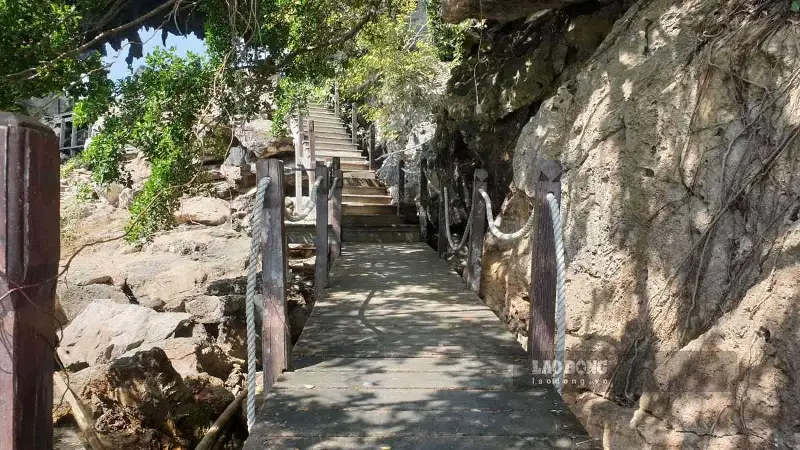
The path leading to Drum Cave. Photo: Nguyen Hung
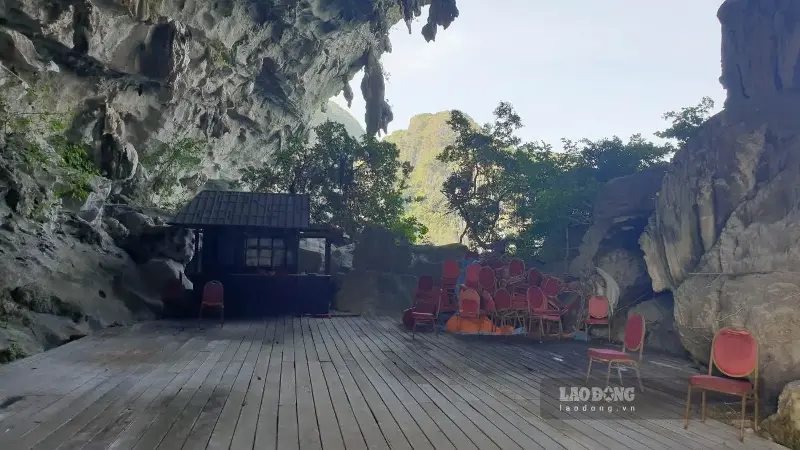
In 2016, Ha Long City banned all eating and drinking activities in caves and on beaches in Ha Long Bay after a series of images of large parties in Trong Cave were posted on social media. The photo shows the tables and chairs that remained after the ban on eating and drinking in Trong Cave. Photo: Nguyen Hung