


Reason
During use, there are many reasons why refrigerators can leak gas. Besides manufacturing defects, leaks or punctures in the pipes or connections can also occur, as the gas in a refrigerator cannot self-destruct and is a closed-loop system. Some basic causes of refrigerator gas leaks include:
Corrosion in the evaporator coil: This occurs when the refrigerator is used for too long and has a long lifespan. Tiny holes appear on the coil, allowing gas to escape slowly, eventually causing the refrigerator to run out of gas. This problem is rarely detected early; users only discover it when they notice the refrigerator is not cooling properly or has run out of gas.
Leaky welds: This could be due to the manufacturer creating welds that are not airtight or secure, leading to gas leaks after a period of use. However, it could also be because your refrigerator has been repaired before, causing the welds to leak.
Strong impacts: During manufacturing and transportation, refrigerators may experience strong impacts, affecting the internal gas system and causing gas leaks. Additionally, accidentally moving the refrigerator to a different location can also cause it to be subjected to strong vibrations.

Refrigerator gas leaks not only cause the appliance to malfunction quickly and consume more electricity, but also pose a risk of fire, explosion, and poisoning.
Punctured evaporator coil: This is one of the main and most common causes of refrigerator problems. During use, users may use sharp objects to remove ice and frost, causing the evaporator coil to puncture. Gas will escape through the punctures, causing the refrigerator to cool less effectively. In this case, you should seek the help of a technician for prompt repair.
How to check if your refrigerator has a gas leak?
Identifying signs of a refrigerator gas leak is not simple for those without expertise. However, you can check for leaks based on signs such as excessive frost buildup on the evaporator coil, weak electrical current, prolonged cooling time, and weak cooling output.
Users can check by running the compressor, condenser, and evaporator as normal. Then, observe whether there are any oil stains on these parts. If there are oil stains, then the refrigerator has a gas leak.
Alternatively, users can check for refrigerator gas leaks by applying a sufficient and even layer of soap powder to the pipe. If you see bubbles forming, your pipe is punctured, causing gas to leak out.
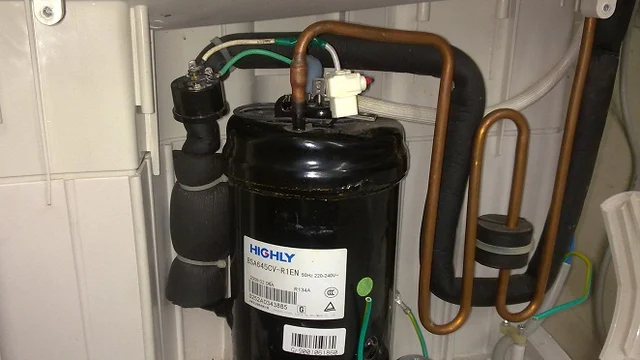
You can check if your refrigerator has a gas leak based on signs such as excessive frost buildup on the evaporator coil, weak electrical current, prolonged cooling time, and weak cold air output.
Alternatively, you can use a matchstick to check for refrigerant leaks in your refrigerator. Light the matchstick and hold the flame against the condenser coil. If the area where the flame is applied becomes excessively hot, then the refrigerator is low on refrigerant.
The harmful effects of a refrigerator leaking gas.
A refrigerator contains a very small amount of gas, about 0.1 kg, but if the refrigerator leaks gas, the gas can easily mix with the air, affecting the environment and the health of users.
The two most commonly used refrigerants in refrigerators are Freon compounds (organic) and ammonia (inorganic). Ammonia is highly toxic and has an unpleasant odor; leaks can irritate the eyes and stomach lining. Therefore, this type of refrigerant is primarily used in large-scale refrigeration applications.
Ammonia will be used less in household refrigeration appliances, with Freon being the primary alternative. Although Freon is non-toxic and does not directly affect human health when leaked, it harms the environment, destroys the ozone layer, and indirectly impacts health.
How to handle it
Place the refrigerator in a well-ventilated area, avoiding damp places, and keep it away from electrical appliances and direct sunlight to prevent gas leaks.
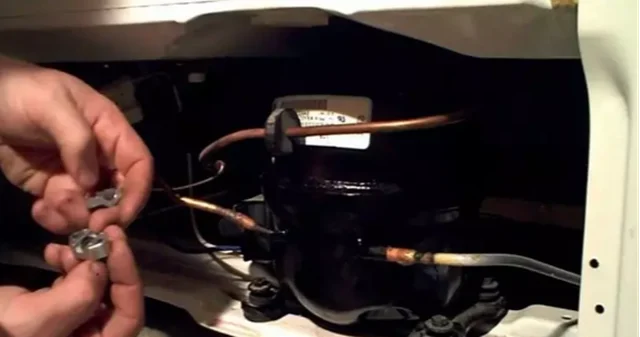
A refrigerator contains a very small amount of gas, about 0.1 kg, but if the refrigerator leaks gas, the gas can easily mix with the air, affecting the environment and the health of users.
If you need to move the refrigerator a long distance, such as to a new location during a house move or when selling an old refrigerator, you must move it very carefully to avoid strong impacts that could damage the internal components.
If you encounter gas leaks or other technical problems that cannot be repaired, you should seek the help of a professional repair technician. Do not attempt to repair it yourself, as this could easily damage other parts of the refrigerator.