



Fish is well-known for being rich in omega-3s, but not everyone can eat it. However, many plant-based foods contain even higher levels of omega-3s than fish, especially ALA – an essential fatty acid for cardiovascular health, brain function, and anti-inflammation.
1. Why are omega-3s important for health?
- 1. Why are omega-3s important for health?
- 2. Omega-3s don't only come from fish.
- 3. Some plant-based foods provide omega-3s.
- 3.1. Chia seeds – a 'superfood' rich in omega-3
- 3.2. Flax seeds
- 3.3. Walnuts
- 3.4. Hemp seeds
- 3.5. Vegetable oils rich in omega-3
- 4. How much omega-3 should I take daily?
- 5. Some notes
Omega-3s are polyunsaturated fats that play a crucial role in cardiovascular health, brain function, inflammation regulation, and many other biological processes. Since the body cannot synthesize them on its own, obtaining omega-3s from food is essential.
The three main forms of omega-3s are: ALA (alpha-linolenic acid) – primarily from plant-based foods; EPA (eicosapentaenoic acid) and DHA (docosahexaenoic acid) – primarily from fatty fish and seafood.
The body can convert ALA into EPA and DHA, but the conversion efficiency is quite limited. Therefore, diversifying omega-3 sources from both plant-based foods and fish is important...
2. Omega-3s don't only come from fish.
Omega-3s are a group of essential fatty acids that the human body cannot synthesize on its own and must be obtained through daily diet. For many years, fatty fish such as sardines have been considered the "gold standard" for omega-3s due to their high EPA and DHA content, offering widely studied benefits for cardiovascular health, brain function, and inflammatory responses.
However, not everyone likes fish or has a habit of eating fish regularly. In fact, there are many other options – especially from plant-based foods – that provide alpha-linolenic acid (ALA), an important omega-3 that the body can convert (to a limited extent) into EPA and DHA.
3. Some plant-based foods provide omega-3s.
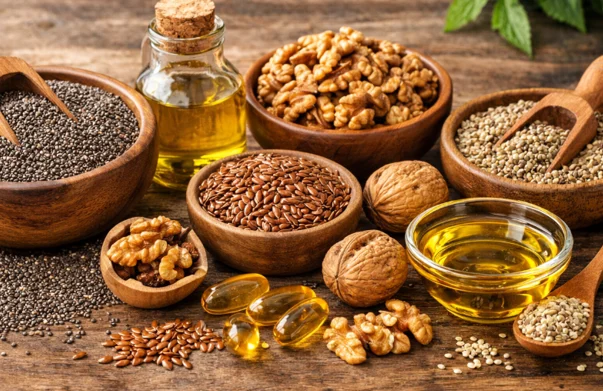
Common plant-based sources of omega-3s…
Here are five foods that are richer in omega-3s than fish, helping you diversify your omega-3 sources without relying solely on fish or seafood.
3.1. Chia seeds – a 'superfood' rich in omega-3
Chia seeds are one of the richest plant-based sources of omega-3s available today. Just one small tablespoon of chia seeds contains more ALA than many fatty fish, approximately 5,050 mg of ALA.
Besides being rich in omega-3s, chia seeds also provide fiber, plant-based protein, and polyphenols – compounds beneficial to health. Research shows that supplementing with chia seeds can help lower blood pressure, improve cholesterol levels, and reduce markers of inflammation. Thanks to their high fiber content, chia seeds also help stabilize blood sugar and improve gut health.
3.2. Flax seeds
Flaxseed is one of the most extensively studied omega-3 rich plant-based foods. One tablespoon contains approximately 2,350 mg of ALA. In addition to ALA, flaxseed is also notable for containing lignans – plant compounds with antioxidant properties and potential hormone-balancing capabilities.
In addition, flax seeds are rich in both soluble and insoluble fiber, which helps lower LDL ("bad") cholesterol, supports digestion, and keeps blood sugar levels stable. For better absorption, flax seeds should be ground before use or consumed pre-ground.
3.3. Walnuts
Walnuts are considered one of the most beneficial nuts for cardiovascular health, largely due to their high omega-3 content. A small handful contains approximately 2,570 mg of ALA. Studies show that regular walnut consumption may help lower total cholesterol, LDL cholesterol, and triglycerides.
In addition to omega-3s, walnuts also contain ellagitannins – powerful antioxidants that can reduce inflammation and oxidative stress, two factors closely linked to cardiovascular disease, some cancers, and brain aging.
3.4. Hemp seeds
Hemp seeds provide a fairly balanced ratio of omega-6 and omega-3 fatty acids, which is thought to be beneficial in reducing inflammation as part of a healthy diet. Three tablespoons contain approximately 2,600 mg of ALA.
These seeds are also rich in fiber, plant protein, vitamin E, and important minerals such as magnesium. Some studies suggest that hemp seeds may support cardiovascular health, reduce inflammation, and improve digestion and constipation.
3.5. Vegetable oils rich in omega-3
Vegetable oils such as flaxseed oil, chia seed oil, hemp seed oil, canola oil, and soybean oil are all excellent sources of ALA. Of these, flaxseed oil has the highest concentration of omega-3s. One tablespoon of vegetable oil contains approximately 7,300 mg of ALA.
Some oils, particularly hemp seed oil, have an optimal ratio of omega-6 to omega-3 fatty acids, which have been shown to benefit skin and inflammatory responses. However, flaxseed and chia oils are very sensitive to heat, so they should be used in salad dressings, smoothies, or drizzled over cooked dishes, rather than being heated to high temperatures.
4. How much omega-3 should I take daily?
There is currently no single official recommendation for daily omega-3 intake, but most expert organizations agree on the following:
- ALA: approximately 1.1 – 1.6 grams/day.
- EPA + DHA: approximately 250 – 500 mg/day.
5. Some notes
- Note when using vegetable oils: Flaxseed oil and chia seed oil are very sensitive to heat and should not be used for frying; they are best used in salads, smoothies, or drizzled over cooked dishes.
- Prioritize methods that promote better absorption: Flax seeds should be ground before use because whole seeds are difficult to absorb nutrients from.
- Avoid overuse: While omega-3s are beneficial for cardiovascular health, brain function, and inflammation regulation, excessive supplementation does not provide clear additional benefits.
- Consider supplements when necessary: For those who don't eat fish or seafood, omega-3 supplements may be considered to meet EPA and DHA needs.
Readers are invited to read more: