



In many families, eating leftover rice is a very common practice. For older people, this habit has both benefits and risks.
When rice cools, especially when refrigerated, the starch in the rice tends to recrystallize. This process increases resistant starch. This type of starch lowers the glycemic index of rice, according to the health website Healthline (USA).
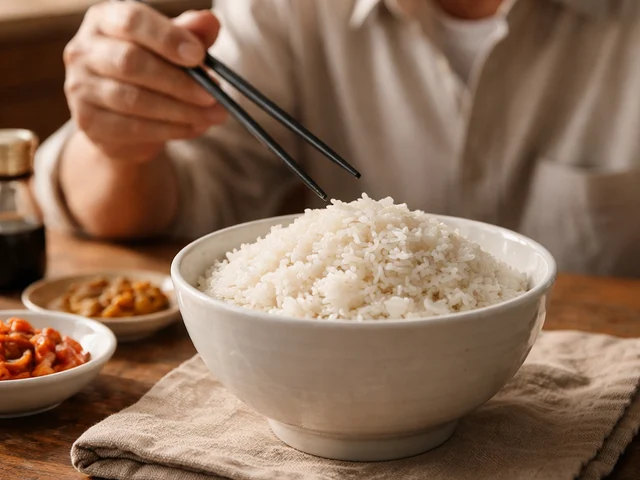
Leftover rice should not be left at room temperature for more than 2 hours.
PHOTO: AI
For older adults, the biggest risk with leftover rice is often food safety. There have been numerous cases of food poisoning due to the bacterium Bacillus cereus. This is because the spores of this bacterium can survive even after the rice is cooked. If the rice is left at room temperature for too long, the spores can produce toxins.
Notably, this type of bacteria produces several heat-resistant toxins. If rice is stored improperly, reheating it does not guarantee complete elimination of the risk of food poisoning. Therefore, people aged 65 and older are at a higher risk of health problems from eating leftover rice that has not been stored properly.
Leftover rice that has been left at room temperature for too long should not be eaten.
Leaving cooked rice at room temperature for too long allows bacteria to grow easily. Experts recommend that cooked rice should not be left at room temperature for more than 2 hours. When storing, rice should be divided into shallow, airtight containers instead of being left in a large pot. The refrigerator should be maintained at 4°C or below. As a general rule, rice stored in the refrigerator should only be used within 3-4 days.
If you know for sure you won't be using it in the next few days, freezing the rice early will significantly reduce the risk of spoilage and bacterial contamination.
After storing leftover rice in the refrigerator, if you want to eat it, you need to reheat it evenly, avoiding situations where some parts are hot while others remain cold.
Food safety guidelines often recommend reheating leftovers to a temperature of around 74°C or higher. However, it's important to note that if the rice was improperly stored in the first place, some bacterial toxins, such as those from Bacillus cereus, may be heat-resistant, so reheating doesn't guarantee complete elimination of the risk.
Elderly people are particularly susceptible to severe complications from food poisoning. Therefore, if leftover rice has been left at room temperature for too long, don't hesitate to throw it away. This is a safety rule that applies even if the rice doesn't smell bad and looks normal, according to Healthline .