



High blood pressure silently damages many vital organs.
- High blood pressure silently damages blood vessels.
- Multiple organ damage: Overloaded heart, impaired kidney function, reduced blood flow to the brain, decreased vision.
- Early control involves a low-salt diet, exercise, medication, and blood pressure monitoring.
According to Onlymyhealth (India), persistently high blood pressure puts constant pressure on blood vessels, which in turn damages the heart, kidneys, brain, eyes, and circulatory system.
According to Dr. Sanjay Bhat, an Indian cardiologist, uncontrolled high blood pressure can cause harm for years before symptoms appear. He says the danger lies in the long-term damage to blood vessels and organs, not in the daily sensations.
The World Health Organization (WHO) states that high blood pressure is directly linked to dangerous diseases such as cardiovascular disease, stroke, and kidney failure. It is estimated that by 2025, more than 1.28 billion adults globally will have this condition, with nearly half unaware they have it.

Prolonged high blood pressure puts constant pressure on blood vessels, which in turn damages the heart, kidneys, brain, eyes, and circulatory system. Photo: PH created from GM
Why does high blood pressure cause damage?
Blood pressure is the force exerted by blood against the walls of arteries to transport oxygen and nutrients. When this force remains too high, the lining of the blood vessels is damaged. This causes hardening, inflammation, plaque buildup, narrowing of the vessels, and reduced blood flow to organs.
Prolonged high blood pressure damages both large and small blood vessels, thereby directly affecting the function of organs.
Heart
The heart has to work harder to pump blood. Over time, the heart muscle thickens, especially in the left ventricle.
A study published in Frontiers in Cardiovascular Medicine in 2022 showed that high blood pressure damages coronary arteries, promoting atherosclerosis. Narrowing of the blood vessels leads to reduced blood flow to the heart, increasing the risk of angina and myocardial infarction.
The American Heart Association's 2025 report confirms that hypertension is a major cause of coronary heart disease.
When the heart is overworked for extended periods, the risk of heart failure increases significantly. Common symptoms include shortness of breath, fatigue, and leg swelling.
Kidney
The kidneys contain many small blood vessels that help filter waste products. High blood pressure narrows and damages these vessels, reducing their filtering capacity.
As the disease progresses, the kidneys gradually lose function, leading to chronic kidney disease. In severe cases, dialysis or a kidney transplant may be necessary.
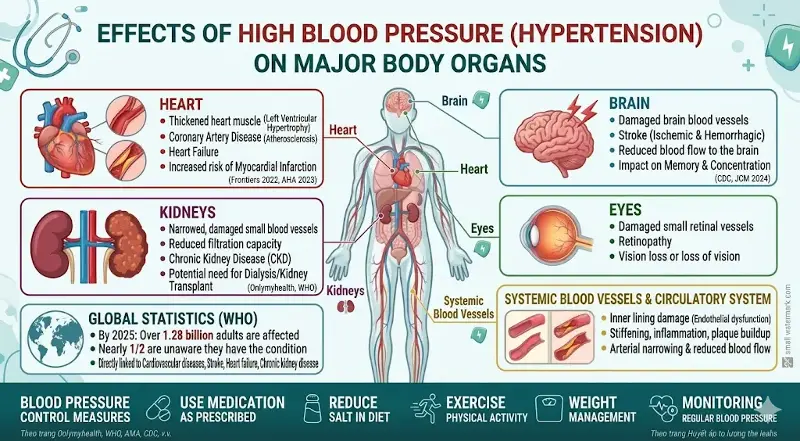
Photo: PH created from GM
Brain
The brain needs a steady supply of oxygen-rich blood. High blood pressure damages blood vessels in the brain, increasing the risk of stroke.
The U.S. Centers for Disease Control and Prevention (CDC) states that the majority of strokes are related to high blood pressure. Bhat noted that this condition increases the risk of both ischemic and ruptured strokes.
A 2024 study in the Journal of Clinical Medicine showed that prolonged high blood pressure reduces blood flow to the brain, thereby affecting memory and concentration.
Eyes and blood vessels throughout the body
High blood pressure damages the small blood vessels in the eyes, causing retinopathy. Severe cases can lead to reduced vision or vision loss. Blood vessels throughout the body are also affected, with hardening, plaque buildup, and poor circulation.
Therefore, controlling blood pressure early helps protect the heart, brain, kidneys, and blood vessels.
Measures to control blood pressure include taking prescribed medication, reducing salt intake, exercising regularly, managing weight, and monitoring blood pressure regularly.