



Hormonal imbalances can affect sleep, weight, menstrual cycles, and mood. Besides medical treatment, some types of tea have been studied and shown to help regulate hormones to a certain extent.
The endocrine system includes glands such as the thyroid gland, adrenal glands, pituitary gland, ovaries, and testes. The hormones secreted by these glands regulate many important functions: sleep, metabolism, blood sugar control, menstrual cycle, fertility, and stress response.
- 1. Green tea helps balance hormones.
- 2. Peppermint Tea
- 3. Chaste Tree Tea
- 4. Perilla tea
- 5. Licorice root tea
When hormones are imbalanced, patients may experience symptoms such as persistent fatigue, weight gain, menstrual irregularities, hot flashes, acne, hirsutism, or mood swings. According to the WHO, treatment for endocrine disorders should be based on a specific diagnosis and appropriate treatment plan. Supportive measures such as diet, exercise, and sleep play an important role.
In this context, some types of tea have been studied for their potential to support hormone balance. However, it is important to emphasize that tea is not a substitute for medication and is not suitable for everyone.
1. Green tea helps balance hormones.
Green tea is produced from the leaves of the Camellia sinensis plant, which undergo minimal oxidation, thus retaining many bioactive compounds, especially polyphenols.
Impact on metabolism and insulin: Several studies have noted that epigallocatechin gallate (EGCG), an active compound in green tea, may improve insulin sensitivity and slightly reduce fasting blood glucose. This is particularly significant for individuals with polycystic ovary syndrome (PCOS), a condition often associated with insulin resistance and increased androgens. Some small-scale clinical trials have shown that women with PCOS who drank green tea daily for 2–3 months experienced improvements in weight and blood glucose levels. However, the degree of improvement was modest.
Impact on sex hormones: Several long-term observational studies have noted that women who regularly consume green tea tend to have more stable estrogen levels and better sleep quality. In men, some studies have shown slight improvements in testosterone and mood, but there is not enough evidence to recommend its use for hormone enhancement.
Safety note: Green tea is safe for most adults when consumed in moderation (2–3 cups/day). Possible side effects include insomnia, frequent urination, and stomach upset if consumed on an empty stomach.
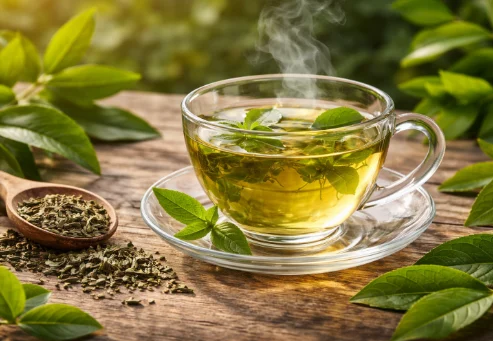
Several types of tea, including green tea, have been studied for their potential to support hormone balance and endocrine health.
2. Peppermint Tea
Peppermint tea is made from the leaves of the Mentha spicata plant and is caffeine-free.
Effects on androgens in women: Several small clinical trials in women with PCOS have shown that drinking peppermint tea twice daily for several weeks may reduce free testosterone and improve mild hirsutism. The mechanism is thought to be due to plant compounds that may regulate enzymes involved in androgen metabolism. Additionally, some preliminary studies suggest peppermint tea may support improved insulin sensitivity and blood glucose levels.
Instructions for use : Use 1 teaspoon of dried leaves or 5–10 fresh leaves per cup of hot water, steep for 5–7 minutes. However, there are no recommended dosages for endocrine treatment purposes.
3. Chaste Tree Tea
The chaste tree, also known as Vitex agnus-castus, has been used for centuries in traditional European medicine.
Effects on prolactin and progesterone: Studies suggest that vitex extract may affect the pituitary gland, helping to reduce prolactin. When prolactin is controlled, progesterone in the luteal phase may improve, thereby supporting menstrual cycle regulation and reducing premenstrual symptoms (PMS) such as breast tenderness and irritability. Several systematic reviews have noted vitex's moderate effectiveness in reducing PMS symptoms, but further high-quality research is needed.
Contraindications: Do not use if pregnant, breastfeeding, taking hormone medication, or have hormone-dependent cancer (breast, uterus, ovary). Possible side effects include headache, nausea, and temporary menstrual irregularities.
4. Perilla tea
Marjoram, also known as Origanum majorana, belongs to the mint family.
Effects on PCOS and blood sugar: A small trial in women with PCOS showed that drinking oregano tea twice daily for a month may improve insulin sensitivity and slightly reduce androgens. The mechanism may be related to flavonoids and terpenes in the leaves. Additionally, some preclinical studies suggest oregano may support menstrual cycle regulation and reduce menstrual cramps, but evidence in humans is limited.
Note: Not recommended for pregnant or breastfeeding women due to lack of safety data.
5. Licorice root tea
Licorice root from the Glycyrrhiza glabra plant contains glycyrrhizin – a compound that may affect cortisol metabolism.
Effects on cortisol and estrogen: Licorice may increase cortisol by inhibiting the enzyme that breaks down this hormone. This is sometimes mentioned in support of mild adrenal insufficiency, but its use should be cautious. Additionally, some compounds in licorice have weak estrogen-like activity and may reduce testosterone. Some small studies have noted potential benefits in PCOS and hot flashes, but results are inconsistent.
Risks of prolonged use: Regular use of licorice, especially in high doses, can cause hypertension, hypokalemia, and affect heart and kidney function. People taking diuretics, cardiovascular medications, or with kidney disease should consult their doctor before use.
Some notes: Endocrine disorders such as PCOS, hypothyroidism, premature menopause, or menstrual irregularities should be evaluated with hormone tests and specialist examinations.
Green tea and herbal teas may play a supportive role due to their effects on metabolism, anti-inflammation, and mild hormone regulation. However, evidence is limited, mostly from small studies; effects are generally mild; and they are not a substitute for hormone therapy or conventional treatments. Maintaining hormonal balance requires a holistic approach: maintaining a healthy weight, regular exercise, sufficient sleep, stress reduction, and regular checkups.
Some types of tea, such as green tea, peppermint tea, chastetree tea, oregano tea, and licorice root tea, have shown preliminary evidence of supporting hormone balance, particularly in women with PCOS or mild menstrual irregularities. However, this is only a supplementary measure. Individuals with persistent hormonal symptoms should consult an endocrinologist or gynecologist for appropriate advice and treatment, avoiding prolonged self-medication with herbs without medical guidance.
Readers are invited to read more: