



When going down stairs, we feel less tired but are more prone to knee pain, especially in the front of the knee. This feeling is not due to a weak knee joint but is related to musculoskeletal activity.
When descending stairs, the quadriceps muscles have to exert more force to prevent the body from plummeting, and the knee joint bears more load in a bent position. Therefore, going down stairs often increases pressure on the knee joint, especially the patellofemoral joint, according to the health website Healthline (USA).
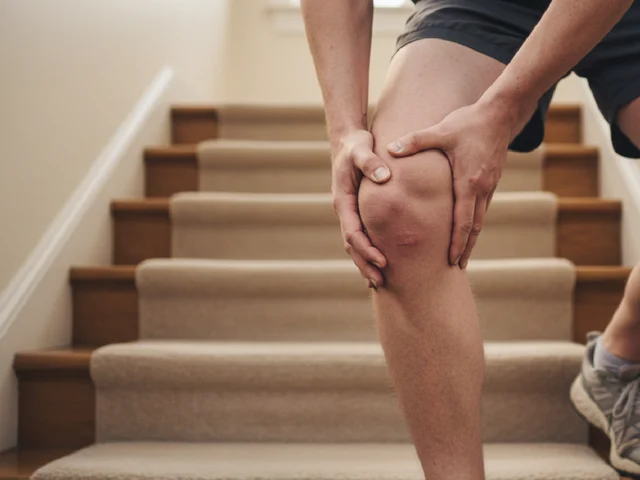
When descending stairs, people with knee pain should place their injured foot down first, while the other foot controls the weight from above.
PHOTO: AI
However, more pain doesn't necessarily mean more joint damage. In people without joint problems, going down stairs is a natural bodily function and therefore nothing to worry about. The knee joint is designed to bear the load of daily activities, including going up and down stairs.
However, for those who already have osteoarthritis of the knee, patellofemoral pain, or are in the painful phase of arthritis, going down stairs often exacerbates the discomfort. This is because the load on the knee joint is greater in the bent knee position, making it easier to trigger pain.
To reduce pressure on the knee joints when descending stairs, first use the handrail if available. This helps distribute the load and increase overall body stability.
When stepping down, walk slowly and place your entire foot on the step, avoiding the habit of leaning forward or only placing your toes on the ground. This is because these ways of walking force your knees to brake harder.
A simple rule, often recommended for people with knee pain, is to step up with your stronger foot first, and down with your weaker foot first. More specifically, when going up stairs, step up with the less painful foot. When going down, place your painful foot down first and let the other foot control the weight from above.
People should see a doctor if knee pain lasts longer than 2–4 weeks or significantly affects daily activities. In particular, do not ignore swelling, heat, redness, stiffness, or looseness in the knee joint.
For those who have suffered injuries from falls or sports, they should also seek medical attention if the pain increases rapidly, accompanied by fever or general fatigue. Additionally, a weak knee joint, inability to bear weight, or difficulty walking normally are warning signs that require medical treatment rather than self-treatment at home, according to Healthline .