



Deep breathing exercises can help calm anxiety, stabilize heart rate, and promote relaxation of the nervous system. Several simple breathing techniques can be practiced daily to reduce stress and improve emotional control.
1. Benefits of deep breathing
Anxiety is a common psychological reaction when people face pressure, stress, or uncertain situations. In many cases, feelings of anxiety appear suddenly, causing the body to react with a "fight or flight" mechanism. This activates the sympathetic nervous system, causing the heart rate to increase, breathing to become shallow and rapid, muscles to tense, and the person may feel restless or have difficulty controlling their emotions. One simple way to help the body return to a balanced state is to control breathing. Deep breathing exercises can activate the parasympathetic nervous system – a system that helps the body relax, slow the heart rate, and reduce stress levels.
When people are anxious, their breathing pattern often shifts to shallow chest breathing. This reduces the efficiency of oxygen delivery to the body and can increase feelings of stress. Conversely, deep, slow breathing allows the body to receive more oxygen while signaling to the brain that the body is in a safe state. As a result, heart rate stabilizes, blood pressure may decrease slightly, and anxiety levels improve.
The diaphragm is the main muscle involved in respiration. When the diaphragm functions efficiently, breathing becomes deeper and more stable, improving oxygen exchange in the body. Conversely, during prolonged stress, many people tend to breathe shallowly using their chests, reducing respiratory efficiency. Practicing controlled breathing techniques can help improve this.
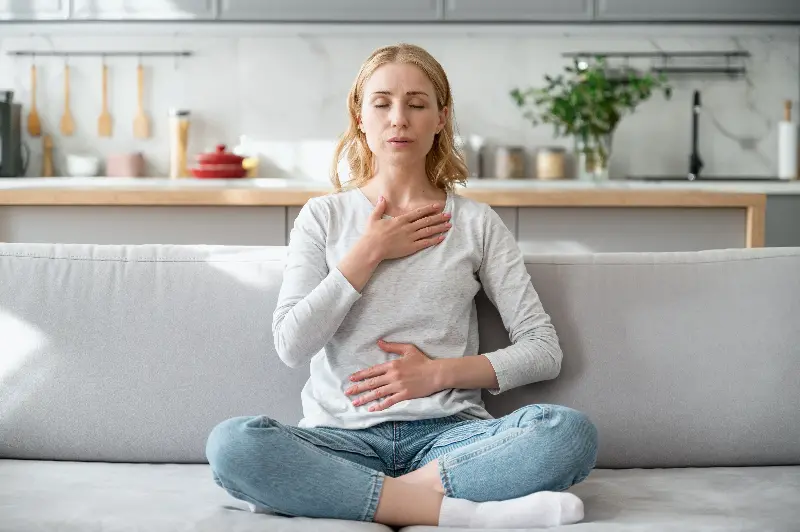
Deep breathing exercises can help relax the body, slow the heart rate, and reduce stress levels.
2. Several breathing techniques can help reduce anxiety.
2.1 The 4-7-8 breathing technique helps relax the nervous system and reduce anxiety.
One of the commonly used breathing techniques for stress reduction is the 4-7-8 breathing exercise. This simple breathing exercise helps regulate breathing patterns and promotes calming of the nervous system.
How to do it:
- Sit or lie down in a comfortable position, keeping your back straight.
- Inhale gently through your nose for 4 seconds.
- Hold your breath for 7 seconds.
- Exhale slowly through your mouth for 8 seconds.
This cycle can be repeated 4–5 times during a single session. Slow, controlled breathing helps reduce sympathetic nervous system stimulation, thereby aiding in anxiety reduction and promoting relaxation. Many people also use this technique before bed to improve sleep quality.
2.2 Diaphragmatic breathing improves respiratory efficiency.
Diaphragmatic breathing, also known as abdominal breathing, is a technique that maximizes the use of the diaphragm – a vital respiratory muscle located between the chest and abdomen. Unlike shallow chest breathing, diaphragmatic breathing allows the lungs to expand more effectively and increases the amount of oxygen entering the body.
How to do it:
- Place one hand on your chest and the other on your stomach.
- Inhale slowly through your nose, allowing your abdomen to expand.
- Keep your chest from moving too much.
- Exhale slowly through your mouth, allowing your stomach to flatten.
When done correctly, the hand placed on the abdomen will move more noticeably than the hand placed on the chest. Just practicing this technique for a few minutes each day can help improve breathing efficiency, support stress reduction, and enhance oxygen exchange in the body.
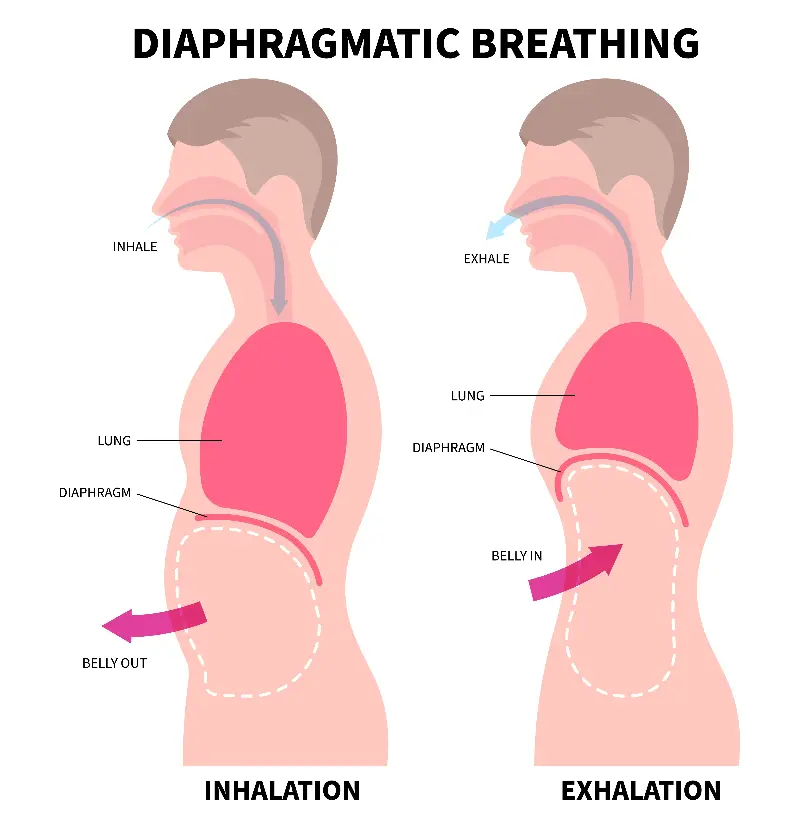
Diaphragmatic breathing improves respiratory efficiency, calms anxiety, and helps slow heart rate.
2.3 Box breathing technique helps control stress.
Box breathing is a rhythmic breathing technique used by many athletes and people working in high-pressure environments to maintain focus. This exercise consists of four steps, each lasting an equal amount of time:
- Inhale slowly for 4 seconds.
- Hold your breath for 4 seconds.
- Exhale slowly for 4 seconds.
- Rest for 4 seconds before starting the next cycle.
Maintaining a steady breathing rhythm helps the nervous system gradually shift to a relaxed state. After doing this for a few minutes, many people may feel their minds calmer and their heart rate more stable. This method is especially helpful when needing to manage stress before stressful situations such as presentations, exams, or important decisions.
3. How to maintain a daily breathing exercise routine
The effectiveness of breathing techniques is not only evident when experiencing anxiety but also becomes more pronounced with regular practice. Spending 5–10 minutes each day focusing on slow, deep breathing can help the body better adapt to stress. Once controlled breathing becomes a habit, practitioners can easily use this technique in stressful situations.
The ideal time to practice might be:
- The morning after waking up.
- Before going to bed, when feeling stressed or overwhelmed...
Combining breathing exercises with meditation or mindfulness practices can also help increase relaxation effectiveness.
Overall, deep breathing is a simple yet highly beneficial method for mental health. Controlling your breathing helps slow your heart rate, promotes muscle relaxation, and reduces the activity of stress hormones. During times of anxiety, pausing for a few minutes to focus on your breath can help your body regain balance and improve emotional control.
Please note that this article is for informational purposes only and does not replace medical advice, diagnosis, or treatment.