



Jensen Huang argues that AI will not lead to mass job losses, but rather force professions to be redesigned around core values.
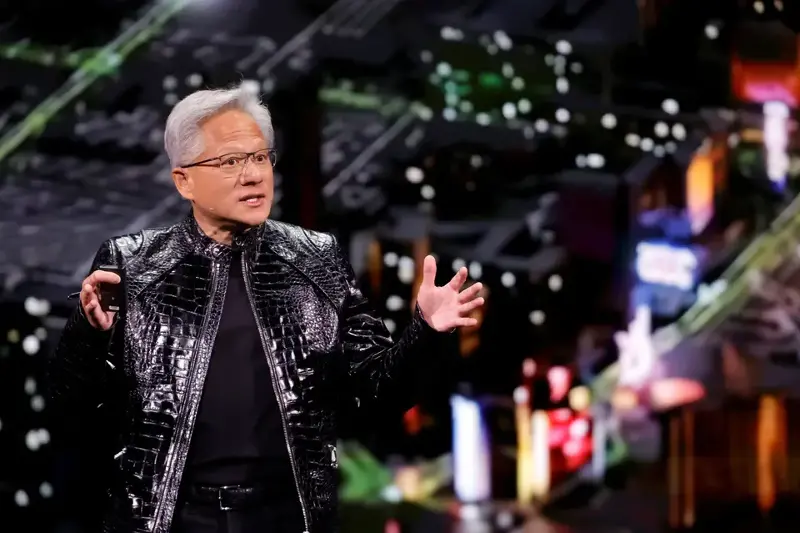
Jensen Huang is one of the pioneers in AI. Photo: Reuters .
Recently on the No Priors podcast, Nvidia CEO Jensen Huang shared his thoughts on how AI will reshape work. He believes chatbots will automate tasks, but will not eliminate core job roles.
During the discussion, Huang explained that those worried about a wave of large-scale job losses often confuse the specific task with the purpose of a job. According to him, AI changes how tasks are performed, but the purpose of the work remains the same.
Huang argues that much of the work involves repetitive tasks, things that technology can learn and automate, but still has a broader, human-led purpose. He cites radiology as a practical example.
In 2016, AI pioneer Geoffrey Hinton predicted that AI would wipe out numerous jobs in radiology and advised students against pursuing this field. While AI may already be automating many radiology tasks, the number of radiologists today is far greater than at the time of this prediction.
In 2025, diagnostic imaging residency programs in the US will open a total of 1,208 places, the highest number ever. That same year, diagnostic imaging will be the second highest-paying specialty in the US.
Jensen Huang explains that the job of a radiologist is not simply "reading films," but rather that these are just tasks that AI is gradually automating. Their core value lies in their ability to diagnose diseases, guide treatment, and conduct research to continuously improve their knowledge and experience in these areas.
This logic, for Huang, can also be applied to the entire economy . He says he spends most of his day typing, but that's just one task. Tools that automate writing will help expand the amount of work managers and employees can handle.
"The fact that AI can automate much of my typing doesn't make me any less busy. In many ways, I'm even busier because I'm able to do more things," Huang said.
According to him, this mindset is expanding into knowledge work, particularly in the software industry. AI can significantly shorten coding time, but at the same time, it increases the need for discovering and solving new problems.
At Nvidia, Huang said the company continues to hire, even as AI-powered programming tools like Cursor are being widely deployed among engineers. AI helps increase productivity, allowing for the pursuit of more ideas, thereby boosting revenue and creating more resources to hire more personnel for the business.
Huang also cited the legal profession as an example. According to him, AI can only assist with technical aspects such as reading and drafting contracts, while the core value of the profession still lies in judgment, strategic thinking, and the responsibility to protect clients.
Furthermore, this perspective can also be applied to simple tasks. He gave the example of a restaurant server whose job is to take orders, but whose deeper purpose is to ensure that diners have a pleasant and fulfilling experience.
AI will undoubtedly disrupt job roles. But according to Jensen Huang, the mainstream trend isn't mass job losses, but rather a redesign of jobs.