



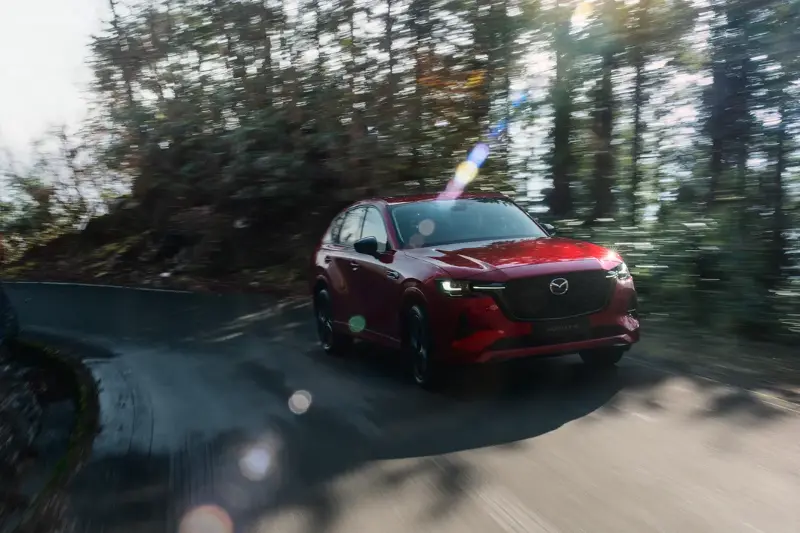
Mazda Philippines has introduced a refreshed version of its all-hybrid CX-60 lineup, featuring a series of mechanical and comfort-focused updates to improve ride quality, stability, and cabin refinement.
Related: Video: 2025 Mazda CX-90 – Review
Since its local launch, more than 800 units of the CX-60 have been sold, making the Philippines Mazda’s largest CX-60 market in Asia outside Japan. According to Mazda Philippines President and CEO Steven Tan, the updates reflect the brand’s ongoing commitment to continuous improvement rather than cosmetic changes.
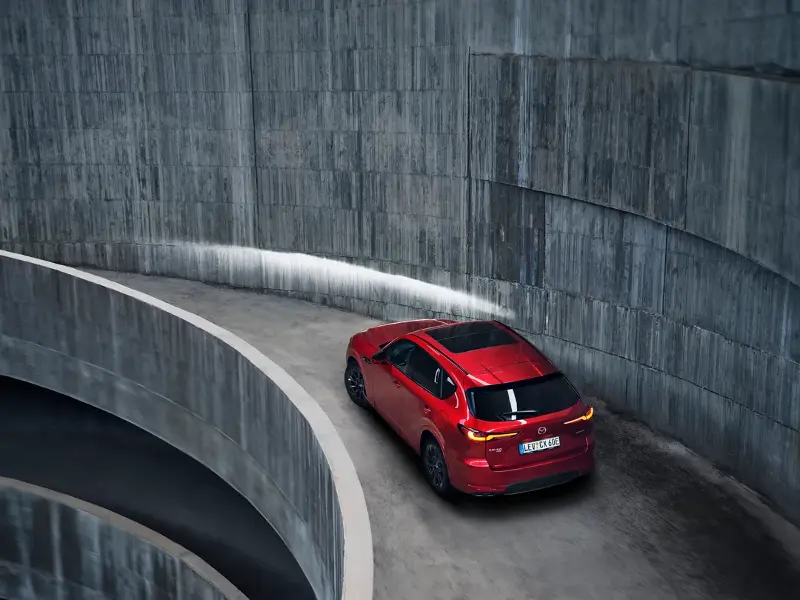
The updated CX-60 receives a long-awaited suspension upgrade to improve ride comfort without compromising driving dynamics. At the rear, softer springs and new bump stops improve compliance, while dampers with increased rebound rates help manage vertical motion. The front suspension now uses dampers with firmer compression rates and relocated front knuckle mounts to enhance stability, particularly on rough roads. Steering and stability control systems have also been recalibrated to improve overall balance and feel. Mazda claims that the new setup cannot be retrofitted to the current model.
These changes complement Mazda’s Large Vehicle Platform, which uses a front-engine, rear-wheel-drive layout. The platform distributes lateral and longitudinal loads between the axles for improved handling and places major powertrain components closer to the vehicle’s center. Despite its size, the CX-60 achieves a 5.4-meter turning radius, smaller than many similarly sized SUVs. These footwork improvements mean that the CX-60 solves all the problems of the former model, and should ride better, especially in the Philippines, where the roads are less than stellar.
The Skyactiv-Drive eight-speed automatic transmission has also been updated with improvements to clutch control and hydraulic valves. Mazda says this results in smoother transitions between the combustion engine and electric motor, along with a wider usable gear range that balances performance and efficiency.
Powertrain remains unchanged, with Mazda’s inline-six-cylinder engine family offered in gasoline and diesel versions. The 3.3-liter e-Skyactiv-G gasoline engine produces 280 hp and 450 Nm of torque, while the 3.3-liter e-Skyactiv-D diesel delivers 250 hp and 550 Nm. Both engines use a 48-volt mild-hybrid system with a lithium-ion battery and benefit from the inherent balance of the inline-six layout, which reduces vibration and improves refinement.
Inside, Mazda has introduced additional countermeasures for noise, vibration, and harshness. Thicker, denser sound insulation is now used on the dashboard, with coverage extending into the upper cowl area. Trunk side trims also receive increased insulation, while a new steering column joint and reinforced doors help reduce interior vibrations.
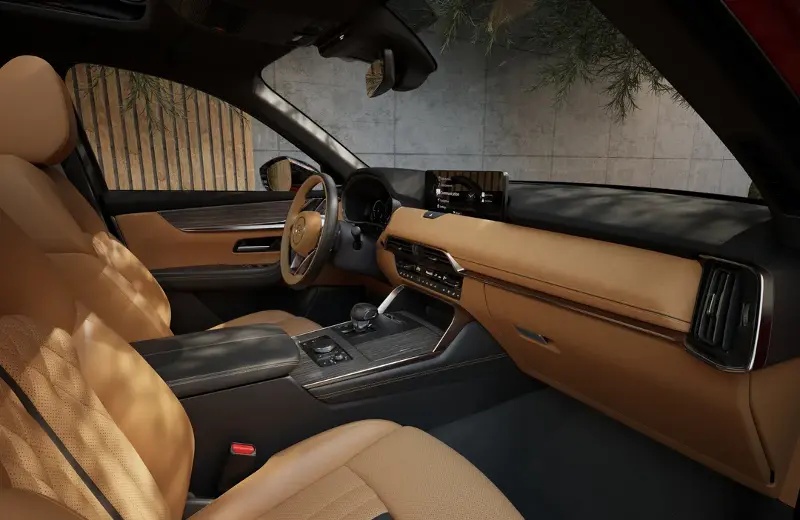
The interior design remains the same, with excellent material quality and driver-focused ergonomics. A wide, horizontally symmetrical instrument panel runs across the cabin, centered on the driver. Three main displays are standard: a 12.3-inch digital instrument cluster, a 12.3-inch infotainment screen, and a 10.4-inch head-up display. The Mazda Commander Control knob is positioned for use with the driver’s arm resting on the center armrest.
Mazda’s Driver Personalization System is also standard. After entering the driver’s height, a camera detects eye position and automatically adjusts the seat, steering wheel, head-up display, and mirrors. Facial recognition allows the system to restore more than 250 stored settings per user, including vehicle, audio, and climate preferences, and supports up to six drivers and guests.
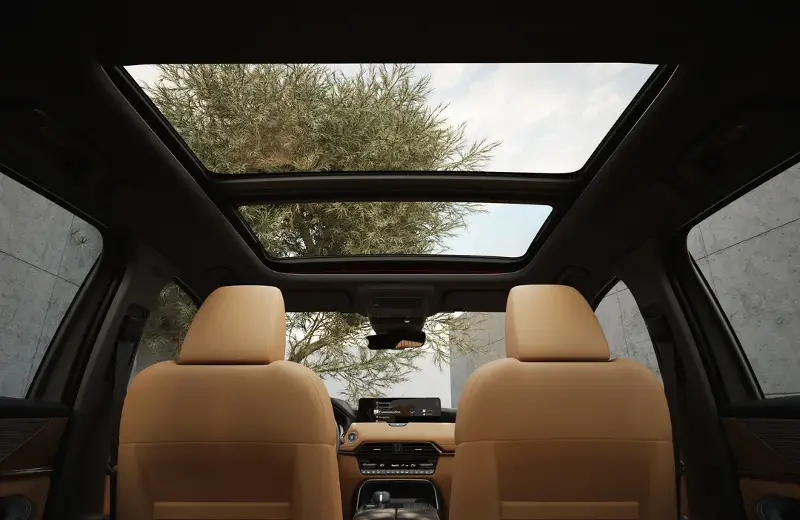
Both CX-60 variants come equipped with a frameless auto-dimming rear-view mirror, front seat ventilation, wireless device charging, ambient lighting, a panoramic sunroof, and dual-zone climate control with rear vents. Like before, the 3.3 AWD HEV Turbo features aluminum and silver metallic trim, black Nappa leather seats, and black leather upholstery. The 3.3 AWD HEV Turbo-D Sport, on the other hand, adds graphite and gunmetal accents, along with tan Nappa leather seats with quilted Leganu suede inserts.
The latest Mazda Connect system supports wireless Apple CarPlay and Android Auto, while a 12-speaker Bose sound system is standard.
Exterior design remains consistent with Mazda’s current design language, featuring a long hood, rearward cabin, and a wide grille flanked by adaptive LED headlamps. All variants ride on 20-inch aluminum alloy wheels with 235/50R20 tires and include a hands-free power tailgate with height memory. The Turbo variant uses machine-cut alloy wheels, bright chrome exterior accents, and a bar-type grille. The Turbo-D Sport adopts a darker theme with black metallic wheels, a dark honeycomb grille, black exterior trim, and black side mirrors.
The CX-60 is offered in three “Takuminuri colors”: Rhodium White Premium, Soul Red Crystal, and Machine Gray, along with Jet Black, Sonic Silver, Platinum Quartz, and Deep Crystal Blue.
The updated Mazda CX-60 is priced as follows:
CX-60 3.3L AWD HEV Turbo: PHP 2,890,000
CX-60 3.3L AWD HEV Turbo-D Sport: PHP 2,990,000
Prices include a five-year free service plan covering scheduled maintenance every six months or 10,000 kilometers, whichever comes first, up to 100,000 kilometers. This is in addition to a three-year bumper-to-bumper warranty and a five-year hybrid battery warranty. The refreshed CX-60 is also coding-free until 2030.
The post Mazda Philippines launches refreshed CX-60 –Brings better ride quality appeared first on YugaAuto: Automotive News & Reviews in the Philippines.