


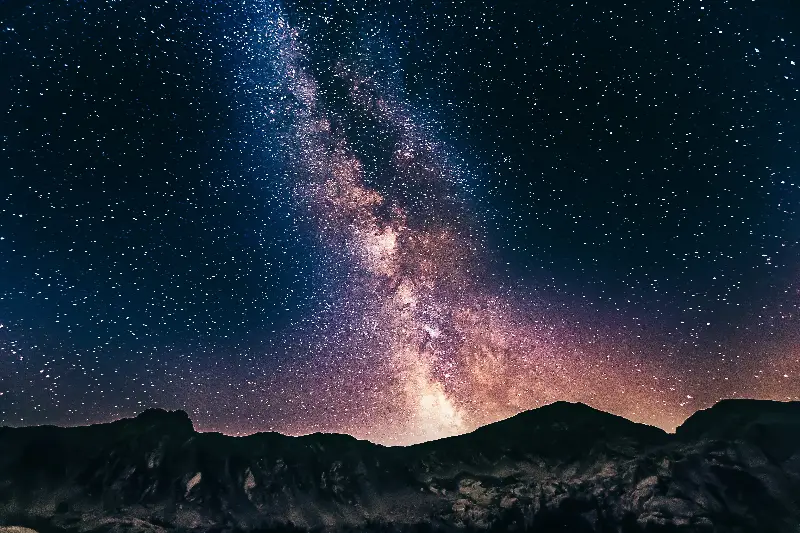
Imagine drifting through a cosmic river, filled with sparkling stars, mysterious clouds, and planets both known and unknown. That’s the reality of our home galaxy—the Milky Way. This swirling disk of light is not only the home address of our solar system but also a treasure trove of astronomical wonders that shape our understanding of the universe.
A GALAXY LARGER THAN IMAGINATION
Stretching over 100,000 light-years across, the Milky Way is a barred spiral galaxy—one of trillions in the observable universe. While we often see it drawn as a simple swirl, its structure is far more complex:
- The Star Count: Our home contains approximately 400 billion stars. For every person on Earth, there are around 50 stars in our galaxy alone.
- The Scale: Some recent estimates suggest the diameter could reach 200,000 light-years when including the faint outer regions.
- The Structure: Spiral arms twist out from a central bar like a cosmic pinwheel. These arms are packed with fresh gas and dust—stellar nurseries where new stars are born.
THE SOLAR SYSTEM’S PLACE IN THE GRAND DESIGN
Earth’s sun is not located in the bustling heart of the galaxy. Instead, our solar system lies on the edge of a spiral arm called the Orion Arm, about 27,000 light-years from the center.
This "suburban" location is a prime vantage point for several reasons:
- Stability: We are safely away from the chaotic, high-radiation environment of the galactic hub.
- Safety: Our quieter neighborhood minimizes destructive phenomena like nearby supernova explosions.
- Clarity: It provides a calm window to observe the distant universe without too much local "noise".
THE SUPERMASSIVE MYSTERY AT THE CORE
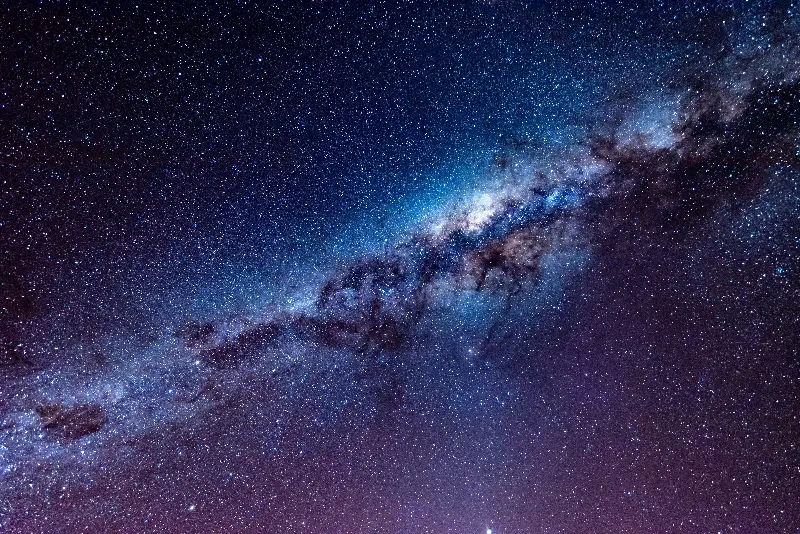
At the very center of the Milky Way lurks a titanic curiosity: a supermassive black hole known as Sagittarius A* (pronounced "Sagittarius A-star").
- Mass: This monster weighs as much as four million suns.
- Influence: Its immense gravity helps keep the entire galaxy spinning in a delicate, multi-billion-year dance.
- Visibility: While we cannot see the black hole itself, recent telescope images have captured the glowing gas swirling around its event horizon, bringing this mysterious giant into focus.
COSMIC TRAVELERS: STARS, PLANETS, AND ROGUE WANDERERS
The stars of the Milky Way are anything but static. Each orbits the galactic center at incredible speeds. Our own sun moves at roughly 514,000 miles per hour, taking an estimated 230 million years to complete a single "galactic year."
But stars aren't the only residents:
- Exoplanets: The Milky Way may host up to 100 billion planets.
- Rogue Planets: Some worlds travel alone through the darkness, wandering between stars without a parent sun.
- Galactic "Theft": Evidence suggests the Milky Way has "stolen" stars and gas clouds from smaller neighboring galaxies during past close encounters.

GALACTIC GHOSTS AND DARK MATTER
There is an invisible presence in the Milky Way that outweighs all visible stars and gas: dark matter. This mysterious substance is estimated to make up about 85% of the galaxy’s mass. While we cannot see it directly, its gravity acts as the "glue" that binds the galaxy together and shapes its rotation.
As the Milky Way orbits within our local galactic group, it is slowly being pulled toward its largest neighbor, the Andromeda Galaxy. In about four billion years, these two giants will merge to create an even larger cosmic structure.
STUNNING VIEWS FROM HOME
If you’ve ever managed to escape city lights, you’ve likely seen a dazzling white band arcing across the sky. That is the dense heart of the Milky Way seen edge-on. Ancient cultures called it the "River of Heaven" or the "Silver Road." Modern astronomy continues to reveal even deeper secrets—from giant bubbles blown by dying stars to complex waves rippling through the galactic disk. The Milky Way is a vibrant, ever-changing city of stars, and its beauty remains a constant invitation to explore the unknown.