


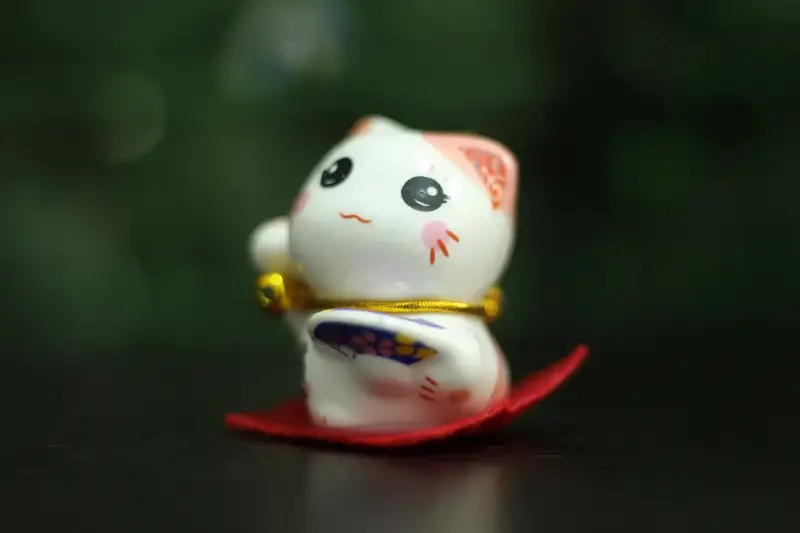
You may have seen its beckoning paw in shop windows, restaurants or on your travels through Asia—a small, adorable cat figurine waving to passersby. Known as the Maneki Neko, or “beckoning cat,” this symbol from Japanese folklore has crossed borders and cultures, promising more than just cuteness. But have you ever wondered why some raise their left paw and others their right? Or what secrets lie behind its promise of luck and fortune?
Paws up: Decoding which paw means what
A quick glance might make all Maneki Neko seem alike, but the paw they raise can actually change the kind of luck you’re inviting. If you spot a Maneki Neko with its left paw in the air, it’s not arbitrary. Tradition says:
- Left paw raised: Invites customers or people—perfect for businesses seeking more visitors.
- Right paw raised: Attracts luck and wealth—favored by anyone hoping for good fortune or increased riches.
- Both paws raised: Offers protection, guarding home and business from troubles.
In Japan, you’ll often find the left-paw version in places looking to boost foot traffic, like shops and restaurants. The right-paw variety, meanwhile, tends to decorate homes or offices of those wishing for prosperity. Some modern figures even feature moving, battery-operated paws, “waving” continuously for extra luck!
Color theory: Beyond ordinary white
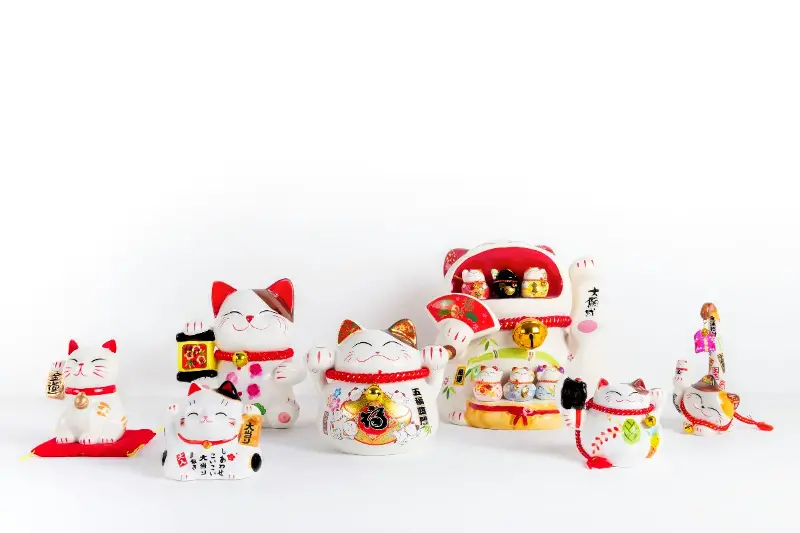
While white is the classic Maneki Neko color, the palette has expanded to include all shades, each loaded with its own special intent:
- Gold: Wealth and prosperity.
- Black: Wards off evil spirits.
- Green: Academic success and safety.
- Red: Protection against illness.
- Pink: Attracts love and romance.
So, when choosing your own Maneki Neko, select the shade that matches your biggest hopes or current goals.
From folklore to fortune: Legends of the lucky cat
The Maneki Neko’s origin story is just as enchanting. According to legend, a poor temple priest took in a stray cat despite his hunger. One stormy night, the cat raised its paw, beckoning a passing samurai inside just before lightning struck—saving the warrior’s life. In gratitude, the samurai donated much-needed funds to the temple, and the Maneki Neko was born as a symbol of hospitality and luck.
Over time, this folklore fused with Chinese beliefs about lucky charms and lucky animals, setting Maneki Neko on its international journey.
Curious cat: Surprising facts that might amaze you
- Maneki Neko is often mistaken for a Chinese symbol, but its roots are Japanese.
- “Maneki” means “beckoning,” while “neko” is “cat.”
- In some regions, the gesture for beckoning is palm out. That’s why its waving may look backwards to Western eyes.
- The cat is usually shown with a koban—a gold coin meaning wealth in Edo-period Japan. Value: 1 ryo, a very large sum at the time!
- Besides ceramic, you can find Maneki Neko made from anything from plastic to crystal—there’s a version for every taste and budget.
The next time you see a waving cat…
Whether seeking luck, love, or a little extra energy in your daily routine, the Maneki Neko remains a symbol of hope, joy, and humanity’s age-old dreams. Its stories span centuries and cultures, yet it continues to beckon us to believe in possibilities. Next time you spot one in the wild, why not pause—and wonder, just for a moment, what specific magic that little upraised paw might still hold for your life?